25 minutes ago
Great Britain rejects restructuring of border between Kosovo and Serbia

Periskopi(7 years ago)
(7 years ago)The former ambassador of the Republic of Kosovo, in Great Britain, Muhamet Hamiti, has brought a debate that has taken place in the Government of Great Britain, from which it has been repeated again and again, that this state is classical against touching borders between Kosovo and Serbia. This dispute over the border issue was initiated by Arminika [...]
The former ambassador of the Republic of Kosovo, in Great Britain, Muhamet Hamiti, has brought a debate that has taken place in the Government of Great Britain, from which it has been repeated again and again, that this state is classical against touching borders between Kosovo and Serbia.
This dispute over the border issue was initiated by Arminika Helik, who earlier was advisor to William Hagg, secretary of Great Britain.
In the writing that Hamit published, the debate has reportedly lasted for more than two hours.
The United Kingdom government of Great Britain and Northern Ireland (the country's official appointment most often known in February as Great Britain) has re-affirmed its stance Thursday against changing the border between Kosovo and Serbia. This is what State Minister at Foreign Office, Lord Ahmad, did at the end of a debate in the Chamber of Lords. Its government does not support revising the borders. Restructuring of the boards on ethnic lines, and we have made it clear to both sides [Kosovo and Serbia]”, he said in London.
The British Parliament's Chamber of Lords discussed the situation in the Western Balkans more than two hours yesterday ( Thursday, January 10, 2019). The biggest concerns of members of this room from all political parties, but even from the superparty members, were about the situation in Bosnia and Kosovo, Serb claims against Bosnia, Serbian efforts to change Kosovo's borders, as well as the destructive role of Russia and Turkey in the Western Balkans.
Thursday's debate has been initiated by Baroness Helic (Aminka Helic, born in Bosnia, now living in Britain for 25 years), which, before being appointed a member of the House of Lords by the Conservative Party, has been adviser to William Hague (Uillim Hag), British Foreign Secretary, former elite of the Consultative Party.
Helic and other members of this region expressed their sorrows and demanded the British government's greater commitment to the Western Balkans after visits they had made late to the countries of this region, including in Kosovo.
The debate's initiative, Baroness Helic, commemorated in the opening remarks that the Western Balkans have gone through extraordinary transformation in the past 20 years. Kosovo has gained independence and survived its active campaign to delegate”, she has said. The EU is divided internally into policies towards the Western Balkans, while the United States appears that “have been busy in large pieces”. Clear plan and vision is required, and not only tactical movement in the Balkans, it underlined, urging the British Government to remain committed to the region even after the country's EU (Brex).
Speaking to Kosovo and Serbian politics, Baroness Helic said: Serbia continues to choke on Kosovo's future by urging countries to recognise its citizenship and block its entry into international institutions. In that sense, I see as very brief that the EU-sponsored plans for changing safe between Kosovo and Serbia are being taken seriously. These clash with the 20-year-old European and American policy that the map of the Western Balkans is complete and ignore the likelihood that such an arrangement would be used as an excuse to justify revising borders in the region and beyond. I hope that the Minister (Foreign Office, present in the debate) will clarify Great Britain's stance on this proposal and shed light on whether does the Government believe it is possible to change the border between Kosovo and Serbia without immediate and long-term influence elsewhere, for example, in Bosnia, Georgia, Ukraine and the Baltic countries?
Bosnia, along with the situation about the border in Kosovo, remains countries with the greatest risk of explosion in the region, Baroness Helic said, demanding that “Brussels, London and Washington act as one with a well-ordinated strategy for the entire region”. According to her, this should include: “the withdrawal of Russian influence and that the revision of the region's map has ended”.
After long discussions of the many members in the Chamber of Lords who appeared in a voice on the issues raised, State Minister for Commonwealth and the United Nations at Foreign Office, Lord Ahmad of Wimbledon, spoke on this assignment from 2017.
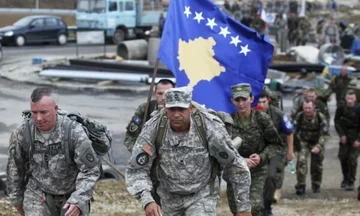
Lord Ahmad spoke of raising tensions between the governments of Serbia and Kosovo in recent months, of Serbia's efforts against Kosovo, the army, the tax, border discussions, and others: “Sic I have learned himself from my travels, Serbia has urged many countries to withdraw recognition of Kosovo's independence, campaigned against Kosovo membership in Interpol, and expressed sorrow over Kosovo's decision to change and fulfil the mandate of its security forces. [ Footnote] KSF. Kosovo, meanwhile, has set a 100% fee for Serbian goods. We believe that I assure the honored Lord Collins of this that Kosovo has sovereign rights, as an independent state, to build its own armed forces. I also assure my honored friend Baroness Anelay that we will continue to encourage Kosovo to do so in close consultation with NATO and the international community”.
British Minister of State has said his government disagrees with Serbia's concerns that gradual change of size and role of KSF endangers the stability of the region. “, in our opinion, the abnormalisation of relations between Serbia and Kosovo is markedly greater risk”. Lord Ahmad has said that his country continues to encourage both sides to relax the situation and turn into conversations about strategic dialogue that facilitates the EU, the “that we continue to support”.
In response to the concerns of discotors and their demands that the British Government make clear its position on Kosovo-Kosovo dialogue- Serbia High Representative for Foreign Policy Federica Moghrini, Britain's Minister of State, has said: “We strongly support this dialogue and we discuss progress regularly with High Representative Moghrini and other partners, including with states that do not recognise Kosovo within the EU and NATO ... Let me assure you that we will continue to raise these issues not only within those organisations but also in the bilateral bases of”.
Speaking on behalf of the British Government, to clarify its position, Minister Ahmad said in the House of Lords on Thursday, January 11, 2019: “The goal is simple: to ensure that we continue to support a solution that contributes to security, stability and prosperity in the region. I can assure honored colleagues, Helic baronees and Anelay, but also Lord Sandwich, among other things, that the government of Her Greatness does not support revising the borders on ethnic lines, and that we have made this clear to both sides. The question was raised here whether this has become clear to the EU High Representative. I can assure my honored colleagues that this has certainly been made clear to our partners, including High Representative”.
In the final address to the two-hour debate, his predecessor, Baroness Helic, noted that “Kosovo was a lucky country” in 1998/99 following the change of British stance on the conflicts in the former Yugoslavia with the coming power of labists and “lessons derived from non-intervention in Bosnia”.
She thanked the minister with these words: “Pics first, welcoming what seems to be a message without equivoke that the government of Her Greatness has given to the leaders of Serbia and Kosovo that we cannot support changing borders. I hope this message will be delivered to the High Representative in Brussels, Federica Moghrini, who seems to have committed himself to and supports this policy [of changing borders], for reasons I don't know”.