10 minutes ago
“The Guardian”: US willing to consider change of borders for Kosovo

Periskopi(8 years ago)
(8 years ago)The United States-backed exchange plan in Kosovo is facing a chorus of criticism, domestic and international, says the Guardian”. Analysing the situation created after Hashim Thaci's controversial proposal and Aleksandar Vuciqi, British prestige, looks carefully at the premises, but also at the consequences of such a plan. Administration [...]
Analysing the situation created after Hashim Thaci's controversial proposal and Aleksandar Vuciqi, British prestige, looks carefully at the premises, but also at the consequences of such a plan.
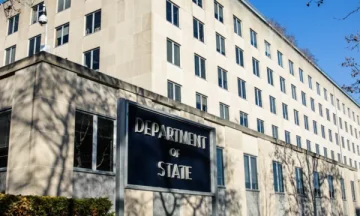
The American administration, she recalls, gave a strong impetus to the idea when it announced through national security adviser John Bolton that it would not stay on the road to Belgrade and Pristina if they reached an agreement. But quoting two sources that are familiar with the Trump administration's thinking, “The Guardian” writes that the new American policy is “not red lines, but also no blank Czech”, which means Washington is willing to see any solution, including border change, but that doesn't mean that it will ultimately support Tch.
On the other hand, even some EU officials have hinted that the idea of changing the border suits them. Many experts identify the potential risk of consequences in the region, where certain borders continue to remain very delicate. One of them is from the Bosnian Serpska.
Her president, Milorad Dodik, is demanding the secession. I think the European bloc likes this plan because it's simple, told the “The Guardian” Leyla Rami-Mesihovik, of “Think Foreign Police Initiative BH”.
But what logic will the international community then have against a Republika Srpska referendum? Is it really time to give up on multiethnic states in Europe, she asks. Such exchanges concern politicians in Macedonia.
These ideas have circulated throughout all Balkan wars, Macedonian Defence Minister Radmila Sugarinska told “The Guardian<18x1>; we need to remind ourselves constantly, that the largest massacres in this region were carried out precisely for this purpose, or at this excuse, she adds.