4 months ago
Five doctors were suspended for failing to comply with work schedules.

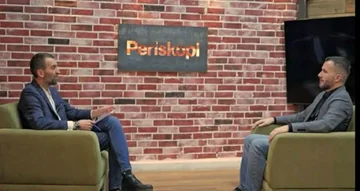
Periskopi(8 years ago)
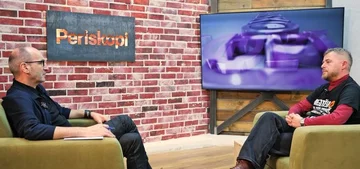
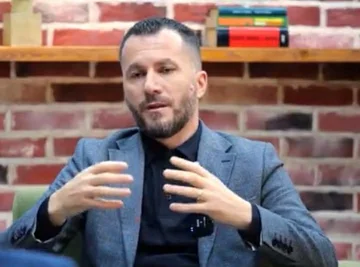
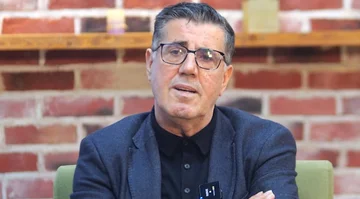
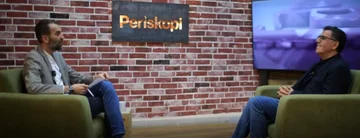
(8 years ago)Kosovo University Clinical Hospital Service Director Basri Sejdiu in an interview for Radio Free Europe has said there are five cases when doctors are suspended because they have not respected work schedules. In this interview he also speaks of efforts to increase the quality of health services. [...]
Our population had exactly disease. A large number of pathologys have been unable to be treated in public institutions and at a high cost have been forced to be treated abroad and this has been damage to our budget and the pocket of patients”, Sejdiu said.
Radio Free Europe: What is the current situation at the University Clinical Centre in Kosovo, with regard to the supply of drugs?
Basri Sejdiu: As far as the drug supply is concerned, the situation has improved. From the essential list (of drugs), the supply is about 70 percent and 50 percent of the saving material, but it always has to improve the situation. Some contracts the Ministry of Health has had for medical supplies have been over-due. There have already been several cuts in the contracts because of the budget, the price higher than the real one, and from all of this we have had a benefit, we have had budget benefits due to the cuts of these contracts.
It's caused some vacuum, but the drug supply situation is going up. With these contracts cut short, the benefits in the budget have been around 6m euros.

Radio Free Europe: Has there recently been improvement in the quality of health services?
Basri Sejdiu: Upon coming to this position, I have identified the priorities and those sensitive points in the health system. For me it was Emergency Center, intensive treatment, cardiovascular system, and ambulator services, which I think, among other things, had serious problems.
The Emergency Center has already been inaugurated, where you can observe another organization system, with a completely changed restructuring, with the purchase of all new equipment. Thus, the Emergency Center has begun with a greater comfort for doctors, staff, and greater security for patients, as well as what we try to do.
Then, an ambulance medical system. There we first began with ambulances of surgical branches, such as orthopedics with physical therapy and then other parts of the internal clinics. It is evidently a better quality service. I'm taking an example of orthopedics, where of the 70 previously visited patients, 200 are now visited under better conditions. New equipment is also available, and if we take the comparison of quality, it can be said that it is a parameters that are also observed by the microscopic aspect and not just by analysis. You can also see patients who are happy but who also have a health - care facility.
So is the cardiovascular system. There I think it's a pretty big hit because it's a 24-hour job at Cardiosurgeon, where we have them now. two cardiosurgic halls And two intensive treatment halls. Also in the Invasive Cardiurgy is a new device. So with two halls in the Cardiosurgeon of Invasives and two in Cardiosurgy, the results are already being observed. The treatment of a heart attack in the first few hours, then reducing the waiting lists for the match is just off the waiting list, and we're on a good track. waiting list also be removed for choreography and cardiosurgeon. In Cardiosurgeology, all operations now take place, counting on the most serious ones, where we once had cases of aorta design, the value was 28,000 euros in the private institution and the QKUK was performed for free. It means that it is a parameters that there is a difficult operation, and other operations are subsequently conducted.
We're planning on developing it at national level, treating a heart attack in the first two hours. I believe we will do it in the coming months and this will be a huge benefit for patients, treated in the first two hours no matter where they are, in every corner of Kosovo. It means, once the heart is identified, all administrative routes and delays will be skipped and (the patient) will be brought directly to the hall. That's a lot better, more lives will be saved. But it will also reduce disability because first - hour treatment also means reducing disability.
As for improving services, we are making investments in all clinics, but also reorganizations. For example, we have in vascular surgery a hall, we're trying to do another hall, the same in neurosurgeon, at the ortopedi, also in the fourth room we're preparing. Our tendency is to have all pathologies treated within our public institutions, so that patients can have more facilities, not spend out of pocket. This is where I want to connect and say that the greatest poverty our population has had exactly disease. A large number of pathologys have been unable to be treated in public institutions, and at a high cost have been forced to be treated abroad, and this has been damage to our budget and patients' pocket.
Radio Free Europe: How short is the medical professional framework?
Basri Sejdiu: Lucky we've come to terms with both the Government and the Ministry of Finance that have allowed us a considerable number of employees, where 100 doctors and 250 nurses are employed, and we've requested that we further increase staff numbers.
We've calculated that quality services are achieved with just enough staff and that the other advantage is to increase employment and not increase Migrating Out of the Country Doctors and nurses.
Radio Free Europe: Over the past four years, the departure of health staff from Kosovo has been observed for EU countries. How can this phenomenon be prevented and maintain professional staff in Kosovo?
Basri Sejdiu: It has strategies and is a health policy and we are on a common path with Government and the Ministry of Health to create better working conditions. This year we have bought 3.5m euros in new equipment and what is very important is the motivation of staff for work. With a collective sectoral contract, the sum during custody has been markedly raised and a doctor will cost a maintenance of 170 euros. As well as raising wages that have been promised so much that wages for doctors and nurses will be raised under the Law. I think this is motivation and combination of everything, I think it will be sufficient for the staff to stay in Kosovo.
Radio Free Europe: Will there be salary raises for health workers, and will there be categories in wages?
Basri Sejdiu: There will be salary categories. We've made a working systematization team, and job risk will be better paid. A green light is seen that there will be improvement, but what will significantly impact health insurance, which on the basis of performance will increase payment.
The health union has taken on more pay issues, but we have information that rising wages will be acceptable to the health staff.
Radio Free Europe: Does the University Clinical Centre of Kosovo have donations and how much is important to health?
Basri Sejdiu: Donations have always been welcome and are very helpful. We have donations of various forms as extenuating material, building objects. One of them is the Paddy Surgery, which is a donation of 22m euros, as sometimes the largest. So any kind of donation is welcome and helps Kosovo health in large measure.
Radio Free Europe: Recently, some inspections have been made, and arrangements have been made for doctors who do not respect work schedules. Can you explain the measures involved?
Basri Sejdiu: In the health system, respect for working hours is essential. Anarchy in the health system means a direct risk of the patient's life. With digitization, so with the round-up card, the staff schedule is being delivered. The contract specifys respect for schedules, especially those of custody. I don't think the nurse doctor should let go. But we've usually received complaints from patients at custody. We've been inspecting at night and checking several cases when the doctor at the time was in a private hospital operating. That's unattended. Since we started inspections there have been five cases that haven't been found at work during the night shift.
The softest measures have been taken, only suspension, but we will continue to inspect and be strict in this regard. Hour must be respected.