4 months ago
Border change barriers are not in Berlin, but in Pristina

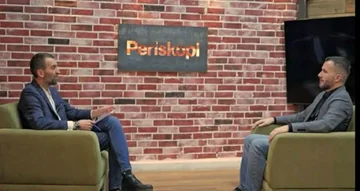
Periskopi(8 years ago)
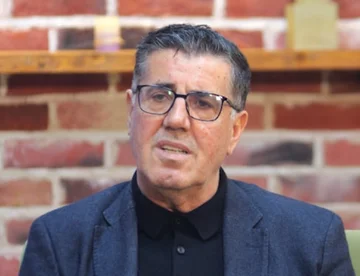
(8 years ago)The idea of exchanging territory or changing borders is morally problematic, if not even offensive proposals, but if this idea gets everyone's support in Kosovo and Serbia, the region could bring finalisation of borders after Yugoslavia's collapse, says US Council for Foreign Relations expert Charles Kupchan. Finally [...]
Kupchan has recently told the New York Times that the European Union and the United States should support this idea. Meanwhile, in this interview for Radio Free Europe, explains the arguments of this support, as “has said essentially is a peaceful form of ethnic cleansing”, and why according to him presidents Hashim Thaci and Aleksandar Vuciq should gain consensus on this idea in their countries, because, according to Kupchan, Berlin's opposition is not very significant.
Kupchan is convinced that a satisfied Serbia would in the future be an obstacle to Milorad Dodik's aspirations for Republika Srpska independence.
Kupchan also talks about how it is possible to close the door to Russian influence in the Balkans and why it is wrong to look at the Kosovo-Serbia agreement as a conspiracy by “kitchen” of Russian President Vladimir Putin and new right-right leader Stephen Bannon.
Radio Free Europe: Mr. Kupchan, your position is that the United States and the European Union should support a possible agreement between Kosovo President Hashim Thaci and Serbia's Aleksandar Vuciq on changing borders. Can you explain why?
Charles KupchanSee, I'm not someone who believes that the exchange of territories is something we should greet, in terms of the loss of the principles of pluralism, ethnic tolerance, and multiculturalism. And in some ways what I suggest is to support the fact that the situation in Kosovo and Serbia remains unresolved, and the fact that the Government of Serbia refuses to recognise Kosovo and that it continues to essentially keep the north of Kosovo under control, leaving that part without the interest of belonging to Kosovo.
Therefore, my view is that in the interest of establishing a final solution, and in exchange for Serbia to be persuaded to recognise Kosovo, the exchange of territories, while finding support in Kosovo and Serbia, but not only between Thaci and Vuciqi, but between the two parliaments and public opinion, is a proposal which has to move forward in the sense that it will try to finalise borders and politics in the Balkans as a result of Yugoslavia's collapse.
Radio Free Europe: One of your arguments is that the potential agreement on changing borders is essentially a peaceful form of ethnic cleansing, but it would still be okay to do it. How is that possible? Are criteria that low now? Isn't it done enough with ethnic cleansing in the Balkans?
Charles Kupchan: As I have said, I think morally the agreement is problematic if not offensive. And, accepting the transfer of the population and the fact that most Serbs do not want to live with Albanians and vice versa, it is a sad and disturbing tale.
But I believe that at some point someone has to accept with pragmatism on principles and I think that to some extent we're just this way. Its isolation from Serbia has been the acceptance of the need for drawing new borders through ethnic lines. And, I think that the exchange of territories that mean that Kosovo's north belongs to Serbia and a part of Presevo meets Kosovo is not essentially different from Kosovo's own independence.
Radio Free Europe: But don't you think people in the Balkans should learn to live with others no matter how different they are, instead of drawing borders and walls?
Charles Kupchan: Yes, I think that at the end of the day there is no alternative to tolerance, different ethnic and religious communities that live together without problems. But I also think that when you once try and remember that the war which effectively drove the Yugoslav army out of Kosovo was over 20 years ago, and that Kosovo's independence has been declared for 10 years, and you still have over 4 thousand NATO troops in Kosovo, at some point you tell yourself, "Listen, it's not working -- and let's try some alternative.
I also think it is reachable if not sure that normalising reports between Kosovo and Serbia at the end of the road will promote tolerance rather than undermine it, as it can lead to the Serbian government feeling satisfied rather than unhappy, and become someone who brings stability to the region and does not create problems.
On the other hand, Kosovo can gain a greater sense of normalisation and stability, and as a consequence, those Serbs who remain in Kosovo can contribute greatly to the country's future. It is important to remember that Kosovo has so far done excellent work in protecting minority rights, not only Serbs, but Roma and other minorities as well.
Radio Free Europe: The U.S. administration is already on the open show that it will support such an agreement. However, as you have already stressed in a writing that German Chancellor Angela Merkel strongly opposes this idea, on the other hand the chief of EU diplomacy Federica Mogerini and Commissioner Johannes Hahn are for. But, they are at the end of their mandate, meanwhile Chancellor Merkel is even further the most powerful leader in the EU, and she is likely to have the greatest impact on the election of the new EU administration. So how can it all end with these facts in mind?
Charles Kupchan: It's very difficult to predict, because as you stressed, there is no consensus within the Atlantic community, and there is no reconciliation from countries apart. John Bolton may have said that the positive “thing, listen if both sides agree to move on with this idea...”, however, there is very strong opposition to this idea.
I'm probably part of the minority in the United States in the belief that it makes sense to exchange territories if both sides agree. So this is more of a developing process.
I also think that the election of new leaders of the European Union and the Commission will not significantly affect whether individuals will support the exchange of territories. So I think the ball is actually on Thaci's side and Vucciki's. They should see if they can find consensus if they can reach internal consensus in their countries. If they do, then the ball passes to the United States and the European Union to decide whether to support them.
My argument has been that limited support from the US and the EU makes sense because through it there is a situation in which Thaci and Vuci feel they have a political shield and they continue to see if there is an agreement.
Radio Free Europe: But, do you think, citing the previous argument that Mrs. Merkel further is the most powerful leader in the EU and that it will surely have the greatest impact on future appointments to the EU administration, the presidents Thaci and Vuciq if they want a deal to do so quickly, instead of expecting the new EU administration. And is that, of course, possible when we consider that President Thaci does not have great support in Kosovo either by the government or by the opposition?
Charles Kupchan: I would say that the most difficult obstacle to reach the agreement we are negotiating, is neither in the EU nor in Merkel, but if Thaci can secure proper support in his country. Because, as you stressed, this is not a very popular proposal in Kosovo, so there is no great political support.
So when I look into the coming weeks and months, I don't think the main obstacle to exchange territories is Berlin, but certainly in Pristina, and that's where we need to focus our attention.
But, I think that since we have positive signals from Washington and Brussels, this helps build support for the Kosovo-Serbia agreement. This would make it safer for Thaci to find the right political moment for this.
I agree with you that for now political support in Kosovo is very small.
Radio Free Europe: Many other experts in the Balkans strongly oppose this proposal because they are concerned that a new drawing of the borders could trigger the opening of the Pandora Box, especially when it comes to Bosnia and Herzegovina, Macedonia and Albania. Why don't you have that kind of fear?
Charles Kupchan: Well, I don't think these worries are trivial or baseless. I think it's a real possibility in part, since we're only seeing that in Bosnian Serb Republika Srpska, Milorad Dodik is heading towards independence. In Macedonia we see a situation where reports between most Slavics and the Albanian minority remain problematic. It is understandable, therefore, that the exchange of territories would encourage ethnic tensions in other parts of the Balkans.
But, I think that in general the situation in any scenario, such as Macedonia, Bosnia, Serbia or Croatia, depends more on local events and trends within those countries and less on what happens in other parts of the Balkans. And as I mentioned earlier, if you reach agreement and Serbia finally says we feel that we have a deal we can live with, maybe Belgrade will play a positive role in the region. Then, instead of encouraging Republika Srpska's independence, it will begin to reject any steps in the direction of this idea.
Radio Free Europe: The situation in Bosnia and Herzegovina on the eve of elections that were envisioned on 7 October is not good. Not only local analysts and observers have said such a situation has never occurred again since the war. Do you think there is potential for something to happen and that talks on these topics can open Milorad Dodik's appetites? He basically very openly says he wants peace and that he would reconcile with a peaceful division of Bosnia and Herzegovina?
Charles Kupchan: I think the situation in Bosnia is very fragile and we looked at how Dodik is challenging Bosnian courts, challenging the EU and the United States. The US actually presented financial sanctions against Dodik because he focused on the road to possible independence.
So there is no dilemma that this is a disturbing situation, but I think the key difference between the Kosovo-Serbia situation and Bosnia Republika Srpska is that on one side we see in the exchange of consensus territories, and on the other side, we see a situation completely without a consensus. Dodik is walking this road completely without the support of the rest of Bosnia, and this creates a completely different situation. Of course, I should stress that if the Government of Kosovo did not support (the territorial exchange agreement) and there would be no consensus on it, neither would I support such an idea.
Radio Free Europe: But don't you think Milorad Dodik does not count on supporting some external factors, such as Russia, but also Serbia?
Charles KupchanI think he's counting on this. But part of my support for the deal ( Kosovo- Serbia) if it were with the consent of both sides, it is an attempt to move towards a situation in which Russia would be unable to use the reconstruction of conflicts to manipulate the region. As I stressed, one can see a situation in which Serbia starts towards investing stability in the region if there is agreement with Kosovo, which at the time would serve for Bosnian stability.
Radio Free Europe: You have also stressed that Serbia is a dominant player in the region, but that this player is balancing between Moscow and Brussels. Do you think that's a reason for concern?
Charles KupchanSee, I think Russians are good at manipulation of the situation. They're good at social networking. Currently, they are trying to block Macedonia on the road to NATO.
My opinion is that we do not know where this story of the entire Balkans' involvement in NATO and the European Union will end. To me, the main question is when and how this will happen and not whether it will happen. If you look at the EU that told Serbia and Kosovo “your perspective to join the EU depends on normalisation of the reports”, then if there is a plan for normalisation should be considered carefully.
So I think that at the end of the day, Russia will close the door in the region, because the region will join the EU, but the question now is how to get there.
Radio Free Europe: Many analysts think that the possible agreement between Kosovo and Serbia has gone directly into Russia's hands, and that is why Moscow is currently silent that it is not very common?
Charles Kupchan: You know, there are those who believe this proposal is Russian conspiracy that was designed with Stephen Bannon and others in the United States who want to see ethnic policy and nationalism flourish throughout Europe and the United States and I think there's little truth in it.
Yes, Bannon and his associates are on this road and are seeking to organise populist movements in different parts of Europe.
But, you know, I'm somebody I think this proposal (Kosovo agreement- Serbia is worth considering from the start, since Kosovo declared independence. I think others who support this idea also see it not as a way to try to divide the world through ethnic but otherwise. Being pragmatic, see this as a way to create stability between Kosovo and Serbia and achieve a finalisation of the region.
At the same time, I don't think it's useful to see this as conspiracy between Russian President Putin and Stephen Bannon and others who believe it's time to spread ethnic nationalism.