4 months ago
Thaci's idea more media debate than real debate on a substance

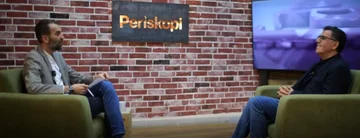
Periskopi(8 years ago)
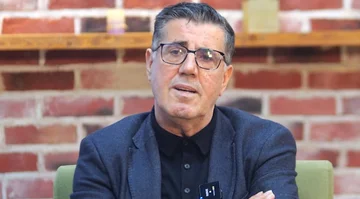
(8 years ago)Democratic Union for Integration in Macedonia Chairman Ali Ahmeti says in an interview for the Voice of America that debates on changing borders are more mediatic, while there is no platform designed and written on which to negotiate. He values the idea as a need for line note [...]
He praises the idea as a need for marking Kosovo's border line with Serbia, while saying historical problems cannot be solved. Ahmeti underlines that debate on the issue does not produce negative effects on security in the region.
Voice of America: Mr. Ahmeti, how do you view debates about changing or correcting the borders between Kosovo and Serbia, and could this idea be realised under peaceful conditions?
Ali Ahmeti: As for this debate, I say it is more like a media debate than a platform applying for solutions. Demarkation with Serbia will not be an easy issue, as has not been easy even to mark demarcation lines with Montenegro and the Republic of Macedonia. I think many times this note will be harder. I think there is not yet a debate that would be supported in fact, that would be based on the platforms of the parties in the negotiations, but one thing is known that Kosovo after the completion of the demarcation with the two neighbouring countries, both Macedonia and Montenegro should make the demarcation of border lines and Serbia, because Kosovo should be admitted to international organisations both at the UN and other international bodies. Of course, Serbia is one of the countries that presents major obstacles in this direction, so the sooner that problem closes, the better it would be for both countries, even for Serbia and for Kosovo, because we cannot have a stable region having such conflicts between states in the Western Balkans region.
I think this conflict, as historical as it is, is problematic because it is known across the world that great injustice has been done in the direction of the division of territories, of the displacement of Albanians from their autochtons. Now, if we went back to the historical context, this problem could certainly never be solved. But we have to go back to rationality, reason, because this problem is now political and as such it has to be solved. The parties must set the issue up for settlement. I think Kosovo has had allies, partners, had NATO, the US, the EU, and further more important partners have these same countries and organisations and this problem, I think without facilitating these international mechanisms: the relief the EU will make, the support the United States will give this relief and NATO... Kosovo has its own authorities, its institutions starting with the president, prime minister, Parliament Speaker, the opposition that is also organised. Also, I think this issue will be discussed at all levels because it is not a matter of a state mechanism, but it is a question of what thought, analysis and all the management and law enforcement bodies in the Republic of Kosovo need to take responsibility.
Voice of America: Mr. Ahmeti, the opening of the concept of changing borders has faced strong opposition to almost all political parties in Kosovo, even German Chancellor Angela Merkel has voiced opposition. What effect do you think this idea can have in the region, specifically in Macedonia?
Ali Ahmeti: The issue is discussed between the two sides, which have a dispute. I mean, between the Albanian and Serb sides (Kosovo). And I think that if a reconciliation is reached between the parties that will negotiate in the future, while I think that this path should pass, I don't think there can be consequences for neighbouring countries like the Republic of Macedonia and Montenegro. Montenegro is now in NATO; Macedonia has received an invitation for NATO membership. We're in good process doing things. And in this case, if the parties peacefully dialogue and agree to note the demarcation lines, I don't think there will be negative effects within these states. But if solutions are imposed, of course, this would not reflect well in the region, not only in Macedonia but throughout the Western Balkans region. Because so matters would be opened up from different backgrounds, different historical conflicts, and if we were called into historical conflicts, these issues could never be solved. The issue of displacement of Albanians from 1878 cannot be fixed, following the St. Stefan Conference to the injustices that have been done to Albanians at the Versailles Conference, and this should be said out loud. I think much more useful would be for all of us and for all sides that have disputes among them, to be called more into Euro-Atlantic processes, in Euro-integration processes. Very important is for our region until twenty years ago troubled by the wars of great bloodshed, so that today the hand of reconciliation and understanding can extend and as a whole be part of the European Union. Only integration processes can ensure a more peaceful region and can ensure a stronger dynamic towards membership of all those countries in the EU. Because, if history were to open up... it's painful and we could never sort out the issues that were caused in the past.
Voice of America: Have you had these days of communication with President Thaci and other Kosovo state and political leaders since you have been collaborators and longtime collaborators with them and what epilogue do you specifically expect from this whole idea?
Ali Ahmeti: I have had meetings with Kosovo authorities; I also had a good meeting with President Thaci. Really, so far I can't say there's something that can be discussed on something offered by the parties. All that is done so far is a media debate rather than a real debate over a substance for the parties to give thought. I think neither the international community nor direct facilitator here will have Brussels and other international mechanisms. Still in the Kosovo institutions, as far as I was informed, there is no drafted and written platform on which to negotiate. Above all, it was for President Thaci that this moment should get epilogue and that epilogue should be positive because it is in the benefit not only of Kosovo, not only of Serbia but also of the entire region. And I think these talks can begin not too far.
Voice of America: There are thoughts that debates over borders will have negative effects on the expected referendum on changing Macedonia's name. What do you think, Mr. President? Ahmeti?
Ali Ahmeti: I don't think that these issues -- this open debate -- can reflect negatively in the Republic of Macedonia, much more in organising the referendum. Citizens in the Republic of Macedonia are aware that we are at a historic moment: on September 30th the referendum is held, and by the end of December 2018 constitutional changes must also take place to ratify the invitation for NATO membership of the Republic of Macedonia and open up the corresponding dialogue towards Macedonia's EU membership, though the dialogue is really open, but is formally expected in June of next year. So, for our region and for our country greater priority than membership in NATO and the EU... I don't think there's any safer and better alternative. The only alternative, not just for us but for the entire region, is to have stability, peace, development and prosperity. We should not waste time but be active and implement our programs that provide us with the benefits mentioned above.
Voice of America: Mr. Ahmeti, are Macedonia's Albanians factors that could seal the outcome of the referendum on changing Macedonia's name and on the other hand, risk deepening the interethnic gap now that the nationalist rhetoric of the rightist parties has increased?
Ali Ahmeti: The issues related to stability, with security, with good neighbourlyity, are not only in the benefit of Albanians. And responsibility ahead of these so important processes has all citizens of the Republic of Macedonia. I think the referendums should answer the vast majority of citizens. The effects, of course, are good and there is no reason to enter the ethnic race regarding the agreement between the Greek side and the Republic of Macedonia. Because, by this agreement, not only are Albanians, but all communities living in the Republic of Macedonia and upholders of sovereignty and integrity are all citizens of this country, and from this moment all benefit. We need to be close to each other and together to build the future because our responsibility lies with all of us.
Voice of America: What is DUI's position regarding opposition demands for early parliamentary elections?
Ali Ahmeti: This is an issue that will be discussed not only at the party level but also at our meetings with the opposition. What is state interest, what is in the interest of accelerating European integration processes, would be acceptable to DUI. It takes agreement on all sides and we would not prevent the election from being held in the presidential election (May 2019) deadline. But it will depend on talks and agreements that will be reached among political parties. DUI is not a party that undermines the processes. It is the party that has helped and will help bring the parties together and in driving the processes towards eventual implementation.
Voice of America: Mr. Ahmeti, how did you comment on the voices in some media for claims by the structure within DUI for your replacement in the party leadership post?
Ali Ahmeti: I have no such announcements, though it would be good if there is such a race. I am more committed to making a much stronger DUI to make a strategy for the next 20 years of what the Democratic Union for Integration will look like. We have closed a historic chapter, nearly 20 years, where DUI has been the winner in all election cycles. Now we are at the moment of discussion the strategy for platform and philosophy of the next 20 years of DUI.