6 minutes ago
What should the opposition do about exchanging territories?

Periskopi(8 years ago)
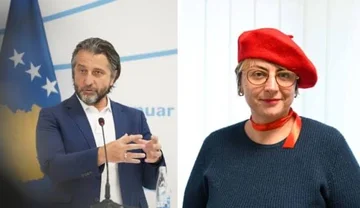
(8 years ago)The idea of exchanging territories between Kosovo and Serbia has origin in Belgrade with the goal of avoiding Kosovo's recognition, according to Roland John, a researcher for interethnic conflicts at Dublin University College. In a Facebook post, he listed five “giant devices” of the disk on border correction. As the first point [...]
The idea of exchanging territories between Kosovo and Serbia has origin in Belgrade with the goal of avoiding Kosovo's recognition, according to Roland John, a researcher for interethnic conflicts at Dublin University College.
In a Facebook post, he listed five “giant devices” of the disk on border correction.
As a first point, he has said that exchanging territories is not the result of changing US and EU policy, but the source of the proposal is the Serbian leadership's desire to avoid recognising Kosovo's citizenship for an indefinite time. So the origin of the proposal is neither in Brussels nor Washington nor in Pristina, but in Belgrade and the fundamental reason is the decline of international interest for the Balkans and Kosovo”, it has written.
At the second point, John has stressed that it is not important for Serbia how long the correction of the borders lasts, but only opening the process brings immediate benefits. He has said that the “exchange of territories is not the grand finale”.
Any bilateral process or international conference preceding bilateral recognition suspends Kosovo's citizenship and international subjectivity. Meanwhile, in the international arena Serbia is designed as a flexible, taboo-free state with no red lines of”, John points out, writes Koha.net.
According to John, the exchange of territories does not ensure Kosovo membership in the UN and that “is the classic fraud that Russia and China will accept any solution the parties agree on”. He has said Russia has no equal interests with Serbia in the Balkans, and China is not obliged to veto them on topics where no benefits are made.
John sees fraud as well as the idea that Spain and other non-recognised states that are part of the European Union will recognise Kosovo “seeing the great love between Kosovo leaders and Serbia”.
The true “is that Serbia is speeding up the integration process as it has been from 2011 to today, while Kosovo has a vague European future in the current EU situation”, John explains.
He has also cited the restrictions of Ahtisaari's Pacos and the Kosovo union ban with other states. According to him, these will remain in force as part of the guarantees for preserving stability in Bosnia and Macedonia.
“is the other topic whether Albanians plan and capacity to move towards joining international restrictions, but it is important to know that the restriction Kosovo has accepted in 2008 from this process”, John added.
In the end, John has added that Serbia expects new concessions from Kosovo, but without being obliged to recognise Kosovo's citizenship at the end of the process, while Kosovo expects favour from Serbia that does not have it in its hands, but it has Russia, China, the UN and the five non-recognitional states in the European Union.
On the other hand, Blerim Vela, a researcher for parliamentary issues at Susex University, has spoken about the opposition parties' recent initiative for extraordinary hearings to debate negotiations where border corrections can be discussed. The session is expected to propose for approval the resolution with just one point, which says Kosovo's territory is one and inseparable, and that no one has the mandate to negotiate Kosovo's territory.
According to Vela, the opposition should not propose adoption of the resolution, but appears to propose the adoption of the draft law for the negotiating process with Serbia.
In a Facebook post, Vela has said this initiative is welcome, but the means by which the halting of the process is aimed is unadequate.
It seems that for opposition parliamentary parties, the adoption of resolutions in the Assembly presents the only possibility for opposing power or executive experts. But the Parliament's strongest weapon in relation to the executive (government and presidency) is the adoption of laws. Such an initiative would create clear legal standards which are binding for each institution. Not one, but if 100 resolutions are adopted, which are more of a political expression than of legal restrictions/authorisation”, he wrote.
Vela has said the bill would have to put the decision-making process center “being informed all the time and defining institutions that would lead with the negotiator process”.
The “Oposor should know that there are no quick and easy solutions to complex problems such as the case of violating territorial integrity during the negotiation process between the two presidents. So let's get serious and get their hands in and really work on drafting the bill and adopt it in the Assembly”, he added, pointing out at the bottom that “anything else is just improvised”.