4 minutes ago
Kosovo state reserves cover needs of only 20,000

Periskopi(8 years ago)
(8 years ago)In the event of major natural disasters or war, Kosovo has reservations to cover the needs of 20 thousand people in length for 20 days. The collection of state reserves has been under way for five years. They can be exploited for the need to supply in cases of war or various natural disasters, officials responsible say. In [...]
The collection of state reserves has been under way for five years. They can be exploited for the need to supply in cases of war or various natural disasters, officials responsible say.
In the Ministry of Trade and Industry in a response to Radio Free Europe, they say the annual “budget for state reserves is estimated significant, but that they have not provided any financial value to”.
But in the medium-term Strategic Plan and the annual Programme of the 2016 State Banks Reserves, 2018, the total of the annual goods value totals over 363 thousand euros.
According to this plan, state reserves are mainly food products, which according to the Ministry of Trade and Industry are the <x0-> that are enough and the money in terms of”.
Based on the Law on State Reserves, the criterion for determining the amount is taken from the population and the type of product, where countries according to their priorities and economic power provide goods.
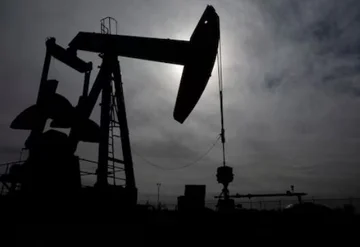
Given these practices as well as the opportunities Kosovo has, it is planned that for the needs of the State Reserve of Goods, in case of emergency, the provision of wheat (which benefits flour) will be made in 20 days for the entire population, sugar for 15 days for 20,000 inhabitants, while oil and its derivatives are reserved for three days of total annual imports.
In the meantime, other non - food items are planned for the needs of the 20,000 inhabitants.
On the other hand, according to connoisseurs, state reserves for citizens' needs in possible emergency cases are insufficient.
Nazmi Mustafa, rector at International Management College “Globus”, for Radio Free Europe, says state reserves depend on the state budget, so according to him, Kosovo's budget does not enable greater amounts of state reserves.
Kosovo's overall budget for this year is about two billion euros.
“In the sense of a state and for what state reserves are envisioned, Kosovo's overall budget is very small. So the reserves are insufficient and small. The budget of a state, but also of Kosovo, is dependent on economic development. There Kosovo has lost its” step, Mustafa tells Radio Free Europe.
Mustafa, however, stresses that competent authority has had to amass more amounts of reserves, mainly amounts of wheat.
The state's “Rezeros are of three categories: the state must have a monetary reserve, reserves of commercial goods and reserves of strategic goods”.
The selection does not know in which category Kosovo institutions have defined it, but wheat is a product that should be favoured with greater reserves. Because it is a purchase from producers and in extraordinary cases can be used or transformed for the state, even as commercial reserves, if the Kosovo market needs export”, Mustafa said.
Otherwise, products considered state reserves are managed by the State Reserve Department, which is within the framework of the Ministry of Trade and Industry.
While under the legislation, private security economic operators, who are also constantly monitored, are contracted, while their location under law in power, remains state secret.
In addition to state goods reserves, the Government of Kosovo annually shares state budget reserves, half of which have been spent in the first three months of this year.
According to Ministry of Finance officials, of about 4m and 800 thousand euros have been allocated as state reserves under this year's Annual Budget Law, more than 2m euros have been spent until the first week of March.