4 months ago
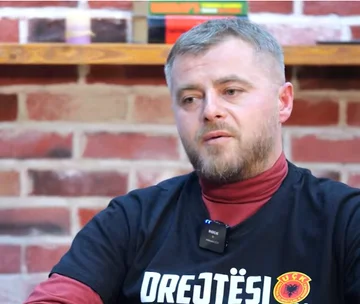
Jakup Krasniqi: Take seriously Angela Merkel, overhauling Kosovo's risk borders

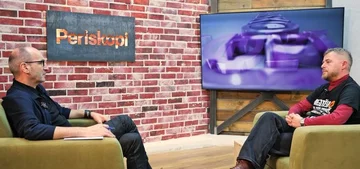
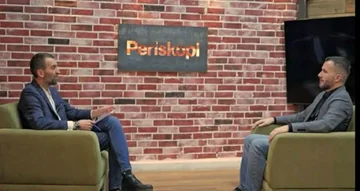
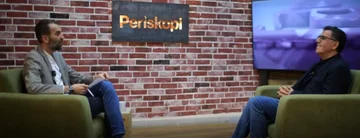
Periskopi(8 years ago)
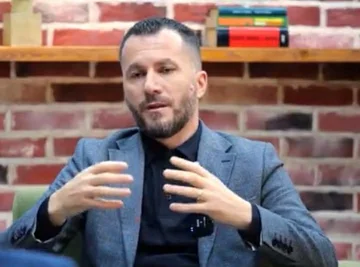
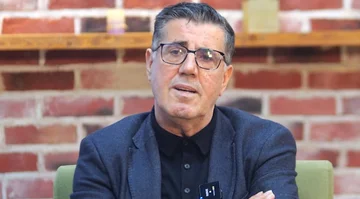
(8 years ago)Former Kosovo Assembly head Jakup Krasniqi says that restructuring the border with Serbia endangers the northern part of Kosovo. He says Chancellor Angela Merkel's declaration of borders should be taken seriously by Kosovo institutions, while the idea of border correction praises it against the Constitution. He also speaks of silence in this interview. [...]
He says Chancellor Angela Merkel's declaration of borders should be taken seriously by Kosovo institutions, while the idea of border correction praises it against the Constitution. He also speaks of the silence of the Kosovo Academy of Sciences and Arts on top of important issues.
Radio Kosova: Mr. Krasniqi, you have been part of important events in the country, both during the war and after it, including Kosovo's declaration of independence. We are currently in the final phase of the dialogue, according to you, is it possible to reach a binding agreement for both sides leading to mutual normalisation and recognition?
Jakup Krasniqi: The language of communication used by high officials in both countries gives me little hope of normalization and mutual recognition, and my fear is especially enhanced by the patriotic language used by the high officials of our country. Those patrioticly cover their political failures, on the other side in the last 30 years Belgrade has shown it does not respect any agreements. For example: Belgrade requires the implementation of the comprehensive document on resolving Kosovo's final status only where it corresponds to them, and thus it is difficult to achieve until normalising relations, and this difficulty comes to the fact that maybe Kosovo has never had to start talks with Serbia with Brussels' mediation...
How do you assess the country's recent declarations that under dialogue, there will be correction of the border in Serbia, joining the Presevo Valley with Kosovo. How did you comment on this situation, taking into account even the controversial voices of that attitude?
But if the president talks about uniting Eastern Kosovo, then he has to say clearly, which is the counterweight of this. Why would I say that? There is no way to achieve a normalisation of relations with Serbia by urging Presevo, a part of Bujanovac and Medvedja ready to be populated by the Albanian population and not to give anything. It means here directly the northern part of Kosovo is at risk, and this does not coincide with Kosovo. The very opening of this issue under these circumstances is unfavourable for the Kosovo side, so perhaps the media should insist on asking the president how he intends to unite eastern Kosovo. It means the answer should come from him..
Now there is also Chancellor Angela Merkel's stance, which is declared against changing borders in the Balkans, how should this message be taken from Kosovo?
Other messages of this nature came from countries of the West, even lower levels. I think this is the most significant message coming from the head of a more powerful European Union state and this should be taken seriously. So, the European Union as it seems other Western countries are not willing to open the border issue. I think that this opening, as it has been, at least convenes Kosovo and Albanians. This is an irresponsibly open subject, unprepared, untested and impossible to carry out. All that is needed in this phase of dialogue between Kosovo and Serbia would require recognition of Kosovo at the borders on which independence was declared. Any departure, and any attempt to create new problems, is difficult to solve, and here Kosovo cannot afford to win even the fact that Western statements, particularly German Chancellor, I think are the most clear message that Kosovo institutions can be given.
The president called this a wonderful message, how do you evaluate his reaction?
It is difficult for a person to comment the statements of people who change over and over again...
Is the Constitution violated with border correction?
If we bear in mind that Kosovo is an independent, sovereign and democratic state, declared on February 17th 2008, at the existing borders is violating the Constitution and is really not the first time that in Kosovo by its own institutions, by its most responsible people the Constitution is not respected and there is a very limited implementation of laws in Kosovo. From this bad practice, the sooner we must leave and respect the Constitution and the laws adopted in the Assembly.
How do you assess the controversial idea that because of statements regarding “correction of borders” between Kosovo and Serbia, the Constitutional Court's opinion is required?
The Constitutional Court has so far made decisions often that have not been consistent with Kosovo's interest. I don't know how prepared and capable of giving her independent and autonomous opinion, but such statements that violate the sovereign boundaries of the state I don't think would have to come either from other institutions and let alone a man who holds a position and has the responsibility to defend the country's constitution and legitimacy in the country.
Meanwhile, we still do not have a consensus among political parties. There are voices opposing the process of being led by the president. They view it as a credit institution for such a thing. Why is this inner consensus so difficult to reach?
I think that during these years a political culture has been created more rejecting than compatible with necessities. I am aware that in democracy there is no consensus for everything, but if we consider the path Kosovo has passed, the difficulties of walking it, even after declaring its independence, I think that politics in Kosovo should have some common elements, or, as I say, Kosovo should have some common values even among political subjects. But this culture has not been installed since the beginning of democratic processes in the 1990s, has continued even after the war, and we are not reaching out for issues for which we need to have consensus to create that consensus. Consensus in this case is very necessary.
Returning to dialogue should the dialogue with Serbia lead the country's president?
But we have an experience of that dialogue. Although I was initially against political dialogue, yet this dialogue is already under way. The government has led the dialogue, even when the government has led the country to have president, actually president, and since issues have to do mainly in the government's field activity, this issue is completely Government. One thing we need to know, Serbia is about a presidential state, the president appoints the candidate for prime minister, and if we compare the responsibility now, our president's responsibility is not the same as the responsibility of the president of Serbia. Our prime minister's competencies are almost equivalent to the competencies of the president of Serbia, which the president of Kosovo does not have. It means with the Constitution the country's main responsibility for governance, rather than the president, has the Government of Kosovo. Although Prime Minister Haradinaj, who I think for no reason but at the looks of the president, has given up on competencies, but giving up the competencies that the Constitution gives, I think is not good for the country's prime minister.
However, we also have the silence of the Academy of Sciences, in the face of recent developments, especially when it comes to territory, and if we compare with the Academy of Sciences of Serbia, it is very loud?
But if the commitments of the Academy of Sciences of Serbia that have nearly led all political attitudes and decisions in Serbia are truly compared to that of Kosovo, which is very inert, very silent, very silent, hardly operational for any important process that Kosovo has gone through, we can also say we have an academy of science and arts. The bad news is that in nearly all scientific institutions and scientific institutions in Kosovo, during these years there have been political interference and more government spokeers than giving scientific thought to helping state institutions find the best possible way.
How do you assess the function of the Assembly when it is constantly neither in physical presence nor in decision making?
Currently, the main problem of non-function of the Assembly is not always in the Assembly, so it's with political parties that are represented in the Assembly. I think that in our society, in the first place, there is a general and honest debate in the very ranks of political parties, and when we don't have a literal debate, the debate on which it comes to the decisions of a political subject, the practice of non-debat, of failing to make responsible decisions is carried to the Assembly. This is a challenge. The second challenge is that now the ruling coalition does not have the necessary parliamentary majority because the Serbian List is boycotting it, so now neither the position nor the opposition has the sufficient number to make decisions, either to make the motion to make decisions for the adoption of laws and many other decisions the assembly must take. On the other hand, there is a lot of disregard for office on the part of representatives in the assembly, I think that this is shown to both its leaders and the MPs, and in a situation like this, as the Parliament is, there is difficulty in making the right decisions.
Actually, is the LDK's idea of holding elections, that there will be solutions to actual processes?
Choices are often solutions, but in this case I don't know... It means there is a challenge in the three main state institutions -- in Parliament, in Presidencys and Governments -- that means Parliament and Government do not have the necessary numbers to make decisions in the Assembly, as the Assembly legitimises many actions, laws and other government decisions. I think even if you go to the elections again we'll have this presedan, and I don't believe that with this ratio that's in the middle of institutions, there might be any changes to the election. I think that Kosovo society needs a real debate, a debate that needs to change the approach of many things and make common decisions that are in the interest of the country. Unfortunately, I do not see that this can be achieved in the Assembly, because the will to reach a consensus on the necessary issues must be reached among political parties represented in the Assembly.
Mr. Krasniqi, does Kosovo threaten the risk with the Association of Serb-run municipalities, since they are insisting that the draft statute of this association be made under the Brussels Agreement, and that the Constitutional Court has found incompatible with the Constitution?
I have often given my controversial opinion on this issue, the Government of Kosovo should clearly say. Kosovo has the association of its municipalities, this association has the basis in the European Charter for decentralisation of power, has the basis in the comprehensive document for resolving Kosovo's political status, that is, the Ahtisaari document, and in the Constitution and such an association that exists for most Albanian municipalities it should also be applied to municipalities that are majority Serbs in the Republic of Kosovo.
Mr. Krasniqi, if you finally have something to add, even though our interview was more focused on the idea of correcting borders, what do you realize you're against?
I am opposed because I am aware that Kosovo is in the phase that should be recognised as a state by Serbia and other countries that have not recognised it, especially those of the European Union on the borders on which independence has been declared, on the border on which talks in Vienna and so on. If Serbia and Kosovo normalise relations, then in another phase of mutual recognition can be negotiated if there is anything to talk about. But, I think that at this stage Serbia should see to it that Kosovo respects the rights of Serbian citizens in Kosovo under the Constitution, and also Kosovo should be strongly interested in having as Serbia requires respect the rights of Serbian citizens in Kosovo. Kosovo should demand that citizens' rights in Serbia, which are not really just in the Presevo Valley, but Albanians also have Tutinje, Albanians also have in Novi Pazar and throughout Serbia.