4 months ago
Even Bujar Nishani opposes Hashim Thaci's idea

Periskopi(8 years ago)
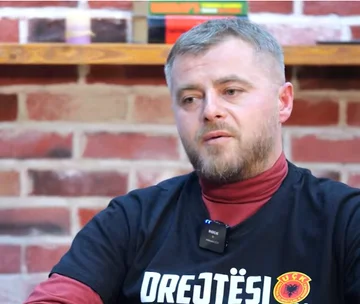
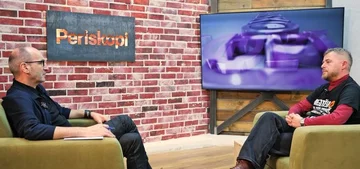
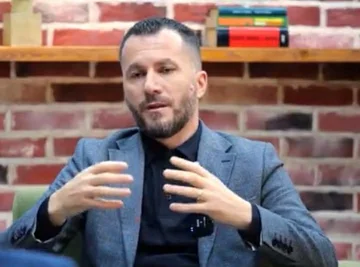
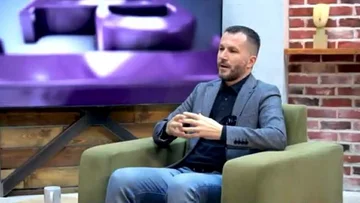
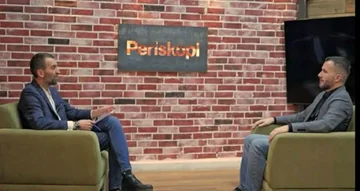
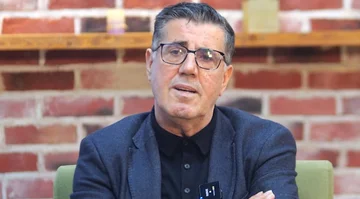
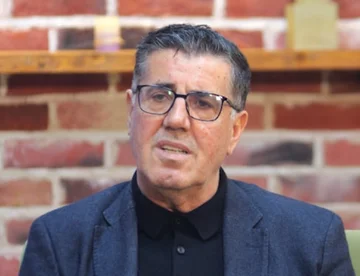
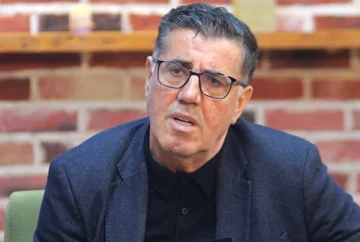
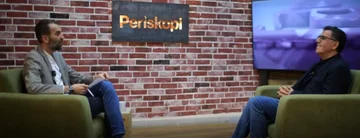
(8 years ago)Former President Bujar Nishani in an interview given Report Tv speaks of the latest developments related to Kosovo, NATO's decision to turn it into a base of its former Kucova military airport, the Vetting process, as well as the latest developments in the opposition Bay, and how Eddi is governing [...]
So, in this context, we can clearly say that, any tendency or attempt to create a model of the new influence of territories, of internationally recognised borders after the breakup of the former Yugoslavia, between Kosovo and Serbia, is obviously a problem of regional confrontation. And not in vain, we have seen recently, that even the policy of some of the other countries in our region, in the Balkans, as it is in Macedonia for example, has reacted immediately against these trends, against these projects or against these” goals, Nishani has indicated.
Mr. Nishani, I would like to start this interview with the latest developments in Kosovo. Does President Hashim Thaci's proposal for redressing borders and mutual recognition seem fair to you?
First of all, I would say that we have no clear information, of course we are not talking about details, but about the essence of what is being considered with the correction of the borders, what the president of Kosovo or even other Kosovo interlocutors in the dialogue with Serbia, that this is obviously an issue referring to dialogue between Kosovo and Serbia. So there's nothing clear on this matter. But since there is nothing clear and a slightly more detailed explanation, all of this is understood as an exchange of territories, for if there is a limit correction, there will be a two - way correction. There can be no unilateral correction of the border. The mutual correction of the border, in my own sense and political, institutional, legal and human logic, means there will be an exchange of territories. This is a long-standing Serbian proposal that the Serbian government has long since lost war as one of the major actors of wars following the breakup of the former Yugoslavia, Serbia has come up with the theory of retaking some territories in the context of a territorial exchange formula. I have judged and continued to judge it as a serious provocation, overall for the stability and stability of the Western Balkan region. It's like insulating a permanent nail of instability, as the boundaries defined after the non-consecutive break-up of the former Yugoslavia, we have a new reality, a reality which has been recognised by the international community, we have several new states, we don't only have Kosovo, we have from Slovenia, Croatia, Bosnia and Herzegovina, Montenegro, Serbia and Macedonia, and put the whole region into a psychosis, in the first place, and then in a political-inumatic commitment, and state redefining of borders in the Western Balkans, which means the area of 10 years ago or 15 years ago, although it was part of the continent as the most civilized continent, war, genocide, and violence, and violence, and the change of this environment, and the conflict, and the conflict, and the conflict, which will bring this change of the environment, and the conflict, and the change of the conflict, and the conflict, and the conflict, that's of this idea, and the conflict, and the conflict, that's changing of the conflict, and the mind. So I say that this tendency and this approach that comes from Serbia, but, of course, with sponsorship of anti-euroatlantist axis actors, which, unfortunately, has created some impacts on our continent's space, means that you keep alive the spirit of instability, uncertainty and the promotion of conflict.
Mr. Nishani, can we say that President Thaci with this statement simply wanted to test Serbia and the international factor in Kosovo?
I think, in my view, that the president of the Republic of Kosovo has wanted to make public, what we can say in the form of pressure may have been done during negotiations, to publicize what has been put on the table of discussion. And I believe that, better to be made public because it is also in a way aided by the Albanian attitude and discussing it, I believe that even more stable, more logical, more politically and institutionally mature arguments arise to oppose this provocation of Serbia and other pro-Serb actors. So, I think that the fact that was made public, not that it wasn't known or launched before, but that when it's brought into question as an attitude of the Kosovo authorities, you get another cootation, you get another approach, and I believe it's like a better phenomenon that is launched and put into public discussion, rather than secretly held, secretly, and punished in some way in the end, in the political sense of the word. I believe that all reactions coming from the Albanian world in Kosovo, Albania, the diaspora, the intellectual thought and I believe that these days have obviously been demonstrated the attitude of an overwhelming majority in the Albanian world, that Serbia's tendency, Serbia's intention to represent the process of dialogue between Kosovo and Serbia to a point, which is thus about exchanging territories or with the so-called correctional framework of borders, is not only at the expense of stability and peace, but at the expense of all the positive processes that have passed in the past but that have brought positive contributions to and at peace. I believe that the time has come for Serbia to understand that, along with the end of the Cold War, it has ended in the Balkan region of Serbian hegemonia. Serbia must comply with the model of international co-existence, good neighbourly, understanding and reconciliation with all other countries in the region. This will be good for Serbia, this will be good for the Serbian people, this is good for all the peoples of our region, this is good for our common future. Fortunately, we have a mechanism that facilitates both perception and mentality and culture and institutional behaviour, such as that of the European integration process. And keeping this process alive helps all sides. But, after all, Serbia must understand that the cold war is over and Serbian hegemonism over other countries and over other peoples is over.
If President Thaci wants to insist on this proposal, will this serve a possible new conflict between Kosovo and Serbia?
It is no longer a matter of redefining borders. The exchange of territories between the two states in the region no longer remains as a problem or as a matter of debate and confrontation between these two states, but turns into a regional issue. We have seen that conflicts in the Balkan region have been conflicts among many states. Serbia has been at odds with Croatia, with Montenegro, with Bosnia and Herzegovina, with Kosovo, with Macedonia, and continues to have several other conflicts. So the clash between two states, especially in terms of territories, automatically in the Balkans turns into an issue of confrontation, conflict and regional instability. So she's so sensitive and so sensitive. No wonder the Albanian factor is spoken of and said to be the factor of stability in the region, the fact that we have today Albanians scattered and living in several Western Balkan states, and the fact that these states have this stability today is also due to the important contribution of the Albanian factor. So in this context, we can clearly say that, any tendency or attempt to create a model of youth the influence of territories, of internationally recognised borders after the breakup of the former Yugoslavia, between Kosovo and Serbia, is obviously a regional problem. And not in vain, we have seen recently, that even the policy of some other countries in our region, in the Balkans, as it is in Macedonia, has reacted immediately against these trends, against these projects or against these goals.
Consider another development. How did you expect the news that Kuchova Air Base will be taken into use by NATO?
First, this is news, which has only been made public through the Facebook of Albania's prime minister. Establishing military access, of whether this Alliance's operational or logistics base in Albania, is very important news, not welcome, but would be news with an impact on the region's history. For this importance that it has as a phenomenon or as a matter, I think it's not serious to get this news, as far as it might be true, from Albania's prime minister's Facebook. First, in my experience, news of opening new Alliance bases can announce Secretary General NATO, or Commander of the Military Committee or Supreme Allied Forces Commander in Europe. Anyway, I take well on the announcement the prime minister made, although I don't join in the form and way he found it to convey or launder it. It could also be an extension of the military capacities that Albania has and not just a literal basis. But, in Albania, there has been a great need for a greater presence of the Alliance, taking into consideration several reasons. First, Balkan stability continues to remain fragile. Second, there is a restoration of modernisation and military empowerment of the North Atlantic Alliance, following the recent summit of this Alliance in Brussels. Thirdly, Serbia has progressed rapidly through the Nis base, alluding Russian resources to the Balkan region. Today's hot war has been replaced by what we call hybrid warfare and it brings various dangers, which require that they be faced in forms that are not just the content of the tank's throat or the rocket, but there are different forms of prevention and discouragement about the dangers that may come, which are asymmetrical. So such a presence of the North Atlantic Alliance in Albania would be extremely important, for the fact that today in the region, which coincides with NATO's southern wing, Croatia and Albania are the two main pillows of the Euro-Atlantic base, in terms of security issues. So it will be a positive development of NATO's expansion and strengthening of the southern wing and Albania can offer this capacity, but it remains to be seen in reality what this project is and in what dimension it will develop.
During the time when you were president of the Republic at once and Commander General of Armed Forces, were there similar demands from NATO or our strategic partners to have their bases in Albania?
Such projects are always discussed with the government. We are a parliamentary republic, the executive is the power that makes the decisions, the president of the Republic really holds the post of Commander-in-chief of the Armed Forces, but in peace time these delegate to the Chief of General Staff, delegate to the minister of defence, delegate it to the president of the government. So all negotiations and security talks are always made with the government. There have always been and continues to be, as long as Albania is a NATO member, contacts and planning, all plans, this is the task of NATO and the governments of the respective countries.
Since Vetting started, you've been very active with your Facebook comments, where you say the Vetting process is being corrupted and degraded. Let's take one of those findings of yours. Why do you think it's being corrupted while the internationals are part of this process?
First of all, I want to start my answer with confirmation that the Vetting principle, as a principle that especially in the societies of new democracies such as Albania, where there is still, let's say, huge gaps in state building or in functioning institutions, so Vetting specifically in social groups that are related to public resource management, is a necessary and necessary process, when there are indicators of abuse of power in relation to public or state resource management. In justice reform, Vetting was a necessary process, it was a necessary principle.
Late?
I can't say late, but I can say it's only timely that we found that the previous mechanisms, instead of helping to function, were constantly undermined. So, I'm talking about the KLD, the way the different inspectors worked at the Ministry of Justice and so on. So these mechanisms that were built, instead of helping, were undermined.
Politics? Who was it?Politics, of course. Absolutely. We can't say citizenship. And since they came to such a conclusion that they were not allowed to function, a new formula was required and this formula was consistent with politics, with constitutional changes, made in July 2016. In that sense, I can say that Vetting was a necessary process and created enormous expectations in public opinion, for all of us. I have followed it very closely and really had a hope that the process, although entrusted to a body of people who as individuals can be very honorable people. I don't personally know any of them, and I have no prejudice against them. But he was entrusted to humans to exercise a trial process without being formed, specialized, trained, not a single day as judges. So, Vetting is based on a trial process. There's a trial. At a time that people who may be highly honored in their personal and professional lives as individuals have no background as judges. Beyond that, I hoped that because of the monitoring coming from the international factor, we would have a solid standardization of the criteria of the process. What brought my disappointment and my judgment that this process is being corrupted and degraded is exactly the conclusion that, at its beginning, double standards were applied to prosecutors and judges who had almost similar problems. And I've mentioned concrete examples on previous occasions. If a prosecutor is convicted, criminalised, expelled from the system only because of the suspicion that he had bought a “Fuoritrada” used and another judge is held and passed the Vetting process, so positively assessed, although he does not justify, but some properties on the coast, then that's a strong verdict. If a judge is told that he does not cross Vetting because his grandson has been identified as a drug user and someone else who has businesses in public services, in the public budget with characters who are now publicly known today as the main beneficiaries of the public budget and there is no excuse for this tax activity, taxes at the state address, then that is a double standard. If one prosecutor is expelled for the fact that his retired parents do not fully justify the amount of attic they have made in the house which they have had since the time of dictatorship, and another goes through and is absolutely appreciated, while there is a whole building built without permission and unjustified, then these are standards that automatically convince us that we no longer have an impartial process, we no longer have a process that is aimed at cleaning up the justice system from the corrupt, but that we have to do with an effective process, which in my judgment, as long as I don't have evidence that this approach to individual corruptness, but that automatically becomes political for corruption. So this is a process not only won't restore and restore trust in public opinion, but it's definitely going to leave it open as a long-standing wound, even the Vetting itself process.
Of those who have so far been involved in Vetting half have not passed. Is this an indication of how rotten and degraded our justice system is?
We have serious problems in the justice system and it is not the only system that we have problems. It has often been the debate - is it the system or is it the individual? Does the individual make the system or does the system make the individual? I've always been against getting into this debate: does the chicken make the egg or does it make the chicken eggs? We're in a society where the culture of corruption has become wandering, unfortunately. And of course it's a culture that's generated for years. What has constantly concerned me is that the approach to corruption phenomenon, the fight against corruption phenomenon that is not only Albanian, although it has come from deepening as a phenomenon, has not come to aggravating the war against him, but has come to break apart, being the most dangerous of his wars. And that's the biggest problem we have. No doubt more could have left the justice system with the criteria set. If we get into other systems, if we get into politics, we make a Vetting with the same rationality.
You need a Vetting in politics? I personally stand for a Vetting process in politics, but a process which is a real political process.
How can it be done?
Who can do it? We cannot say that there is no one to do it in Albania. Absolutely there are people in Albania who guarantee impartiality, guarantee intellectual capacities, guarantee civic and moral responsibilities, who have been or even may be part of politics, but decide to break away from politics and be dedicated, let's say, a cleansing process. But let's build institutions. We have mechanisms. If we, these mechanisms that we have today, seriously build them, give them guarantees of invulnerability as long as they apply legal criteria, I think it creates a culture. We won't see and we won't see things white and black. There won't be a Damocles sword in this process. So we say it's a process. It's a process of pain. It's a process that requires sacrifice. It's a process that requires space and flexibility. So to finally come to the answer for the reform process in justice. I don't personally call it alarming why the process is going at this rate. Because after all, it is a process that has to be done seriously. For me, the main defect is that the process started wrong. The process was to begin in another way, in view of whether the Constitutional Court and the Supreme Court would either guarantee their functioning or should be already built mechanisms so that we would not have a collapse of opportunity and space to seek the preservation and protection of fundamental principles and rights of the individual. Is it fair to say that reform makers in justice, including internationals, failed to predict collapse in the two most important courts in the country -- the Constitutional and the High? This is an obvious failure because we have more than a year since Albanians have neither the Constitutional Court nor the Supreme Court. That's a fact we can't undo, no matter how much we deny it, it's actually a truth we're facing today. A citizen, if he wants to go to the Constitutional Court today after the constitutional amendments has expanded a lot of right to address the Constitutional Court, no one expects him because there is no one to wait for him at the Constitutional Court. Or a law adopted in Parliament, which some may claim to violate constitutional freedoms, has nowhere to be addressed. At the Supreme Court, we have more than a year since the case is no longer considered. Just a case of emergency. It has been denied the right to pass cases beyond the local judicial system, the International Court of Human Rights and Freedoms, in Strasbourg. So this is a reality that we cannot deny. I believe it was a rush, due to some political objectives. Internal politics sought to take over its influence and put this process under its influence. Foreign policy called for Albania to reach out, as quickly as possible, some political objectives in integration processes or that of formal processes of criteria that are in the process of European integration. I have preferred and I belong to culture that, undisputed, European integration is the best mechanism and we have to struggle with all our strength to keep it alive because there are different controversy and hostility towards European enlargement today. Our region, but Europe in general, must keep the integration process of Western Balkan countries at any cost alive. It's in everyone's interest. But we cannot walk at virtual speed. We have to walk with the normal step so that the process is mature, mature and real. So these two goals in my judgment brought the very consequences that we have today.
Are they correct? They're definitely correctable. Of course it doesn't interfere with the Constitution anymore because, after all, we have to create some kind of seriousness in our model of institutional behavior. But the process began and gave him the first signs of abuse that in the adoption of organic laws, they should have been by consensus. And of course there should be, not for the sake of the opposition's demands, but for the sake of guarantees of transparency and independence that mechanisms and the process, some guarantees should have been provided, even though the opposition demanded, laws adopted unilaterally by the majority of the previous legislature. So these laws can be corrected today by consensus, because the opposition has presented, as I have heard, some views. Of course, it may be a negotiation process for improving the laws of the justice system, but I fear it will be difficult because the very bias displayed, strong political partisanism in selection of judges and prosecutors who have entered the Vetting process, shows that there is no political will to address the justice system, but in controlling justice.
The Magic School Bill found no consensus and therefore did not approve.
Do you think we are facing a situation where a high political dialogue table is needed between majority and opposition? Do you personally support the idea of such a table?
The high-level dialogues are political dialogues, which can only be done on major issues. The issue of reform in the justice system whether there is political will or whether there is a clear indication of the correction of what has been attempted or accomplished so far, experts may well be left to regulate this. And both sides, both opposition and majority, have experts, but must have not only their readiness but also have political support. The issues of high-level political dialogue take place in very large phases, for very major reasons, for the country's strategic issues. The process of correcting this initiative and this current path of political control over the justice system should be corrected precisely by undoubtedly leaving negotiations and talks to the experts of the parties and to submit relevant regulations to the laws, which must provide guarantees for the mechanism.
There are different tests for the opposition performance. In your view, is the opposition performance at the right level? I've always, given the format or public position I've had in the past, tried to avoid this making judges both to majority and opposition.
One opinion you have... No doubt I have my opinion. I think the opposition has had some political trauma, which was mostly not due to its responsibility but to the misuse of power it has, which has power in hand, the government in concrete cases. Beyond the trauma he suffered in the 2013 elections, the use of anti-legal crime mechanisms in the recent parliamentary elections, the deformation of a result that could have been no winner for the opposition, but it was abusive to the opposition. These certainly created political and psychological trauma in opposition party structures. But I believe that since that time, at least, in my view, I have seen that the opposition has had a rise in communication with the public, in terms of getting contacts with opinion, in terms of access to public confidence. He'll definitely have to do a lot of work. The opposition, after all, is difficult. In Albania a little harder than in other countries. But I believe that the rising trend that the opposition has shown, especially in communication with opinion and in the extent to public opinion, is a positive indication that the opposition is being re-edited in its role.
It turns out you're a man with close ties to the PD base. Are PD structures in well-organised circles ready for the upcoming local elections, which are a test for both majority and opposition? I've been dating and I've been director for a long time, a long time associate of PD base structures. I haven't had any more contact. But not only for the DP, for any major party targeting power -- that is, it is not the second or third party -- it is necessary to keep in touch and dynamic with the base. Large parties are distinguished by small parties because of the expansion, influence, contact and scope they have on the basis. So I think that the opposition, along with other commitments, must cost a greater time and greater contact with its presence at the base. I say that once again, repeatedly, it's vital for the big parties. The major parties, I talk about parties aiming to pass the 30% or 35% threshold in the electoral competition -- to reach 45% and higher -- must at any cost -- have an extension and a contact and a daily presence and a very large one at the base.
E Does the PD have this until we talk? I don't actually know how much the PD has, because as I said, I'm not in touch with the PD structures, but I can say that whether the PD, whether the SP has their own nucleus, they have their nucleus much bigger than other parties right on base. And they've always been the first parties when they were in government, because they've managed to raise enough votes to be the first big parties, not only because of political programmes, not just because of public debate, not just because of the presence in the media, but also because mostly of their scope and presence on political grounds.
How do you see the PD's until now cooperation with the LSI? There are two opposition parties. And I think not only the two parties that you mentioned, that have had the experience of co-government in the past, but other parties, other social factors, who are positioned in the opposition camp with current governance, with the political conduct of current governance, with the current government model, must be grouped to focus their political power on a blow, I always speak political, as efficient as possible. Of course the PD has big differences with the LSI. One belongs to the right and one belongs to the centre left. They have very different views on matters, including matters of day. But as long as they're in the opposition camp, it would be wrong, in my judgment, if they weren't co-ordinated in terms of political war and in terms of political opposition entertainment and it would always benefit from the ill-governance of the opposition and the non-consolidation of the opposition, so I believe it's perfectly normal this opposition co-operation that is among these forces.
Did it have fruit? I believe that yes, because if you look at the very expansion of the opposition's presence already in the Contact or the expectation that the public environment creates, year after year, or month after month, shows that even the opposition action, I believe that even the delegate of many misgovernance acts on the part of current governance, has created this perception of opinion, this belief in the opinion of how misgovernance and because of opposition front, the art of opposition. The more opposition articulation we have, the more arguments we will have, the more we will have views, which means there is a greater political shock to mismanagement.
Mr. Nishani, a few months ago we read an investigation of the magazine “Sister Jones” for a suspicious payment of $500,000 from an executive company on behalf of the PD. This case is being investigated by the FBI as well as the Albanian Prosecution. This event is so harmful to us PD and Speaker Basha herself? I believe debate on the one hand is a completely political debate. On the other hand, involvement in lobbying processes is a process that does not happen for the first time in Albania, not only by Albanian political parties. It's a legitimate process, I can even say by my own safety, in the knowledge that I have, in the experience that I have, that the PD has lobbied and lobbies in monetary value as 1/10 or 1/100 of the lobbiing that the SP does, or that it has done or that it keeps doing in the United States. In America, it's not just Albania. Albania is a very small country. It's being lobbied all over the world because ultimately America is the center of political, financial, and economic decisionmaking, and we can't deny it, so there are two separate things: the aspect of involvement in this lobby process, which is a legitimate process, acceptable and legal. As far as legal aspects are concerned, if there are really violations of these procedures, I am sure that the American authorities are easily exposed and very easily denounced and highly regarded, according to their legislation. You can't get through the American system if you break the law there. As far as political debate is concerned, this is a political debate, where each political force will exploit it for political warfare. But I think there is a political balloon in Albania that has not created and does not create any specific electoral political weight in opinion, in my judgment.
How would you assess the first year of Prime Minister Rama's second governing mandate? We practically don't have government, unfortunately. I don't like it. I have been and remain an opposition voice in terms of different aspects of government. I don't say today by opposition voice, no matter how the opposition sounds while you're against, but I say it from the disturbing point of view of a simple citizen today, having experience from how it works and how the state should function and ultimately, and the desire not to have the partisan successes of a political party that I don't belong to, but a government at the end, that good jobs serve everyone. Practically today, we do not have a government in Albania. If we look, after five years of governance, no one can list a major investment in infrastructure. The economic situation in Albania is a situation, not only because it has been estimated problematic by prestigious institutions recently, but because the pace of investments has fallen terribly, foreign, not and not, there has been, but the pace of domestic investments is dropping very much. Large Albanian business companies are mostly transferring money abroad and to my judgment -- the money that circulates from large business companies in Albania, not all of it, but from some, even keyly, has created serious doubts about the way they do co-operation with third countries' businesses. And this is a very big problem that the government should have in its attention, because it will not be cost only to the government, but it will be cost to the country's economic and financial perspective. We certainly have a sharp decline in health service standards. Agriculture, which is one of the main bases, has not recognised any major projects. If we look at today, the Albanian farmer is almost bankrupt, in the sense of aggressively dominant the agro-budge market. We are talking about the Albanian market, we are no longer talking about ambitions that the Albanian farmer have ambitions to spend on the regional market, as he had 3-4 years in the regional market, such as Romania, Bulgaria, Serbia, Montenegro and Kosovo. Tourism is another problem, which is not finding a real strategy. We continue to count how many people get off the plane in Albania and we don't see what we actually did in elite tourism, mountain tourism, cultural tourism or sun tourism. So there's not only one clarity, but I believe that the most recent alarm that came, from the drasticly artificial fall of the euro in front of the money, and I'll say that, despite we're a state and a society that uses our currency, but real money in Albania is currency, it's euro first and then dollar. So all of these, the IMF's removal, the collapse of the agreement with the IMF, are processes that have created huge holes and huge constraints that are undergoing the balance and control mechanism of powers, in a single hand, have created this situation, which I judge is an emergency and problematic situation, which can be passed on to serious social problems, that will be not only politically harmful and the political cost of current governance, but will have major problems in terms of the conflict and the country's social deadline.
Apparently, none of the governments want to present the IMF... has a few views. On the one hand, governments certainly do not want to have the IMF present, because along with the guarantees it gives, there are its restrictions, especially in some social policies that governments are entitled to even electoral effects, it applies from time to time. With the IMF present, you're pretty limited by the bad usage “of these policies that are more electoral policies than you do in Albania today. But on the other hand, there's another point of view, generally trying to get rid of IMF control because of the big problems the money laundering mechanism has. And we have this today, actually, as a serious problem. The State Bank's intervention to buy an extraordinary amount of euros shows that the money laundering mechanism was very strong and very dangerous because it called for the State Bank's intervention and very strong intervention with large purchases exceeding the amount of purchase the State Bank made in two or three years together. So we cannot deny that there is a big problem with money laundering, money laundering. The IMF's departure gives me the suspicion that it has been envisioned as such a closed eye policy, liberal policy towards intervention or intruding dirty money into the Albanian economy and having The IMF present, it would not be easy for this process to take place. But these may seem beneficial for a very fragmented political moment of a government, but I belong to this policy, this political culture that I see and I want to see things beyond my personal interest of a certain moment. I want to see them a little bit older and, after all, no governments will be able to do miracles, much more in a country like Albania, which is a country with an economy still far from the reports we have with those places where we live, because we live in Europe. So in this context I believe that the processes that take place and the economic and financial situation is very alarming, and if it doesn't get involved and if it doesn't reflect, it does not escape political penalisation, but rather, the political penalisation that will take very strong will leave a very large social pit in the medium term of the country.
Since you were also minister of Internal Affairs, how do you see Minister Fatmir Xhafaj's leadership at the head of the Ministry of Internal Affairs? I, while I was president of the Republic, have decreed Mr. Xhafaj as minister, despite the great debate. After all, the decree of President I have clarified at that time is an act that simply fulfills the government's political will, which has the right to form government. I didn't have the information at the time about the processes that the current minister's brother was involved. But even after that, I have declared and continues to remain my conviction that, legally, the minister cannot take legal responsibility for his brother's criminal acts. But morally, the current interior minister could not stay in office, as it was proven by documents that his brother was convicted as a member of international drug trafficking criminal groups. This makes the minister vulnerable, this decoupled the public opinion's confidence, which makes institutions vulnerable -- the mechanism that is the interior minister's subordinate. And I believed it would have been not just political normality, but it would have been an institutional obligation to resign from the minister, not that he is guilty of his brother's criminal activity, absolutely not. I have no doubt that the minister was part of his brother's criminal activity, but the fact that it was institutionally proven from a documentary point of view certainly couldn't leave even a single day for the current interior minister in his office.
What about the State Police performance? There's a huge problem today, the State Police, which is just about the loss of faith. I've been a man, maybe even for working there, that I have a tremendous respect for the sacrifices people make within the State Police. I've seen their work closely, but along with these sacrifices and enforcement that give you the law uniforms that the police officer wears, there's a huge problem with the State Police. Once trust is lost within the hierarchy, the institution is almost unstopped because the police operate or start their activities, and the outcome of their activities on the basis of information. The moment information exchange is lost, the entire operational work of the State Police and its shock force has been damaged and down. We have a number of already verified cases that police officers were involved in drug trafficking. We have senior police officers helping criminal groups, who are looking for police today, and who have processed all the material and information that came.
We also have a Vetting process in the State Police... for me, this is a wrong process because you can't do that. It's totally speculation and it's decomposing of the police officer. We're going from one to the next. I'm gonna finish up with the first one, and we're gonna go back to Vetting to the police. So the police today feel betrayed because the simple police officer, the inspector, the inspector, the chief of the sector, the subcommittee have seen that the directors have been involved and the information they gave about criminal activities of criminal groups, have been precisely addressed to those people who were with criminal groups. And this has completely broken trust and if we want to strengthen the State Police, we need first to cure the belief that isn't today. For Vetting in the police. Why do I call it a speculation and harmful process? Because you can't do Vetting today at a time that you've had your own country unprepared, unbuilt. I'm taking an example, which seems a bit vulgar, but it's an example of real life. A police officer, whether of the Fast Intervention Forces or of the preservation of the artifacts or of the Rrugor Circulation facilities, etc., after completing the work schedule, we need to be aware of the level of our salaries, to compensate for something for his family, went to do an extra job, someone guard at a local, someone at a insurance company etc., and for his job, legal, paid. But no payment through the banking system. And ask these cops today and get them kicked out of the system, because they can't present the pay papers they've taken for legitimate jobs they've done, it's a speculation, and it's definitely going to be a witch hunt, while if I'm asked for advice, I'd say there's a Vetting process in the career process of these employees, so if someone gets the commissioner's degree, or goes into the process of taking the rank of prime minister or will be named District Director or chief of the Commission. The moment these people enter this process, then they must advance from the Vetting process. And by correcting this on the hierarchy dome, I am convinced that then it will come perfectly normal to flow even down. But it has to come through a process.
What are your expectations for the new political season in September? I think we're gonna have a tense situation. First, the opposition is closing down more and more spaces, which is a government mistake, and history has shown that every government and majority that has narrowed its opposition spaces has emigrated and exacerbated the political situation and has taken first cost of the majority itself. Second, the process of apprehending the justice system by the majority and government will increase a lot of political tension, and I am convinced that the opinion is now understanding, accepting and creating the perception that this is a policy-captive process and will translate this into support for opposition causes. The economic situation is obviously not promising. Political and regional situations are not calm. So I think there's going to be a tension, which for me is a poor, not positive, negative sign for all of us and I wish that politics could calculate the situation, calculate the environment around us and find the right solution.
Do you see a co-operation between the majority and opposition in the coming months possible, which would serve the process of European integration?
Even for this question I can say two-three perspectives. First, cooperation as a principle is perfectly normal and should always be cooperation between majority and opposition. Second, unfortunately this principle has been undermined through a continuing dissemination policy on the part of the majority against the opposition. I think that the pre-election meeting between the prime minister and the opposition chairman, instead of being allowed to go into the perception of public opinion that we are opposed, but on major issues we agree, was misused on the part of the majority, it was injected to public opinion as a dominant and use the prime minister made to the opposition chairman. Of course, government mechanisms are far more powerful than those of the opposition to do this public opinion brain washing. But it has done a huge damage because it has not only undermined the principle of co-operation between the majority and the opposition, but it has already made it impossible, in my judgment, that even in major cases when this co-operation will be needed, I would see with great question whether the opposition would have more confidence in the majority to offer its co-operation in this context that I see the principle of co-operation. So there is another element that will aggravate the political struggle in the future.