17 minutes ago
How is the partitioning of Kosovo being enabled? Here are last week's statements on our political scene.

Periskopi(8 years ago)
(8 years ago)Hashim Thaci, the country's president, has made a series of media conferences last week talking about dialogue with Serbia and the final agreement, which according to him would be “difficult and painful”, writes Periscopi. In a political show, US Ambassador to Pristina Greg Delaway had changed his stance from [...]
Hashim Thaci, the country's president, has made a series of media conferences last week talking about dialogue with Serbia and the final agreement, which according to him would be “difficult and painful”, writes Periscopi.
In a political show, US Ambassador to Pristina Greg Delaway had changed his stance from the last time in terms of the country's territorial division. If he flatly denied such an opportunity a few months ago, he simply refused to respond a week ago.
Asked about such a thing, Hashim Thaci did not want to be declared. What is really negotiating in Brussels, we do not know, but the president of the country that has committed the negotiator alone does not have enough legitimacy and credibility for such a thing.
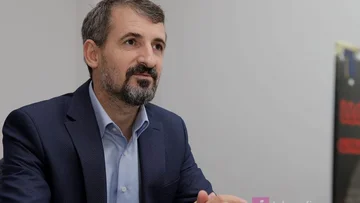
Meanwhile, in the same past week, even a voice from the opposition came to the fore. Lutfi Haziri, chairman of Gjilan and one of the contenders to become head of the Democratic League of Kosovo, said the Presevo Valley would be good to trade with Leposaviqi and some villages of this municipality. Such a proposal brought about some sort of institutional rift, since Ramush Haradinaj, the country's prime minister, called the former prime minister and rejected the proposal, saying partition could lead to war.
And after all that, again the public attention is put to Hashim Thaci, who for the first time publicly accepted the possibility of exchanging territories with Serbia. The opinion has never been clarified why Kosovo had to enter the new dialogue process with Serbia in 2011, three years after the country's declaration of independence. However, Thaci continued to compromise after compromise, even though Kosovo had remained defunct as a state and after Ahtisaari's Pack.
It is still not known whether a national consensus driven by international pressure will be reached in the country, but if the agreement is finalised only by the president and other institutional leaders of the ruling parties, plus Lutfi Haziri, it will be hard to legitimise it in the country. This would be a highly unacceptable development for the country, and another opportunity for internal and frustrated political conflicts. /Periscopi