4 months ago
Parliament to appoint the negotiating team, Thaci is chief negotiator

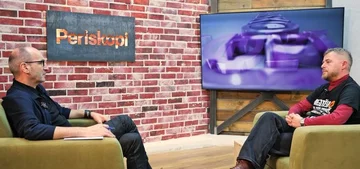
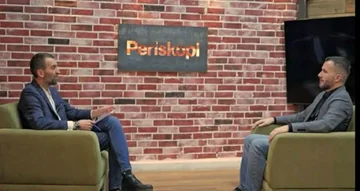
Periskopi(8 years ago)
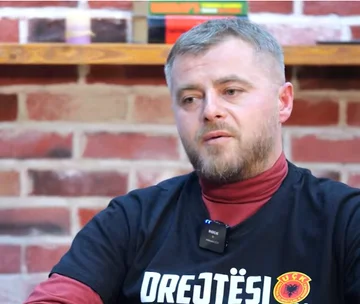
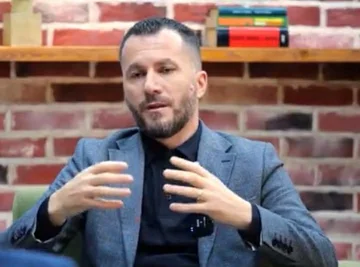
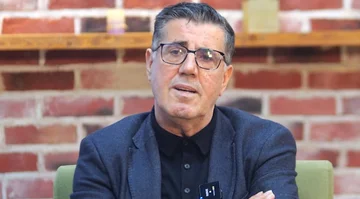
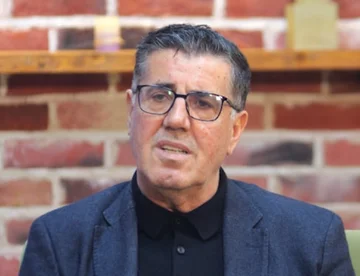
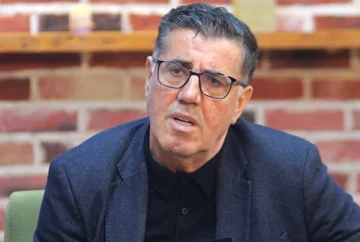
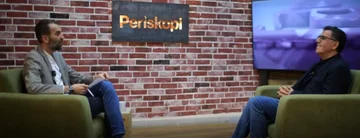
(8 years ago)The approach of Federica Moghrin's office in political dialogue between Kosovo and Serbia was harmful, Deputy Ilir Deda of the political subject Alternative has said in an interview for Radio Free Europe. Without the United States of America, in whatever form it breaks, this process cannot succeed. Every time the U.S. [...]
Without the United States of America, in whatever form it breaks, this process cannot succeed. Every time the US and the EU were on a line or have had a unique approach to the Balkans, they have also succeeded. When there was no trans-Atlantic unity, then there was no success and I can express, as the Alternative, we are disappointed with the role of Mrs. Moghrin, especially in the last 12 months in the face of this process of normalisation between Kosovo and Serbia”, Deda has declared.
Radio Free Europe: In the political spectrum in Kosovo, the possibility of creating a negotiating team that would represent Kosovo in the next phase of talks with Serbia is under consideration. Based on political positions, how much is it possible to form such a team?
Ilir Deda: Even the Alternatives, as well as other parties, are in intensive communication with diplomatic representatives in Kosovo. The entire political spectrum is facing a situation of confrontation of two extremes. The first is an awareness, which we have in the Alternative, but it's also in other parties, that consensus is necessary for the final phase of dialogue with Serbia. Meanwhile, the second concerns deep distrust existing against Kosovo President Hashim Thaci.
Since the beginning our political position has been that meetings are intense and can express regret that there has been no intensifying of political party meetings. It's been two and a half months since we've been trying and several tables have been held in the Assembly, some of the civil society, but they haven't been serious enough because our position is that we're closed with a table, until we really see whether or not we're going to get to the table where we all say our political position and then it turns out there's no chance to agree. If all parties want to agree to a team, a delegation of unity, then this agreement can be reached.
Radio Free Europe: The other issue is constantly under way; if Kosovo institutions have their responsibilities, then why an inclusion is needed. It's about a consensus, conditionally said, that Kosovo should do it now in the final phase?
Ilir Deda: But all involvement in Kosovo's new history has always been positive. Every time we were united we have succeeded, even when we were divided, as in the Brussels process, then we were not successful. For the alternative is the Brussels process lesson -- that is, the division which existed and the poor quality achieved -- some of which were opposed to the Kosovo Constitution.
Now, we are aware and all political parties know much what is expected of Kosovo, a kind of framework that has been communicated. But we think that only political unity in Kosovo in this process enables success or successful agreement for Kosovo. We need a good deal which ends this process with Serbia once and for all. We don't need a half deal that would last 10 years and we don't need a result of an agreement that for Kosovo would be a new Bitus quaoʹ and here I mean where Kosovo wouldn't be an equal member of the United Nations, by which ways for membership in NATO and the EU would be opened.
For Kosovo it cannot be this normalisation process without the UN, but normalisation with the UN. Normally the position of all parties in the Assembly is that normalisation means recognising Kosovo on the part of Serbia and reaching a peace agreement between the two countries, which would also affect reconciliation between the two peoples because I think that relations between Albanians and Serbs depend on Kosovo's relations with Serbia and not on Albania's relations with Serbia.
Radio Free Europe: How optimistic are you that such an agreement can be reached?
Ilir Deda: I am personally skeptical of Serbia's seriousness in achieving this normalisation. How serious the Serbian leadership, when spending hundreds of millions of euros on cancelling Kosovo's recognitions, fights us in the international arena, tries to demonise Kosovo, does not allow people of art and culture to travel to Belgrade. I mean a rhetoric from a part of the Government of Serbia, which is the same as that of the 1990s to the Kosovo Albanians.
We need to ask Mrs. Moghrin and the Serbian leadership whether you are serious in this process and if so, then you have to radically change the approach you have toward this process.
Likewise, there can be no successful agreement if we continue to be on the defanzies by defending ourselves all the time. For the political spectrum in Kosovo, it is important that it should not be affected by the territorial integrity of the Republic of Kosovo. So there can be no division, there can be no exchange of territories because they are ideas of the XIX and we don't want to live in such principles. And, as well, Kosovo's internal functionality cannot be jeopardised.
Radio Free Europe: Can I complete this process without the most active involvement of the United States?
Ilir Deda: It is actually the office of Mrs. Moghrin, who in some cases of nontranspartent meetings between the two presidents, has played a harmful and personal role of the EU representative. We have expected that (Magher's) office to have principles or non-negotiable lines in the process of normalising relations between Kosovo and Serbia, but this office has no non-negotiable principles. Here I speak of Kosovo's territorial integrity. So there are discussions on the inclusion of other EU countries in dialogue, primarily Germany because we cannot enter a process without non-negotiable principles which are red lines. We also need to know the guiding principles in this process.
Without the United States of America, in whatever form the process can not succeed. So every time the U.S. and the EU were on a line or had a unique approach to the Balkans, they had success. When there was no trans-Atlantic unity, then there was no success and I can express, as alternative, we are disappointed with the role of Mrs. Moghrin, especially in the last 12 months in the face of this process of normalisation between Kosovo and Serbia.
So we can no longer see this dialogue as a process where three people go, they meet in a nontransparent manner, they talk things that can't be talked about at the table and then sell it to us as a kind of success. For this reason Kosovo needs unity.
Political unity for dialogue means that anyone who is the leader of this process cannot go to speak whatever it wants there. Unity also honours the head of the Kosovo delegation.
Radio Free Europe: This leader is currently President Hashim Thaci...
Ilir Deda: No, he is not a leader, he is self-appointed because the leader and delegation are named the Assembly of Kosovo.
Radio Free Europe: Is it possible, then, that this process will be redefined in the Kosovo Assembly, whether it is giving the mandate to the president of Kosovo or appointing another leader to represent Kosovo in this phase of dialogue?
Ilir Deda: This should now be part of the political parties' agreement represented in the Assembly. We as alternative insist that all options be exhausted, to see if there is a real possibility of agreement or not, because it would be shameful if we didn't agree now, and after three months we agreed. So either we reach agreement in the early stages of the process, because in half of this process, what would be the value of reaching this inner consensus.
It has been said that this will be a serious process and I would appeal to Kosovo representatives, the carriers of institutions that are unilateral in this process, go public and inform us what it means to be grave. If the weight is heavy, it means they've taken some sort of obligation without asking us and not agreeing. Let them say, will it be discussed on the property of Kosovo; will it be discussed on natural resources; on additional self-government for the Serb population; what is this additional self-government? We cannot take additional obligations because someone unilaterally has done this job. Especially scandalous is the approach to discussing territorial integrity. It is scandalous that a representative of the Republic of Kosovo will sit at the table with (Aleksandar) Vucinciqi and talk about Kosovo's borders. He has no mandate to speak for Kosovo's borders.
Radio Free Europe: Then why isn't President Thaci invited to the country to clarify these issues, these dilemmas?
Ilir Deda: He's not even mandated by the Parliament to be invited now to report. For one thing, we should see whether it is possible for political parties represented in the Assembly to reach agreement on institutional design of the process and host, the head of the Kosovo delegation. If this agreement is reached, the Alternative supports the idea that the Assembly will have an overseer role in the process. If this is achieved, then all as a package must be approved in the Parliament.
Now we don't have much time, since on July 18th the second meeting between the two presidents where additional obligations will be taken that we will then understand by our international friends. We are followers of the loss of options before July 18. If we don't agree, let's get in front of the people and say we haven't reached an agreement. Here I always say how it is possible for Kosovo to deal with Vucinqi and not let the political parties represented in the Parliament agree.
I think it's possible to agree, there's a possibility of creating a comprehensive delegation, where each of us would assume responsibilities that are due to the normalisation of relations with Serbia and not happen to us at the end of reading a deal, mourning and understanding, but to apply how it has happened so far. We have the case of the 2013 Brussels agreement. We were so shocked to see what was accomplished, but it was approved by two-thirds of the vote in the Assembly and must be implemented. Kosovo politics must be rationalised and learned from its mistakes.