9 minutes ago
Erdogan, first Sultan of modern Turkey

Periskopi(8 years ago)
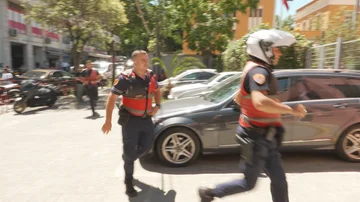
(8 years ago)After President Erdogan takes the oath in Ankara, Turkey passes from the parliamentary system to the presidential system. On Sunday by decree, he released more than 18,600 state officials, including 9000 police officers, about 6,000 members of security forces and 199 academics. This is probably the final decree before the removal of the situation. [...]
It has been 13 years since the AKP and its founder, Erdogan came to power. At first, it seemed to be the years of democracy, freedom of thought, and social peace. But now Turkey is giving extraordinary competence to an authoritarian president, with increasing Islamist and nationalist tendencies. With the abolition of parliament's controlling office, he takes the only power to decide on the executive. And through the competence of determining the highest members of the justice device, he can control justice as well.
Compared to the United States and France
Ersin Kalaycioglu from Istanbul's Sabanci University Political Centre says it is not yet clear, how the system will be changed. The new system has only been discussed with us on thick lines so far. Neither public opinion nor researchers know the details. ”
Erdogan has often reiterated that other democracies also have the presidential system. But Turkey's presidential system differs from French or American. So, for example, in the U.S., the president does not have the ability to break up the convention. Erdogan can do so and announce new elections. In France, parliament defines members of the Constitutional Court, in Turkey rather than make decisions affecting this important court.
Researcher Ersin Kalaycioglu recalls the autocratic features of the presidential system in Turkey. We have a well-formed civil society in both the American and French systems. We don't have this. ”
Erdogan could also operate presidential decrees in the future. So far he was allowed to do so only in the context of the state of emergency. But now Erdogan can undermine the administration at any time. It seems impossible to function an independent and non-party justice system. According to Turkish politician Dogu Ergil, power sharing and justice independence, so important for democracy are actually abolished with the new system.
ultranationalist danger
It is still unknown whether the coalition Erdogan closed with the nationalist party, the MHP will increase tensions in the country. Many people think, that the MHP's harsh stance, especially on the Kurdish issue and rejection of certain democratic values, will create an even more nationalist atmosphere in Turkey. Erdogan needs the MHP to secure the majority in parliament. This could turn to the main obstacle to resolving the Kurdish problem and bringing Turkey closer to the European Union.
Great interest also presents the future of developing relations with the West. In 1999, Turkey has officially opened its EU membership bid, negotiations began on 3 October 2005. But no progress has been made in marking in the last 13 years. And with the announcement of a state of emergency two years ago, they actually stopped.
New Turkish crisis- United States
Katty Piri, European Parliament rapporteur for Turkey, has indicated an official ban on membership negotiations. At a time that EU-Turkey relations risk freezing, another crisis has also emerged in relations with the US. There are a few points weighing them down: Fettullah Gülen, who is held responsible for the military stamp by Erdogan, lives in the US. Washington works with Syria's Kurdish armed arm, YPG, but since Turkey, it has been viewed as a terrorist organisation. Turkey also seeks to buy S-400 missiles from Russia, despite NATO membership. All these issues have blinded US-Turkey relations.
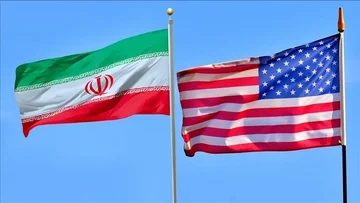
Politologist Dog Ersil also refers to a recent survey in Turkey: According to him, the US is in Turkey more unpopular than in Iran. A increasingly hostile attitude towards the US and the EU is spreading in society, Ergil says, despite Erdogan's policy. / DW/