4 months ago
Thaci for the French newspaper: Peace between Kosovo and Serbia is inevitable

Periskopi(8 years ago)
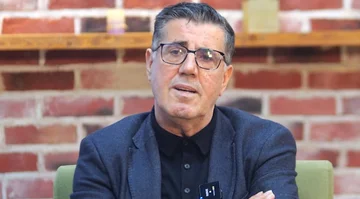
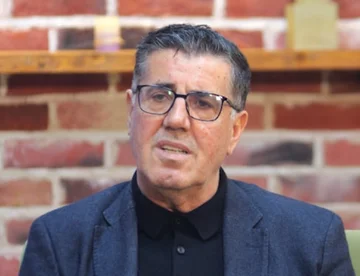
(8 years ago)The prestigious French newspaper “La Figaro” has dedicated a whole page to the portrayal of Kosovo President Hashim Thaci. In an interview published with President Thaci, this prestigious newspaper describes him as the political leader of the Kosovo Liberation Army, who has fought against Milosevic's regime forces but that [...]
The prestigious French newspaper “La Figaro” has dedicated a whole page to the portrayal of Kosovo President Hashim Thaci.
In an interview published with President Thaci, this prestigious newspaper describes him as the political leader of the Kosovo Liberation Army, who has fought against Milosevic's regime forces, but now, 20 years after the war, is continuing the dialogue with new Serbian President Aleksandar Vuciq from Sunday evening.
This prestigious French newspaper quoted President Thaci as saying he wants to believe that the Serbian president is no longer inmate in history.
If peace is possible, it's because there are right leaders at the right time. Our cause, reconciliation, is right. Twenty years ago they fought on front lines, opposite each other. Today, we are able and courageous to talk about peace and the future.
I want to believe that the Serbian president is no longer a prisoner of history. Together we can overcome the rhetoric of hatred, nationalism, and populism. Our people have paid an expensive price for war. Strategic circumstances make the moment historic. Should know to exploit them”, President Thaci was quoted as saying about “La Figaro”
This is the full interview published by “La Figaro” with President Thaci:
Hashim Thaci: Peace between Kosovo and Serbia is inevitable
Hashim Thaci is president of Kosovo. During the war against Serbia has been Kosovo Liberation Army chief of political power (UÇK), which has fought against forces of Slobodan Milosevic's regime. He continues from Sunday evening to Sunday the dialogue for peace and reconciliation with the new Serbian president, Aleksandar Vuciq.
La Figaro: What is the challenge of peace negotiations that are restarting between Kosovo and Serbia, ten years after independence?
Thaci: The challenge of reconciliation is to find a defined agreement, which is <x0-profit-winer” and serves the interest of both countries and our peoples. It is not about finding a magic formula, but promoting a pragmatic solution that allows Kosovo as well as Serbia to draw close to the European family. We must no longer be a hostage to the past. We owe peace and prosperity to our children. Why now? Peace would have been done earlier, but disputes between Serbia and Kosovo date back to several centuries because they go to confrontations between the Ottoman Empire and the Austro-Hungarian Empire. The resumption of dialogue has also been facilitated by the resolution of the conflict between Macedonia and Greece. But it will also help in the efforts for Europeanisation of six Western Balkan countries, assisted by the United States and the European Union. So it is not only the beginning of the end of the conflict between Serbia and Kosovo, but also an act of European capital for our two countries. Kosovo and Serbia know they will never be accepted by the EU unless they regulate border issues. I am determined to achieve the determining peace between Kosovo and Serbia.
La Figaro: How are things with Serbian President Aleksandar Vuciq?
Thaci: If peace is possible, it's because there are right leaders at the right time. Our cause, reconciliation, is right. Twenty years ago they fought on front lines, opposite each other. Today, we are able and courageous to talk about peace and the future.
I want to believe that the Serbian president is no longer a prisoner of history. Together we can overcome the rhetoric of hatred, nationalism, and populism. Our people have paid an expensive price for war. Strategic circumstances make the moment historic. They should be used.
La Figaro: Each country will have to make concessions. What will yours be?
Thaci: It is negotiations between two sovereign and independent states, under the support of the EU. It is not confrontation in a boxing ring, but to understand that victory through mutual compromises is common. We will therefore discuss the most sensitive topics, such as the recognition of Kosovo, reconciliation between communities, not found. The process will be difficult and difficult, because we will be criticised by nationalists and extremists in Pristina and Belgrade. Kosovars never forget Milosevic's war and know that some false Serbs, even academics, view Kosovo as their Jerusalem. But we must overcome these blockades and be realistic.
La Figaro: Are you willing to go as far as you give up some Serb majority municipalities in exchange for a recognition of your independence?
Thaci: We are listening to all opinions and we will find a solution to the Euro-Atlantic model. I respect the interest of Serbia and the citizens of Serbian affiliation in Kosovo. But instead of changing borders, it would be best to open borders between our countries. Like in Europe.
La Figaro: The Serbian president is more powerful in his country than you are in Kosovo. How will you impose compromises on your radical opposition?
Thaci: It won't be easy, but I have faith in the spirit and European will of Kosovars. They know that peace between Serbia and Kosovo is inevitable. And it's better to get there now than later.
La Figaro: In the event of failure, will Kosovo remain a black hole in the Balkans?
Thaci: In case of failure, everyone would lose: Serbia, Kosovo, the region and the European Union. The quo status is dangerous because in Belgrade, as in Pristina, some have an interest in fueling tensions. Emptyness would be filled with our opponents. And in the Balkans fire can be lighted. In the event of failure, new bloodshed can occur. If our two countries deviate from economic prosperity and democracy, the EU would also pay the price.
La Figaro: You talk about opening borders and reconciliation at the moment when the EU is threatened by breaking and you ask yourself about the possibility of closing borders. Aren't you going upstream?
Thaci: No, because since I see the growth of populism, I also see the discipline of states that do everything to preserve European values and soul. These debates should be accepted in democracy. I think the unlimited desire of six Western Balkan countries to integrate into Europe is greater than the desire of those who want to leave the Union. I also think that European values are more powerful than political populism. The latter may come and go, but the European spirit, he, will remain. I hope, however, that we will receive visa liberalisation this year.
La Figaro: Are you aware that Kosovo has a bad reputation in France? And that you yourself, because of the past with the KLA, don't you create unanimity?
Thaci: Kosovo's freedom and independence have always had strict opponents. But we have witnessed to what extent we are dedicated to the right of this cause. For the past 20 years, I have always been criticized. At times, such criticisms were justified, at times blamed. The Serbian propaganda always accuses neighbours of being failed states. My Serbian opponents do not forgive me for the role I have played in Kosovo for freedom and independence, though independence has not been determined by an individual, but by the will of a people. I notice, furthermore, that France has accompanied the transition and independence of Kosovo. All we have done has been in partnership with the international community and the United States. For this, the history of Kosovo is a success story. To be sure, it's enough to see Afghanistan, Iraq and Libya. Despite shelling and war, we have installed peace and democracy.
La Figaro: Do you fear the Kosovo Special Court that will be based in The Hague?
Thaci: Absolutely not. I have no reason. I even worked with the EU and the United States on this issue. I think, rather, that it should be transparent, that it should be an advantage and a way to get rid of this building. KLA fighters have been freedom volunteers. Does this mean that all of them were angels? Their fight was just. No one will ever be able to rewrite history.