2 minutes ago
Kosovo very slowly towards Europe

Periskopi(8 years ago)
(8 years ago)Kosovo institutions are being delayed with the adoption of the package of laws that emerge as a need for meeting the criteria in the process of European integration, government officials and civil society officials say. The slow functioning of the Kosovo Assembly is seen as one of the biggest obstacles in this direction. Minister [...]
Kosovo institutions are being delayed with the adoption of the package of laws that emerge as a need for meeting the criteria in the process of European integration, government officials and civil society officials say.
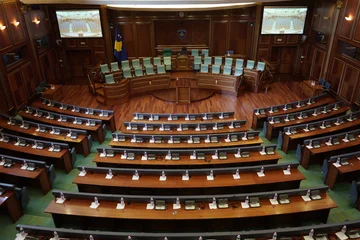
The slow functioning of the Kosovo Assembly is seen as one of the biggest obstacles in this direction.
Minister of European Integration in the Government of Kosovo, Gift Hoxha, tells Radio Free Europe that institutions are delaying with the adoption of laws linking the agenda to European reform.
“We are late with the agenda for European reform, so we must proceed quickly with the adoption of these laws in the Kosovo Assembly. We're seeing a deadlock or a delay, which is being caused, which I believe is that perhaps with better co-operation, whether of the Government or of the Parliament, together we can all find a formula that will work and push ahead with the European integration agenda”, Hoxha says.
Minister Hoxha admits that even the Government of Kosovo needs greater dynamics in this direction:
And we, like Government, have some guilt, because we have to be more cooperative with the Kosovo Assembly, but I think we need to work here to find a formula that works”.
The Kosovo Assembly, currently, has more than thirty laws that it is considering, which concern European integration. The Kosovo Assembly has recently adopted nine bills linking with the agenda for European reform.
The package of laws related to European integration is large and various sectors, such as the one for the justice system, the package of anti-corruption laws, that of reforms in public administration, education and other laws.
In the event of a lack of laws dealing with integration processes, according to Minister Hoxha, Kosovo as a state, will remain even more behind in the process.
So if we can't build a moment that we're moving forward, that we're prepared, the institutions are taking full responsibility the obligations that come out of the European integration process, then we can only apply, but if there's no progress, it can go for years and we won't get candidate status. The visa liberalisation process has shown that European Union institutions are institutions that have criteria and standards and without their fulfillment, do not move before”, Hoxha explains.
Kosovo's current legislature has so far been characterised with poor work planning, have praised nongovernmental organisations that monitor the work of the Kosovo Assembly.
Artan Murati, analyst from the Kosovo Democratic Institute, tells Radio Free Europe that the job of the Parliament and the effect of its decisions is becoming extremely damaged. He says not only laws dealing with European integration but also other Parliament laws are failing to pass.
“Location, simply, is failing to complete it properly or is failing to fulfill its legislative role. This is largely true of the number for all laws, including laws involving European reform”.
So if the Assembly doesn't want to increase its pace of work, it's hard to believe that we can keep up with the necessary developments, which are then required by us intervention, whether it's change of laws or the adoption of new laws. The Assembly should be much more active and MPs much more responsible for the work they are doing”, Murati estimates.
Analysts say the blame for non- Efficiency in adopting laws in the Kosovo Assembly should be held by political parties represented in the legislature, both in opposition and in power.
Frequent disagreements and clashes among MPs from political parties have blocked the adoption of many laws and other issues.