11 minutes ago
“EULEX failed, Kosovo expected difficult days”

Periskopi(8 years ago)
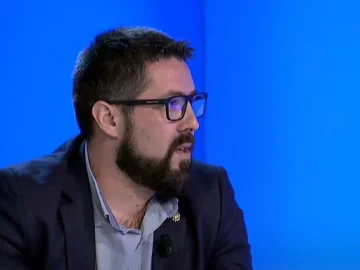
(8 years ago)Ehat Miftaraj from the Kosovo Institute for Justice has said EULEX has failed in its mission to fight corruption in Kosovo. According to him, EULEX in its mandate has testified that more is behind the goal of preserving a political status quo and not following those who violate the law. “If [...]
According to him, EULEX in its mandate has testified that more is behind the goal of preserving a political status quo and not following those who violate the law.
If we go back 10 years, we citizens have trusted this institution to judge the worst criminal acts. But he has lost confidence and failed to exercise his mandate on the basis of expectations we have. It does not seem to have been the ecstatic pursuit of people who were opposed to the law, but it was the preservation of the status quo”, he said at Express Interview at KTV. I don't know how an international mission with millions of euros can be reasoned, which has never had any problems, no security, no family and business ties to the locals, but has failed to carry out the mandate with which it was called to Kosovo. Ten years after the establishment and Kosovo has yet to meet a criterion for liberalisation, corruption, which was executive competence of EULEX. This shows that it has been subject to politicisation by Kosovo or certain states, aimed at having Kosovo have had good reports with Serbia, to establish the Special Court, but it has never been the war of crime for which we report on a daily basis”.
As for EULEX's new mandate, which will retain executive competencies in local institutions, Miftaraj has said, however, EULEX will retain certain competencies. EULEX will now handle monitoring and assessing the work of justice institutions in the country, and that it will deal with the protection of Special Court witnesses. He has also said that EULEX “has not entrusted locals to this point and will have key competence for storing information so as not to allow surprises in the first phase of the start of jobs by the Special”.
According to Miftaw, with the passage of executive competencies to local institutions, Kosovo will expect difficult days.
When the new agreement is voted, local institutions will have executive competencies. Citizens eventually have the address in these institutions, which are politicised, influenced, and have great shortages. Confidence is very low, and Kosovo is awaiting very difficult days. We hope that with pressure from internationals and the public, we will have what we have requested, the property process, which would clear up the scheme in the justice system that is damaging the system and Kosovo” itself, it has added.
During the transfer of competencies from EULEX to locals, Miftaraj has said that it is good to become registers of cases that will be transferred to the goal so that the public is aware of what cases are not handled properly. He has said this applies especially to war crimes cases, where more “kas accused of Albanians that Serbs making it appear that in Kosovo, war crimes have committed Albanians rather than Serbs”.