2 minutes ago
As never before, Clinton relates behind the bombings and handover of Milosevic

Periskopi(8 years ago)
(8 years ago)On 24 March 1999, NATO air strikes were launched against the Serbian military, police and paramilitary forces in Kosovo. The attacks lasted 78 days, resulting in Kosovo's release. It's been 18 years since these bombings, so KultPlus brings you a piece of the memories of former US President Bill Clinton, where he talks about the war in Kosovo. From memories [...]
On 24 March 1999, NATO air strikes were launched against the Serbian military, police and paramilitary forces in Kosovo. The attacks lasted 78 days, resulting in Kosovo's release.
It's been 18 years since these bombings, so KultPlus brings you a piece of the memories of former US President Bill Clinton, where he talks about the war in Kosovo.
Of the memories of the former American president, summed up with the title “My Life”, he also talks about the war in Kosovo.
Clinton first confesss to the public the atmosphere, the background and diplomatic, political and military steps that led to the launch of bombings on the former Yugoslavia on 24 March 1999. Problems of 11 Weeks of Air War, Milosevic Handover, Preparation of Peacekeeping Troops in Kosovo
When the time came to return, we were entering another Balkan war.
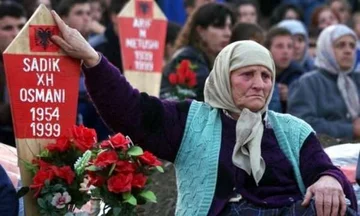
This time in Kosovo. A year earlier, Serbs had launched an attack on Kosovo Albanian rebels, killing many innocent people; there were children and women who had been burned in their homes.
The latest round of Serbian aggression had sparked the spark of a new refugee escort and had increased Kosovo Albanians' desire for independence. The killings were very similar to the early days of the war in Bosnia, which, like Kosovo, was the bridge of the division that existed between European Muslims and Orthodox Serb Christians, a dividing line along which there had been occasional conflicts of six hundred years.
In 1974 Tito had granted autonomy to Kosovo, allowing self-rule and control over schools. In 1989 Milosevic stripped Kosovo of the right to autonomy. Since that time, tension had increased until it erupted later in 1995 when Bosnia achieved independence.
I was determined not to allow Kosovo to become a second Bosnia. Medlyn was just as determined. In April 1998 The United Nations had imposed an arms embargo on Serbs.
Meanwhile, the United States and its allies had imposed an economic embargo on them after they had failed to end the hostility and did not enter into dialogue with Kosovo Albanians. By mid-June, to enable the ban on violence, NATO had begun planning a number of possibilities for military intervention.
As summer approached, Dick Holbrooke (Dick Holbrooke) had returned to the region to try to find a diplomatic solution to this conflict. In mid-July, Serbian forces again attacked armed and unarmed Kosovars, thus launching a summer of attacks that would force 300,000 other Kosovo Albanian people to flee their homes.
Late in September, the United Nations Security Council approved another resolution seeking the end of the conflict, and at the end of the month, we sent Holbrooke (Holbrooc) to Belgrade to try to find the language of reason with Milosevic.
October 13th NATO had threatened to attack Serbia within four days if UN resolutions were not respected.
The air strikes were postponed when it was seen that 4 thousand Yugoslav Special Forces officers were withdrawing from Kosovo. Things got better for a while, but in January 1999, Serbs began killing innocent Kosovars again, and the air strikes seemed inevitable. We decided to try diplomacy once again, but we didn't have much optimism. The targets of the parties were far apart.
The United States and NATO wanted Kosovo to enjoy the political autonomy it had had under the Yugoslav Constitution between 1974 and 1989, until Milosevic removed them, and we wanted a NATO-led peacekeeping force to ensure the peace and security of Kosovo civilians, including the Serb minority.
Milosevic wanted to keep Kosovo under control and opposed the deployment of foreign military troops there. Kosovo Albanians sought independence. But they were divided among themselves.
Ibrahim Rugova, head of shadow government, was a gentle man, noted for always wearing a scarf around his neck. I was convinced that with him we could reach a peace agreement, but I was not so sure of the other major Kosovo factor, the Kosovo Liberation Army (UÇK) led by a young man named Hashim Thaci. The KLA sought independence and believed it could face teeth with the Serbian military.
The sides met in Rambouillet (Ramboulet) in France on February 6 (1999) to agree on the details of an agreement that would restore autonomy, protect Kosovars from oppression by NATO-led operation, would disarm the U. The CK and would allow the Serbian Army to continue guarding the border.
Madeleine Albright and her British counterpart, Robin Cook (Robin Cook), aggressively insisted on the policy. After a week of co-ordinated talks by US Ambassador Chris Hill, (Chris Hill) and his counterparts from the European Union and Russia, Medlin (Madelene) and I discovered that our stance was rejected by both sides: Serbs did not want to agree to the deployment of a NATO-led peacekeeping force and Kosovars to agree to accept autonomy if they did not receive guarantees for holding a referendum to decide on independence.
And the KLA was not happy that it would have to disarm, in part because they were not sure they could rely on NATO forces to ensure protection. Our group decided to write the agreement in such a form as to delay holding the referendum, but not to deny it eventually.
On February 23rd, Kosovo Albanians, including Thaci, accepted the agreement in principle, returned home to sell it to their people, and in mid-March they traveled to Paris to sign the completed document.
Serbs boycotted the ceremony, while 400,000 Serb troops gathered around Kosovo and Milosevic reiterated that he would never allow the deployment of foreign troops to Yugoslav soil. I sent Dick Holbrooke to see him for the last time, but Dick couldn't move him.
On March 23rd, after Holbrooke leaves Belgrade, Secretary General NATO, Javier Solana, with my full support, asked General Wesley Clark to launch air strikes.
On the same day, by majority of votes 58- 41 Senate voted to support the move. Early in the month, the House of Representatives had voted 219 to 191 to support sending American troops to Kosovo in the event the peace agreement was signed. Among the prominent Republicans who voted in favour of this proposal were Dennis Hastert and Henry Hyde.
When Congressman Hyde (Hidee) said America should rise up against Milosevic and ethnic cleansing I smiled and said to myself “probably Dr. Jackell (Jekyll) at the end was somewhere inside it” (Examples: Dr. Jakstar is a literary character and here means the positive side of a person. )
While the majority of Congress and all our NATO allies supported the air strikes, Russia was not on the same line. Prime Minister Yevgeni Primakov was traveling to the United States to meet with Al Gore.
When Al announced that an attack on Yugoslavia was possible, Primakov ordered his plane to return to Moscow. On the 24th (March 8, 1999) I directed the American people to show what I was doing and why I was doing it.
I explained to them that Milosevic had robbed Kosovars of autonomy by denying them guaranteed rights with the Constitution to speak their language, to have their schools, and to govern themselves.
I described to them the Serb massacres -- the murder of civilians, the burning of villages, the expulsion of people from their homes -- 60 thousand in only the last five weeks and a total of a quarter million. I was finally able to place current events in the context of the wars Milosevic had declared against Bosnia and Croatia and the devastating impact of his killings on Europe's future.
The shelling campaign had three goals: the tow showed Milosevic that we were serious that we would stop another line of ethnic cleansing, that we would avoid an even more bloody attack against innocent civilians in Kosovo, and that if Milosevic did not surrender that soon we would seriously undermine Serbia's military capacity.
Air strikes started that night. They would last 11 weeks, while Milosevic continued to kill Kosovo Albanians and expel about a million Albanians from their homes.
Bombs would cause major damage to Serbia's military and economic infrastructure. Unfortunately, in some cases they would avoid defined coordinates and take the lives of the people we were trying to protect. Some people reasoned that our attitude would have been more justified if we had sent troops from the earth.
But there were two problems with that argument. First, until soldiers achieve their positions, sufficient in number and with adequate support, Serbs would cause a very large bull. Second, civilian victims of a military campaign on earth would have been many times larger than the number of victims as a result of inaccurate bombs.
I could not agree with the argument that I had to attend a course that would take more American lives without much convincing the possibility of a victory. Our strategy would often be suspected, but it never was abandoned. At the end of the month, when the scholarship was closed for the first time in its history with over 10,000 out of 3 200 when I took the Presidency, I decided to do an interview with CBS television journalist Dan Rather.
After a broad discussion about Kosovo, Dan asked me if I expected one day to become the husband of a United States senator. By that time many New York officials had joined Charlie Rengell to ask Hillary to consider joining the race.
I told Catherine I had no idea what she would decide, but if she ran and won “it would be amazing”. In April, as we had stepped up bombings in the city of Belgrade by hitting the interior ministry, the headquarters of Serbian state television, Milosevic's house and his party building, the conflict in Kosovo intensified. We also significantly increased financial support and presence with military troops in neighbouring countries like Albania and Macedonia to help them cope with the enormous momentum of refugees.
By the end of the month, when Milosevic had not yet bowed down, in two directions at once opposition was coming to our policy. Tony Blair and several members of Congress thought it was time to send troops from the ground, while the House of Representatives voted against sending troops without the prior approval of Congress.
I still believed that the air campaign would produce results, and I hoped we could avoid sending troops from the ground for different reasons from that of the peacekeeping mission.
On April 14th, I called Boris Yelts to ask for military troops to join a peacekeeping force, as well as Bosnia. I hoped a Russian presence would help protect the Serb minority and give Milosevic an opportunity to save his face for objections to the deployment of foreign troops.