a few seconds ago
Make in China a lie, here's the truth.

Periskopi(8 years ago)
(8 years ago)Chinese textile companies are increasingly using factories outside their borders to benefit from cheaper work, just as the West is dealing with China. But they're cheating on the market because they have a known label “Made in China”, and goods are actually produced by exploited workers [...]
But they're cheating on the market because they have a known label “Made in China”, and goods are currently produced by workers used in North Korea, Reuters broadcast.
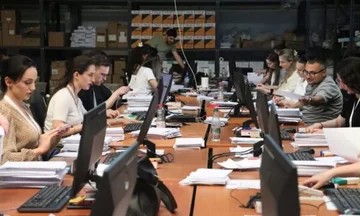
The Chinese use more and more factories, businessmen and companies in the border town of Dundong, and then the goods produced there are sold worldwide as if they were produced by them, Kosovas broadcasts.
North Korea's use of cheaper clothing shows that, despite UN sanctions imposed there, Kim Jong Un manages to be found with the help of “enemies”.
In fact, sanctions due to the northeastern nuclear program have nothing to do with preventing textile import.
“We take orders from around the world,” said a Korean-Chinese businessman from Dandong, a town on the border of the two countries through which most North Korean shops are being developed.
Like most people who spoke on this subject, he sought to remain anonymous because of the sensitivity of things.
Twenty agents are active in Dundong, who are mediators between Chinese suppliers and clients from the US, Europe, Japan, South Korea, Canada and Russia.
The final client has no idea that the goods are made in North Korea, the source says.
Textile is the second largest element in North Korea's exports, after coal and other minerals. The textile export profits are $757m in 2016.
The recent UN sanctions have completely banned the source of coal, so North Korea really has to endure and apparently relies on China on its economic survival.
Chinese exports increased by about 30 percent, or $1.67 billion in the first half of the year, and most of them are cloths and other raw materials that are ready for market in North Korea.
Australian sports brand Rip Curl publicly apologized last year when it was discovered that part of their ski equipment, marked as “Made in China”, were made in North Korea at one of their factories.
Rip Curl blamed the supplier for his “outuring” on an unauthorized subconvention. But businessmen and agents in Dundong say this is a widespread practice.
Producers can save up to 75 percent by making their clothing in North Korea, a Chinese merchant discovers.
Some of the factories in North Korea are located in Siniu, while others are located near genus. Completed clothes are usually sent directly to Chinese ports, where they are repacked and shipped to the world ports they have ordered.
The production of textiles in North Korea was highly developed in the last seventyth century, when the first Dutch companies began trade with Korea.
Although production has declined, in recent years it has begun to grow again. The monthly payment for a North Korean textile industry worker is about $80 a month, meaning that production is 30 percent cheaper than in China.
In addition, North Korean workers may produce 30 percent more clothing every day than a Chinese worker discovers a Chinese merchant.
The reason for that, of course, lies in exploitation. In North Korean factories, workers do not go to the toilet when they should, otherwise they would slow down the entire assembly line. That's why there's really a definite holiday toilet, which needs to be respected by everyone.
Another reason North Korean workers are so productive is their conviction that they are working to improve their country and not pay.
They believe they do so for their leader and a better future, and their salaries differ from those in other Asian countries.
For example, while in North Korea the minimum monthly wage is $75 and an average of $160 a month in China, average wages in factories range between $450 and $750 a month.