4 months ago
Agreement with Serbia won't be new compromise

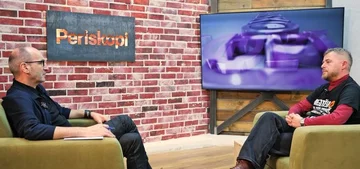
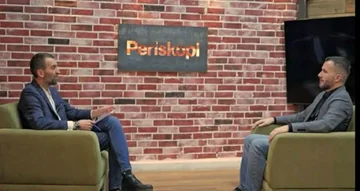
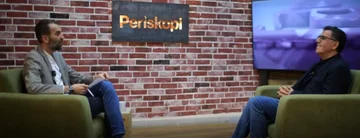
Periskopi(8 years ago)
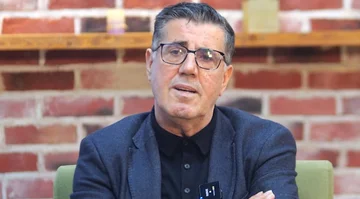
(8 years ago)The final agreement between Kosovo and Serbia does not imply any compromise paralyzing the state of Kosovo and does not mean any kind of division, Kosovo Assembly Speaker Kadri Wessel has declared. Wessel has voiced optimism that at the end of this year, the European Union and member states will decide to lift the visas of [the...] citizens.
Wessel has voiced optimism that at the end of this year, the European Union and member states will decide to lift visas for Kosovo citizens so they can move freely like other European citizens.
Radio Free Europe: Mr Wessel is expected Sunday to continue talks in Brussels between Pristina and Belgrade. How many obstacles or problems can the fact that President Thaci travels there this time without an internal political consensus?
Kadri Wessel: We're building a consensus. The political parties' table, which has been initiated, is already under way. What is key is that we are on the right road to achieving a common position in the dialogue process with Serbia. Kosovo needs to have the historic agreement so as to open up prospects for Euro-Atlantic integration and at the same time in the United Nations organisation, and that path is inevitable. We are very serious in this process. At the same time, I'm pretty sure we'll succeed as historically in the last three decades we've been together.
Radio Free Europe: It is constantly about a legally binding agreement for both sides. What's the deal?
Kadri Wessel: It is a historic agreement, where Kosovo and Serbia are independent and sovereign states, recognise each other, help each other in integration processes towards the European Union. At the same time, the prospects for both peoples are opened through a process of peace. This is what is to be achieved, and it is a way to go.
Kosovo is a political reality as an independent and sovereign state in the Western Balkans as far as Serbia is. We must live jointly as independent countries, as sovereign countries with Albania, with Montenegro, with Macedonia as good neighbours.
A very good result of this neighbourhood is the agreement between Macedonia and Greece on the name. Why not even between Kosovo and Serbia? The period of conflict has passed.
Radio Free Europe: Does this agreement imply any new compromise on issues, conditionally said, suspended, such as the north of Kosovo or the formation of the Serb majority municipalities' association?
Kadri Wessel: It implies the complete sovereignty of Kosovo, territorial integrity and at the same time that Kosovo recognises the independent Serbian state. That means no other consensus or compromise. We too, should take into account the issue of communities, Kosovo is an example for the entire region of rights it has given communities. We're going to further issue these rights and that's our consensus.
It does not mean partition, nor does it imply any compromise paralysing the independent state of Kosovo. It means respecting communities and all citizens living in the Republic of Kosovo.
Serbia is trying to reduce recognitions, but Kosovo will become UN member
Radio Free Europe: As much as the fact that President Thaci, currently, does not have the necessary political support in the Assembly, will the agreement finally be ratified in the Kosovo Assembly?
Kadri Wessel: President Thaci is president of the Republic of Kosovo, elected on the basis of democracy and the people of Kosovo, and at the same time, I will be instructed in matters that matter most. Before we look at President Thaci, we see Serbia, which we have to dialogue with and which we are serious about, with which we have to face arguments that are in the interest of our country.
President Thaci sees it as a freedom fighter, as a man who has contributed to freedom and state, the statehood of Kosovo substantially. There is therefore problem, problem is this: the state of Kosovo must be recognised by Serbia, and at the same time we have to move strongly in the new decade towards economic transformation.
Radio Free Europe: You are talking about normalisation of reports with Serbia, but already, diplomacy there is working on obstruction or even cancellation of recognitions, as is the case with Liberia. Do you have any information, did Liberia draw recognition?
Kadri Wessel: No one should feel surprised by this, rather we should be more determined in the process of reaching historic agreement, with which our independent and sovereign state will recognise it. This is one more reason why we should be even more determined in the global reality in which we live. Both Serbia and Kosovo have specific interests, related to the EU integration process, and to us and NATO. We move together in this process. But let us not fall prey to something that has been traditional in Serbia to block Kosovo's prospects.
I don't want to waste much energy on Serbia's desperate efforts to attract recognition. We will add recognition because Kosovo is moving towards its UN membership, when the number of recognitions will then not be too relevant. You have many states that are UN members and do not have diplomatic agreements as much as Kosovo does.
Visa liberalisation late in the year
Radio Free Europe: If we can get to another issue. Next week, EU institutions are expected to come up with their recommendation regarding visa liberalisation. You've lobbied these days on this issue in different European countries, so what recommendations do you expect?
Kadri Wessel: The expectations are positive. I have had a wide journey through many countries, along with colleagues of position and opposition from the Kosovo Assembly to specific European Union countries, but also at the headquarters of the European Union in Strasbourg, in Brussels, for the sensationalisation of countries to support Kosovo for EU integration.
We are a Western country, we are a European and natural country we seek our place in the family that belongs to us, in the European Union and that will happen. At the same time, the circumstances in which the global world is moving and specifically the European Union has a scepticism within the traditional EU countries, especially in the area of a comprehensive EU reform and, as well, concerns are also about the refugee issue, specifically from Georgia and Moldova, but also from Albania and Macedonia. In this situation my attempt is to clarify our position that Kosovo is a particular case that has economic progress, with economic growth of 5 percent, and at the same time with the smallest number of asylum seekers currently in the EU. We also have over 90 percent of those who want to return to Kosovo.
Kosovo is making progress, it deserves visa liberalisation, and that is what needs to happen.
Radio Free Europe: Do you expect Kosovo citizens to travel without visas within the Schengen zone this year, or next year?
Kadri Wessel: No, we expect to have free movement of our citizens within this year because they deserve it. We have fulfilled all the criteria and it is very unfair to citizens, for our country, which has achieved progress, has met the criteria for citizens to remain isolated.
Kosovars do not want to remain isolated because they have the Western soul, have the European spirit, and they want to move freely like any free country. We're free country.