12 minutes ago
How strong is Iran militarily?

Periskopi(8 years ago)
(8 years ago)Although financially not the great power of Iran to compensate for relative weakness is based militarily on asymmetric capabilities. The strategy seems to be successful. Iran is a major military force in the Middle East, with 534 thousand active persons in the army, navy, air force and Islamic Revolution Guard (IRGC). Global Index, [...]
Although financially not the great power of Iran to compensate for relative weakness is based militarily on asymmetric capabilities. The strategy seems to be successful.
Iran is a major military force in the Middle East, with 534 thousand active persons in the army, navy, air force and Islamic Revolution Guard (IRGC). World Index, Global Firepower Index, a website that makes the online rankings of military powers, classified Iran 13th to 136 countries in the world.
This ranking is done on the basis of 50 factors, including the potential for fighting nonconventional (no nuclear) forces, military power, geography and finance. To make a comparison with other regional powers, we are saying Turkey ranks ninth, and Egypt 12th, Israel 16th and Saudi Arabia and 26th.
Iran's population of 82 million shows that the army can grow. This is a key factor in the duration of wars, as the Iran-Iraq war lasted between 1980 and 1988
However, the $16 billion budget in 2017 cannot be compared to individual regional rivals and is small compared to the protection costs of countries with which Iran could come into conflict: Israel's budget of 18.5 billion dollars (plus $3.5 billion US military aid), Saudi Arabia 76.7 billion, and the United States of 600 billion dollars.

Strategic assistance response to disadvantages
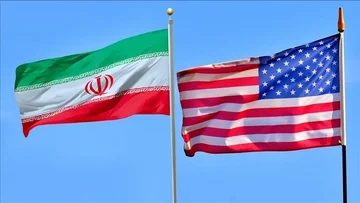
Iran rain is financially small weight for those countries it views as military threats, the United States, Israel and the Arab Gulf states, which are Sunnit. The country is also surrounded by the U.S. military base and lacks the security guarantee that rival Gulf Arabs and Israel receive from the United States.
In addition, Iran has suffered four decades under the United States embargo and since 2006 under the limit of UN weapons. This has forced Iran to rely on domestic weapons production. Meanwhile, Iran's rivals have provided advanced weapons systems from the West.
To compensate for its relative weakness, Tehran relies on asymmetric capabilities and precautions to reduce costs.

Protection Before
One of the provisions of the Iranian Defence Strategy is “saving before”, led by special operations of the IRC's Wood Force. The strategy includes the use of regional allies and their representatives, known as “axi of residence”, as the lever to strike, defeat, or fight Iran's enemies to stay away from Iranian soil.
Several groups, including the units of popular mobilization in Iraq that fight “the Islamic State”, foreign militants' rains fight in the name of Syria, friend of Iran; Lebanese Libyan groups of Hezbollah, the Houthi rebels in Yemen, and the Palestinian Islamic jihad. Iran is therefore one of the regional countries that has influence over the Palestinian groups of Hamas in the Gaza Strip.
Although allies with Iran politically and militarily, these groups have different degrees of reaction and local political interests where they operate.
Ballistic rocket
Another important point of Iran's military strategy is short, medium-sized and intermediate ballistic missiles capable of hitting Israel, Arab Gulf states, American military bases in the region and parts of Europe.
As the International Crisis Group points out, Iran views these ballistic missiles as preventative measures against Israel, and if Iran is then hit by enemies will respond on their land or at US military bases in the region. Iran sees ballistic weapons as protective weapons, its enemies consider them to be offensive risks.
Ballistic missile policy can be combined with defence policy forward, such as the attacks on rebel ballistic weapons Hauth vs Saudi Arabia, in response to its war on Yemen and Iran's Hezbollah weapons with a series of rockets against Lebanon. Iran refuses to arm the houth with ballistic missile components. / DW