4 minutes ago
Optimistic Hoxha: By year's end, citizens move without visas

Periskopi(8 years ago)
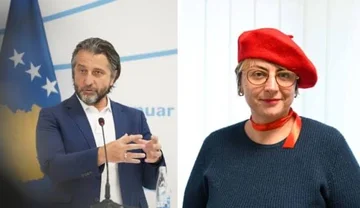
(8 years ago)European Integration Minister Gift Hoxha is optimistic that Kosovo citizens will move freely without visas by the end of 2018. She has been talking about the meeting, which for two days took place with the EU's assessment delegation, the latest criterion for the visa liberalisation process, where she said they expected [...]
She has been talking about the meeting, which for two consecutive days had with the EU's assessment delegation, the latest criterion for the visa liberalisation process, where she said they expect a positive assessment by the European Commission.
This is a fact-finding mission, it's not a political mission to give political opinions or whatever it is, but this fact-finding mission is based heavily on facts, on arguments, in concrete numbers about what has been done so far, and we believe that we have managed to crack this one complete photographer of what was done by each of the institutions. We have also had preparation meetings for Kosovo, our country, all law enforcement institutions to come up with the best, not to adorn things, but to tell the truth, only by work, facts and arguments. So far we have seen that there have been and from past reports, there has been a very positive, objective approach of course, but I am optimistic that we will get a positive assessment. To wait until the beginning of June, but I am also very optimistic always based on this decision-making process, by the end of the year, I believe that our citizens will move free without visas”, Hoxha told Kosovas.
Hoxha said institutions have done a great job in fighting crime and corruption, in terms of the visa liberalisation process, but that the fight against these phenomena will continue in the future.
“As far as visa liberalisation criteria are concerned, we think that the actions that have been taken, especially in marked cases, we have done a great job. If we compare the moment when these cases are starting to be monitored. So we've had 31 cases, now the number has increased to 43 cases. These cases are of different levels, have moved to the first, second instance. We have firm court decisions, so it's really done, if we compare 2016, 2017, 2018, especially the last actions we've taken to connect to the Tracrds or cases marked as package of laws that have been adopted, the increase in the number of judges, the increase in the number of prosecutors, the growth of the budget. All of this confirms and increases confidence in our law enforcement institutions that this work will continue. Now the ball is in the EU institutions, and it depends on what dynamics they will take in the decision-making process so the commission, the parliament, the Council of Ministers, because it remains to the very least, the final decision is in member states separately, with the interior ministers, who will ultimately vote”, she said.
But it says visa liberalisation, free movement, is only a segment of all the work that needs to be done for the European integration process.
According to her, institutions need a new dynamic aimed at accelerating the implementation of the SAA, which is a very important agreement for Kosovo to advance the position towards candidate status.
“Reforms are needed in the Public Administration, reforms in education, reforms in the economy, reform in many segments, especially in rule of law. I shouldn't forget that reforms should definitely continue. Then build this moment to apply for candidate status. The plan is that by 2020, Kosovo becomes a candidate country and we do our best to start negotiations, because otherwise we can't take the step with the countries of the region and have to use the opportunity here and repeat what I've said long ago, that it's the last time we need a national consensus with all political parties, with all institutions. So even better communication, an even better co-operation between the Government, the judiciary, the prosecution, the assembly, all other institutions, be they part of the legislature, the executive or the judiciary, so that we can have as good co-operation as possible, that the European integration agenda, not analyse, she said.
Hoxha has spoken about the impasses in the implementation of the SAA, which she said are numerous.
We have seen that some of the impasses are in the education sector, in the public administration reform sector, then in connection with education or curriculum with the labour market. Professional skills we need. The competitiveness of our companies, our products in different markets. There are many other impasses, of course we must continue to empower rule of law”, she said.
According to Minister Hoxha, we should move on to reforms in rule of law, where, in the judiciary and the prosecutor, we should have as many cases as possible, while cases passing through the courts are cut short.
She finally said all these are jobs that need to be done if we have consensus.