2 minutes ago
Ivanovic murder, one more case in long processes under investigation

Periskopi(8 years ago)
(8 years ago)The murder of Serbian politician from Mitrovica, Oliver Ivanovic, is gradually entering into the murder cases that remain under investigation without dawn. Five months since Ivanovic was shot dead in front of his party headquarters in Mitrovica, responsible institutions say they are failing to provide needed information in [...]
Five months since Ivanovic was shot dead in front of his party headquarters in Mitrovica, responsible institutions say they are failing to provide needed information about the whiteening of this case.
Civil society representatives estimate that even investigations into the Ivanovic case are entering into the context of unlighted cases for the killings of public figures that took place before, during and after the war in Kosovo.
Meanwhile, Kosovo Government officials stress that investigations into the dawning of the Ivanovic case are under way intensively, but that according to them, official Belgrade is not showing the will to co-operate with Kosovo institutions so that the perpetrators of this criminal act can be brought to justice and receive deserved punishment.
Oliver Ivanovic was killed on 16 January, in front of his party headquarters in northern Mitrovica. He was the leader of the civic initiative “Freedom, Democracy and Justice”.
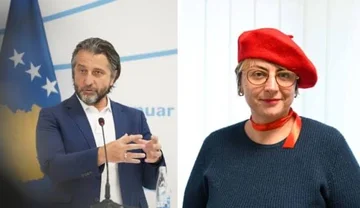
Kosovo Government Justice Minister Abelard Tahiri told Radio Free Europe that Kosovo authorities are constantly dealing with this issue, but that there is currently a impasse, due to the inability to obtain information requested by Belgrade.
We've finally had a deadlock since we haven't been able to get that information we've been looking for from the Republic of Serbia. And our institutions have continued to intensively the same work so that as soon as possible the perpetrators of this work will be brought to justice”.
“We will not stop under any circumstances and will make continued efforts for Ivanovic's killers to be brought to justice”, Tahiri said.
A few days after Ivanovic's murder, the Ministry of Justice in the Government of Kosovo had sent four requests to the Government of Serbia.
Likewise, authorities in Serbia have asked Kosovo authorities to exchange information about the investigation. In the end, however, it turned out to be more mutual guilty than cooperation.
According to Minister Tahiri, the Kosovo side has shown will and is ready for co-operation.
On the other hand, representatives of the Kosovo Institute for Justice stress that in Kosovo it has become a practice that the whitewashing of cases of killings that have occurred in public figures, tow dust.
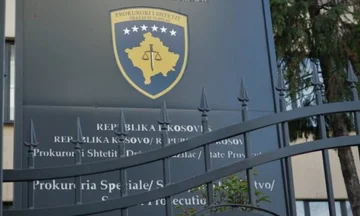
Ehat Miftaraj from this Institute, doubts that this case could ever be revealed, as he says, the very way of launching the investigation by the Mitrovica Constitutional Prosecutor and not by the Special Prosecutor of the Republic of Kosovo is unclear and meaningless.
Then, even the lack of co-operation of the Serbian state with that of Kosovo, according to him, affects the process.
The “has become practical in the Republic of Kosovo so that cases that are of particular importance, which are high profile, enter into a context of those cases covering dust”.
“Rasti Ivanovic somehow entered into these cases. And with the fact that we're dealing with the murder of a political leader, it's known that such cases, if institutions fail to solve them for a short time, then in time become even more difficult, and the results in this case are missing”, Miftaraj points out.
Otherwise, the top heads of state, including Kosovo's chief prosecutor, have sometimes reiterated their stance that they will engage in investigating and uncovering all murders of public figures, occurred before, during and after the recent war in Kosovo.
But, Ehat Miftaraj points out that political leaders have never lacked the will to light these cases, but in practice, he says, take nothing to change the justice system.
“In succession all institutions, all political parties have neglected and have not taken action to have a Special Prosecutor's empowerment, with sufficient numbers of prosecutors”.
“have failed to offer sufficient numbers of judges so that they can have the comfort and then can exercise their powers independently and impartially”, Mifataraj says.
However, at the beginning of this year, the chief state prosecutor has said that in 2018 he expects a major commitment of all prosecutors, as he has said, key challenges such as high-level corruption, organised crime, terrorism, war crimes, and unsightly killing public figures before, during and after the war.