4 months ago
Cundalous how Albanian politicians escape punishment

Periskopi(8 years ago)
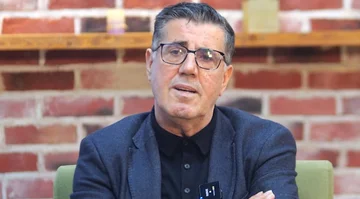
(8 years ago)An early connoisseur of developments in Albania stresses that opening negotiations with the EU would enable the European Union to more insist on carrying out reforms in the country. Robert Hunt, political adviser to the Helsinki Commission, in an interview for Voice of America, said that if he were an Albanian citizen [...]
An early connoisseur of developments in Albania stresses that opening negotiations with the EU would enable the European Union to more insist on carrying out reforms in the country. Robert Hunt, political adviser to the Helsinki Commission, in an interview for Voice of America, said that if he were an Albanian citizen, it would be scandalised how he escapes punishment from the country's top officials. He also said Albania's political leaders lobby in the US for their interests, and not for the good of the country, and that all countries in the region should take seriously the risk of foreign influences, such as those of Russia and Turkey.
Voice of America: The European Commission recommended opening negotiations for Albania's membership. The recommendation prompted debate over whether Albania is ready for the road to membership. What do you think, is he ready?
Robert Hunt: I think there is a degree of arbitrariity and subjectivity on the part of Brussels over the decision that when negotiations begin, so except for the fact that Albania is ready or not, Brussels will probably have wanted to send a signal to the Balkans, that enlargement is now on the table again and that Brussels wants to work with countries in the region and give them a European direction. So I think that's more why they're doing it now, and not because Albania has achieved the same level of progress that other countries had when they opened negotiations. However, I clearly think there is no consensus on this decision in Europe. I know from Rama's visit to Germany, which did not promise to support the European Commission's recommendation, there was some hesitation, questioning whether Albania is ready or not. In my opinion, the European Commission's recommendation is positive and I hope that negotiations for different chapters begin, but I hope that by doing so, the European Union will increase its influence on Albania to insist on carrying out reforms in the country. It looked like the EU was losing influence and I think it could increase its influence on Tirana to push for the reform programme and I hope to keep Tirana responsible for all conditions that must be met to close chapters. This will be the main one.
Voice of America: So you see this process with two parallels: on the one hand giving a chance on the part of Brussels maybe for its pragmatic reasons, some of which might have to do with the Balkans and some with the new reality in Europe and on the other side of pressure exercise?
Robert Hunt: That's what I'm talking about. And from the time the European Commission made that recommendation until June when member states have to decide, instead of trying to sell it in Albania, saying “will open negotiations”, and cause disappointment if that is not realised, I think both the government and opposition should try to work together to take steps that will enable member states to agree when meeting the Council to open negotiations. I'm a little worried when I hear Prime Minister Rama say if ( The EU does not now, will have Islamic radicalism or Russian influence. These are not arguments for negotiating openings. He should be concerned about these problems himself and work with the opposition, and I hope the opposition will also work with it. And (the prime minister should) say “these are threats to Albania, let's work to make sure that when June comes, the European Council says yes, let's open negotiations”. So I would like to see this kind of pressure exert on Albania's political leaders right now, to advance a stronger reform programme.
Voice of America: There seems to be a difference between the Commission's assessment, according to which the positive “impact of recent years continued” in the fight against corruption and the recent two State Department Human Rights reports, which say “corruption was widespread in all branches of government” and that of the Freedom House organisation. How would you analyze these reports?
Robert Hunt: First of all the reasons I mentioned why in my opinion the Commission took this step are not necessarily the reasons they can officially say, so it may have been to some extent a chance for Albania to prove itself. But I also think there is a trend on the part of Europeans that simply adopting laws or agreements on the strategy for fighting corruption, be seen as progress. The American view and that I think is evident in the Human Rights report the way we treat things is not the same: It is not enough to adopt a law, there must be concrete application, concrete steps. For example, it's a positive thing that has recently had judges vetoing, but that doesn't mean that overnight corruption disappeared in Albania's justice system and I think the State Department report reflects this. Even if there have been approvals, concrete implementation, change in the field, it has not been realised, and therefore it seems that this report is much more critical. I see this contrast. The way Europeans consider human rights, corruption issues, the state of law has always been somewhat different from that of the United States. It is the difference between adopting measures and concrete implementation. Then we have Freedom House report looking at things from another perspective. First of all, there is a nongovernmental organisation and non-governmental organisations, as well as civil society always require more, push for and in particular Freedom House, compare Albania with other countries, and analyzes for a longer period of time and when you do so, you don't only see what happened from 2016 to 2017 to 2017, but also where this country is compared to our expectations where it should be, and from this perspective Albania is far behind, and I agree with Freedom House. I can admit that there may have been little progress here and there, but a quarter of a century after the fall of the one-party communist state, Albania should have been much ahead of what it is now. It is truly ridiculous that he has not been able to advance more in terms of fighting corruption. So I would agree with Freedom House, who I think has the most critical assessment.
I would also say by reading the European Commission report, that even there is always a certain progress, which at least in English, is the same as saying minimal progress, does not say considerable progress, or great progress. So although the European Commission report is a little more positive, it is far from a strong support for what is being done in Albania to fight corruption. I hope Brussels will understand this and you will probably understand because it is its report and Tirana says it should be much more serious in its efforts to fight corruption.
Voice of America: What's striking in these reports, but even if you see the situation in Albania is the culture of impunity and the fact that property has begun, but people at high policy levels continue to be immune and you've raised this concern before...
Robert Hunt: It's not something that happens only in Albania, we see in other countries that when pressured to fight corruption, they do so with the easiest subjects, people at lower levels and not organisers, and without question that I see it there is impunity for those at high levels, that they are not accountable and I hope that this will change. That is partly why I share the most critical assessment, and if I were an Albanian citizen I would be scandalous about how political leaders have escaped and continue to escape punishment for what they have done.
Voice of America: How would you answer those who say, “if we were so bad, how could we have won elections with such a majority”?
Robert Hunt: It's a matter of alternatives. Given how rampant corruption is and not only is it in the Socialist Party, you see it in all political parties, people have no real alternative acceptable in the face of what is essentially a corrupt political elite. It would be great to see new faces in Albanian politics presenting these alternatives, but by the way things are structured, it would be difficult for young people to move on. I know that in some political parties, there has been an effort to turn attention away from the current leadership, but so far it seems that everyone is stuck in still positions and that's really the problem.
Voice of America: You mean the changes that gave wide powers to party leaders?
Robert Hunt: Yes, political parties themselves are not very democratic and I know that some of the ordinary members in party structures are disappointed by this situation, but their ability to change is very limited.
Voice of America: How would you assess the work of government since the majority won the elections last year?
Robert Hunt: It's a little hard to give grades on these things, but I think the European Commission report, the State Department Report and Freedom House, as well as others speak for themselves. I think the government understands it needs to take steps, but I don't think the pressure is enough to take these steps and I hope they do more because I wouldn't be happy if I were an Albanian citizen. Of course, some of the pressure may come from outside, but it would be good to see more pressure from within as well - pressure for change from the younger generation, civil society, and so on.
Voice of America: Speaking of outside pressure, you've always supported American Ambassador Donald Lou's efforts. Do you think they helped?
Robert Hunt: Yeah, a lot. I think he's done a great job there, and I hope as long as he's still there, he'll keep doing it.
Voice of America: One of the most serious problems in Albanian politics is the lack of transparency and lack of legal framework in terms of sources of financial support for parties and all major parties in Albania have spent money on lobbies in the United States. How justifiable is the spending of such sums as it is likely for political photographers in the United States and to score points with public opinion, in a country like Albania with high poverty and other problems? And one argument may be that lobby is legitimate, but the context matters...
Robert Hunt: Yeah, there's a legal context, but that's a very political question simultaneously. Lobby is the norm here in Washington and there are specific rules, such as registration as a foreign agent, reporting customer names and how much you've been paid by them. As long as everything has been done in accordance with American law, whether you like it or not, many things are accomplished in Washington, and some of these public relations companies may otherwise provide access to some individuals who could not. This is in theory. In reality, when such a thing makes parties and not governments that represent the country, their motivation is not necessarily to do what is good for the country, but what makes them as political parties look good and this is problematic to me because I think it's generally not positive for the country when every political party has its own lobbies here in Washington, racing with each other for contact with this person, and especially not like because each one of them is going to try to reach out for weighty members of Congress for example, not necessarily knowing the details of the political situation in Albania and bring them a good argument, and he's going to say something that he's going to say that he's got a bad attitude like the United States or the situation. Then there is the issue that you have discussed, the lack of transparency, and even where this money comes from. They're huge sums and they make me wonder where they come from. So I see it as a major political concern. Even if everything is done legally here in the United States, Albania should consider whether this is the best way of action. I have worked with the Albanian Embassy here in Washington and there have been very good and capable ambassadors and ambassadors working to represent the country as a whole, but seeing how many shortcomings they have in resources when there are those representing the country here in Washington, I would prefer to increase funds to improve the ability of the Embassy to provide contacts and to be available to any visitor from Albania, regardless of which political force, to come and use the sources of the embassy, such as providing meetings and other such as these. In my opinion that would be the best way, but it is up to Albanians to judge whether they are satisfied with the situation or want this other way that the whole country will represent.
Voice of America: But when there's uncertainty about where the money comes from and how it comes from and how it's reported and used, it doesn't happen anymore just if the public approves it, the rest is that the public doesn't understand...
Robert Hunt: Yes, it is a lack of transparency and this is one of those things that needs to be changed in Albania, to be made public about where this money comes from.
Voice of America: Past and current governments or ruling parties have lobbied in the United States. The United States is friendly. Do you think it's necessary to spend all this money when, for example, a government, a prime minister or a ruling party will have access to officials in America?
Robert Hunt: I think that answering your question is at the root of all of this and comes mainly from political parties. Albania is very pro-American. I think for the most part the United States knows this and has greatly supported Albania and those who know Albania even more. There may be some people here in the United States who may not know so much about this good relationship. But I think that kind of lonering doesn't have as a target as much as we think of the country as a whole. It is more competition within Albania the reason for a part of this lobby than efforts to lobby on behalf of Albania itself. I think that's the problem. No, Albania doesn't need to make much effort to sell itself here in Washington. It's a friendly country, ally and we have a good relationship in this regard. But lobby has increasingly focused on this game if we favour the Socialists or the Democrats or other political forces.
Voice of America: Concerns have also been raised about a potential tendency towards authoritarianism, given the control Prime Minister Rama has over the party and the vast majority in parliament, but rather thanks to his actions to use this majority for not too convincing reasons. These concerns cannot be seen outside the context of increased liberalism in some European countries. As someone who has worked for decades to establish and consolidate democracy in Albania, are you concerned?
Robert Hunt: Yeah, I'm worried, and I think that maybe just because I've been following it for so long, I don't necessarily see it as much connected to the growth of Iliberalism throughout the region. I see it as something that is a constant concern in Albania itself. First of all, I would say that since 1997, we've seen in Albania -- Socialists, Democrats, Socialists, Democrats, by exchanging power, where each of the parties provides two mandates, or eight years, and especially during the second mandates, you can see how all problems start to intensify: The ruling parties arrogantly push their agenda, corruption increases, so I am not surprised that we can see the same things now in the second term of the Socialists. This does not mean that the next elections will necessarily be lost, but I have seen this trend before. We have seen it with the Democratic Party, and this reflects a problem that in Albania is more structural, in the sense that there is no respect for the opposition in the first place, trying to ensure the opposition's co-operation and to put it out openly and would criticize both parties when they were in the opposition, and the problem of how an opposition should behave in democracy. Part of the problem in Albania is that democracy is often interpreted as “if you win the elections, take everything and do whatever you want” and (democracy) doesn't work that way. Two additional concerns that concern me most at the moment are the first - the size of the majority of the Socialists. This certainly reflects the outcome of the elections. Also in practical terms, in previous governments where the ces was a coalition partner, which could determine what would be done, maybe at the time I was naive and I thought that a coalition partner could prevent a part of this negative trend, but rather I think that the LSI focused more on taking advantage of the coalition coalition partner, all the benefits coming from such a fact than trying to ensure that Albania was on the right path to reforms and restrain the main coalition partner in power. And second, although I don't believe that this trend of increasing liberalism in other countries is so present in Albania, it can reduce the pressure on Albania to do something to solve their problems, because if the trend in neighbouring countries is negative, this could result in a way that “we are only one of many and therefore will not set us apart by”. So yes, this trend is concern, but it is a constant, non-new concern and a concern Albania must face.
Voice of America: How concerned you are about the Russian and Turkish influence not only in Albania but in the Balkans, or rather the effort to exercise influence?
Robert Hunt: Incredibly concerned. The Helsinki Commission has had hearings on the subject. In some of the sessions for Russia, participants have said the Balkans are targeted by Moscow and Russia's policies towards Europe. They are trying to find ways to influence the Balkans. We have also had hearings in which we have analysed the situation on the part of the Balkans: the size of foreign investments from Russia and other actors, whether China, Gulf countries, Turkey, etc., and whether it can turn into a political impact that can change the country's direction. So it's a big concern for the region and it's also a concern for Albania. It's not enough to say that it doesn't have Russian influence, just because the country is so pro-American. A popular Russian tactic is to penetrate a country using other seemingly more friendly and never known, so caution is needed. This is a further argument for greater transparency than exactly what happens in Albania. Also, of course, as long as there is corruption, even the most pro-American and pro-European country is exposed. If anyone can get bought, it's a problem. And it's not just Russia, it's Turkey. While Russia has been an ongoing problem, developments in Turkey under President Erdogan's leadership, I think they are doing more and more to policymakers here and I hope that even in the Balkans, they can understand that this is not just a phase, it may be something long-term, something they have to deal with. If countries in the region want to have a European focus, then they should be concerned about Turkish efforts that could push them away from that goal. This certainly relates to the whole issue of the American and EU role. I don't believe that in Albania the role of the United States needs to be adjusted because I think we're doing a good job there, but in the region, in Bosnia and other countries, the gradual withdrawal of the United States has created an emptiness that can easily be filled by these other countries, such as Russia, Turkey or others. I think it takes more American commitment and the EU in the region.