a minute ago
When books were burned in Germany, philosopher Martin Heidegger added fuel to the fire

Periskopi(8 years ago)
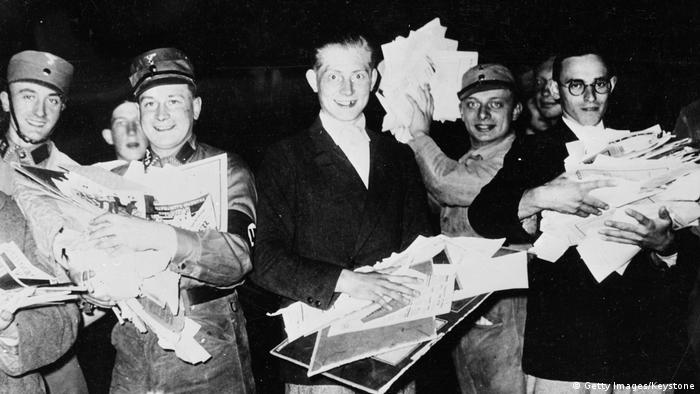
(8 years ago)Eighty-five years ago, the fire sparked by the Nazi regime targeted literature labeled as non-German “”. Many enthusiastic students joined this act at that time. “This was just the beginning. Whoever burns books, they burn human beings”. Those words were written by German poet Heinrcich Heine [...]
This was just the beginning. Whoever burns books, they burn human beings” Those words were written by German poet Heinrcich Heine in his tragedy “Almanor” about 100 years ago, before the Nazis made his warning come true.
The burning of books was organized by the Nazis in 1933, months after Adolf Hitler had taken power, where it was only the beginning of a persecution that would force hundreds of authors to take to the streets in exile, while the rest to be persecuted, reports “DW” Transmission Periscope.
The foundations of this event were established by the propaganda minister Joseph Goebels, who also had the support of student organizations. Their calls were: “The state has been occupied, but not university”.
But he was not the only person in this enthusiastic participation. “We, as representatives of the Book Association, actively participated in the burning of the book”, had said the manager of the German Association of Editors and Librarys, Alexander Skippis. We drafted lists. We directed libraries not to keep certain books. So in the end we supported the Nazi regime and its” ideas, Skipis says. He adds that this is done in hopes there will be increased economic benefits.
Author lists and works representing a “non-German breath” were compiled.
Most of the blacklisted were Jews, adding to the leftist, rightist, pacifist, or critic of national-Social ideology.
These include Bertolt Brecht, Kurt Tuchovsky, Erich Kastner, Herinch Mann, and other authors. Scientists such as Albert Einstein and Sigmund Fried were also part of the black list.
The first - time burning of books was done in the Berlin Opera Square, also known as the Babel Square, on the evening of May 10, 1933. More than 20,000 books were brought to the square.
About 55,000 students had arrived, and tens of thousands more attended the event. Minister of propaganda Goebels said that evening “The age of excessive Hebrew intellectualism has already ended... If students get the right to cast intellectual dust into flames, you must also take responsibility to remove these wastes to clear the way for real German works”.
The new president of the University of Fraiburg at the time, famous philosopher Martin Heidegger, addressed the students with these words: “Flack, talk to us, shine us, show us the way from which there is no going back! Fire flares, heart burns!”/Periscopi/