10 minutes ago
Freedom House estimates Kosovo has advanced little to the degree of democracy

Periskopi(8 years ago)
(8 years ago)The headquarters human rights organisation in the United States, Freedom House, estimates that Kosovo has scored easy progress on the scale of democracy since last year. These statements are part of this organization's annual monitoring of democratic reforms project, a project that has been published since [...]
These statements are part of this organisation's annual monitoring of democratic reforms project, a project that has been published since 1995.
In an assessment from one to seven, where one grade is the highest, while 7 is the lowest degree of democratic progress, Kosovo has a mark of 4.93 different than 4.96, which it had a year earlier.
Part of the report on Kosovo says among other things that Kosovo had a turbulent year during 2017. There were some improvements in the election process, while the fight against corruption was stalled due to lack of political will.
The “, despite semi-in authoritarian tendencies and the mix of administration and external interests. The constitutional and legal framework has continued to provide protection from the concentration of power”.
The report describes weaknesses that passed through the government since 2016, which could not be overcome due to continued internal tensions caused by “antipatia” among the constituent coalition parties, which led to early elections in June last year.
The new ruling coalition was established in September, but, reportedly in the report, it failed to provide more stability than the preliminary one.
“instead, he relied on government by decree, bypassing parliament and often acting in spite of processes and legal requirements”, broadcast the VoA.
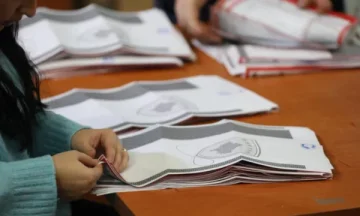
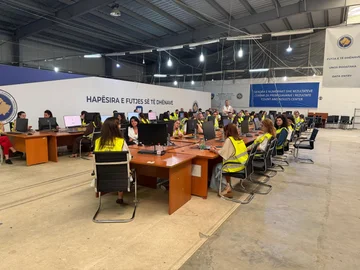
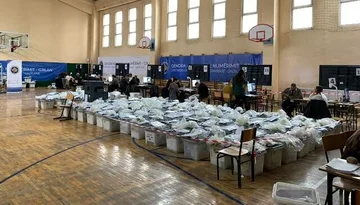
Kosovo held two sets of elections during 2017 -- general in June and municipal power -- in October.
“If long ago identified shortages under the legal election have not been exceeded, the Central Election Commission and other authorities undertook a considerable effort to ensure that elections are free, competitive and transparent. This was achieved to a large extent, even though some concerns arose over political pressure in Serb-populated areas”.
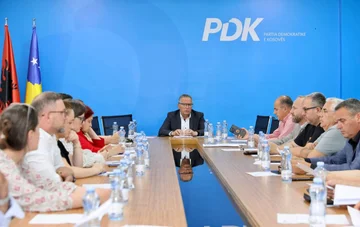
The report stresses that the elections showed that the “achievement of the nationalist party, Vetevendosje and the decline of power of traditional parties has continued during 2017. Ideology has been put at the top of the election campaign, threatening to dominate parties originating in the 1990s and whose leadership for the first time is unclear”.
The report highlights changes that took place on the political scene after the elections by changing the rankings of political parties.
With institutions paralyzed by the busy electoral calendar, it is said in the report, civil society and the media took into their hands organising public debate and continued to spread corruption and mismanagement of public affairs by the state and its officials, despite increased pressure, often manifested by physical violence.
The report stresses that the framework for local institutions has experienced some minor improvements during 2017, and municipalities still do not have enough funds and resources to fulfill their major role in Kosovo's political system.
“Over the year there was no progress in forming the Association of Serb majority municipalities, due to procrastination of dialogue with Serbia and congested political developments”.
The report stressed that the greatest in the field of justice was the functioning of the Special Court in The Hague under Kosovo's legal umbrella, despite opposition from many actors in the political spectrum and the current government. It also mentions last December's initiative to abolish this court “by a number of MPs and with the support of the president and government, raising doubts about Kosovo's dedication to justice and rule of law”.
Similarly, says the report “The fight against corruption stalled after authorities showed an absolute lack of commitment to deal with high profile officials, preferring to focus on low-level corruption, thus avoiding complicated processes and fighting political ties”
The report stresses that during 2018 the new Kosovo government will try to implement its programme. “Internal Conversion, a weak coalition that depends on minority parties and a unilateral approach will mark this year, as the government will continue to bypass parliament to avoid adequate parliamentary control”.
The European Union will continue to seek the fulfillment of inherited obligations such as establishing the association of Serb majority municipalities and meeting the final conditions for visa liberalisation.
The report says that the integration of Serb majority zones in the country's north will progress slowly in the course of 2018, depending on the pace of talks with Serbia. The judicial system in the north will continue to replace the former parallel structures, though subject to high political interference, while the municipalities and decentralised administration will remain weak for a while.
Even during 2018, the report says, the lack of political will and high politicisation of state structures will continue to impede the fight against corruption, while political opposition to the Special Court continues despite diplomatic criticism.