4 months ago
The Balkans are in an extremely delicate situation if left alone

Periskopi(8 years ago)
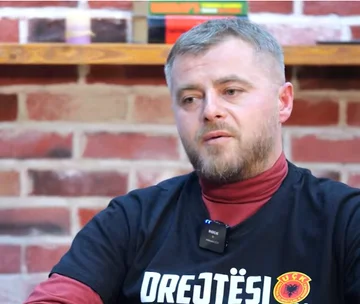
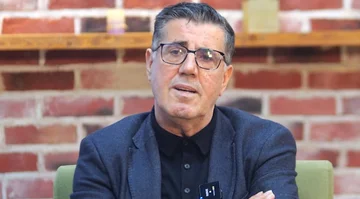
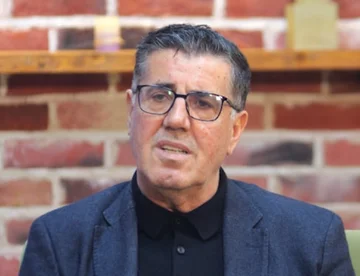
(8 years ago)For the integration of the Western Balkans into Euro-Atlantic institutions, the danger of Russian influence on the Balkans, as well as some of Macedonia's challenges towards Europe, Blerim Reka, professor at Southeast European University in Tetovo, has spoken in an interview for New York's Voice of America. He has said that the Balkans are in one [...]
For the integration of the Western Balkans into Euro-Atlantic institutions, the danger of Russian influence on the Balkans, as well as some of Macedonia's challenges towards Europe, Blerim Reka, professor at Southeast European University in Tetovo, has spoken in an interview for New York's Voice of America.
He has said that the Balkans are in an extremely delicate situation if left alone and left out of Euro-Atlantic orbit.
According to Reka, Macedonia's stability currently depends on two factors.
Reka has described Macedonia's negotiations with Greece as difficult.
When talking about the Law on Languages, Reka has said it was an advance of legal solutions for the use of Albanian language, but is not the final solution desired by Albanians.
Voice of America: Professor Reka, you have recently legalized in Florida on the geopolitical of the Balkans between the West and Russia. We hear many analysts warning that the Balkans could return to the battlefield of a new cold war between the West and Russia. Do you agree with such an analysis?
Brian Reka: Exactly and what a coincidence! Today is the day when the two Koreans signed for the end of the old Cold War. Russia, meanwhile, is opening a cold old war since President Putin's speech at the Munich Security Summit and with concrete annexing shares in Gjorgji, Ukraine and Syria. In recent years there is an impact and a diplomatic and military and energy penetration of Russia in the Balkans, along with Turkey's cultural or cultural and economic degradation. I think that the Balkans are in an extremely delicate situation if left alone and left out of Euro-Atlantic orbit, as I said a few days ago in my Florida lecture. This is the last time that the US, NATO and the EU will change their approach of waiting and be more pro-active and present in the Western Balkans.
Voice of America: Are interethnic relations in Macedonia a weak link that Russia could use to bring about instability and conflict, as it did in Ukraine?
Brian Reka: Macedonia's stability currently depends on two factors, or on two pillars: The first pillar is domestic, interethnic relations in Macedonia between Macedonians and Albanians, and the second pillar is foreign, its friendly relations with its neighbours more specifically with Greece, as far as the name issue is concerned. I appreciate that only one policy, which would achieve an interethnic consensus between Albanians and Macedonians in this state, would be a guarantee for internal stability and at the same time would be like a kind of entry ticket to Euro-Atlantic integration, especially in the situation where we still don't know whether by July there will be membership for Macedonia in NATO or not. Any postponement of Macedonia's NATO membership would be catastrophic for Macedonia and the region, at a time when even Russian state and diplomatic leaders several times in recent weeks made their opposition to Macedonia's NATO membership clear. In other words, leaving Macedonia in a Limbo situation, or in a security vacuum situation, would have externally dangerous consequences for the entire region.
Voice of America: The European Commission's recommendation for starting negotiations with the EU is on the basis of reform merits or a gift to the new government that faced many challenges?
Brian Reka: This is a combination of both; not only in Macedonia's case, but the entire enlargement process is a geopolitical and less technical process. True, there are conditions, instruments and criteria that must be met, but the European Union since its establishment led the geopolitical line and only when strategic interests were endangered changed the policy of enlargement. For the past 15 years, the European Union left the Western Balkans out of its orbit, and only when the North-East and Southeast threats began on European borders, it began to turn into enlargement policy. In that sense, even in Macedonia, it is now the anniversary of the tragic events that took place in Macedonia's parliament on April 27th. It was what the last alarm looked like -- April 27th of last year -- of how far the infiltrate and effects of foreign secret services can go and the destabilisation of Macedonia and the region. On the other hand, in the recommendations, delivered in the progress report for Macedonia, it was very clear that in addition to meeting the conditions, which are known by “aquis communitaire” for all states, Macedonia should still close the problem with its southern neighbour Greece on the name issue. There is little time; there are two months remaining from the EU European Council Summit, which should prove positive recommendation for the start of negotiations, and less than 3 months from the summit. NATO, where it is expected that Macedonia will finally join NATO and close the last hole of NATO's southern wing in the Balkans.
Voice of America: The Balkan countries' internal problems, including Macedonia, are known: corruption, capture of the state, lack of legal state, autocratic trends. In your opinion, is the temptation toward the European Union enough for these countries to successfully fight these trends, or is involvement and more energetic pressure required of the West, as we see for example in the case of the American ambassador to Tirana?
Brian Reka: This belongs to the second technical basket, that a little higher, I talked about the geopolitical aspect of the problem on EU countries' membership. In the EU report published 17 April, as well as in the February 6th communication from the European Commission, two clear messages were delivered: The first clear message was regional, that no membership will be accepted, or that no new European Union member state will be accepted from the Western Balkans without the closure of bilateral inter-ethnic disputes. The second condition was very clear: derimination of societies in the Balkans, which means, without accurate evidence for the fight against corruption, organised crime, without the establishment of an independent judiciary and outside political influences, which in Albania is being done through rventingão and through Macedonia, no state can join the EU. That's why in the last 7 years from post-conflict states, all Balkan states slipped dangerously into the situation of captured states. But that is not the end; the danger is even greater. If this process does not stop now, they can slide into the stage of failed states. And all the failed states, in all the international analyses, have been shown as an attractive magnet for authoritarian regimes outside the Euro-Atlantic community, to extend their influence.
Voice of America: From your observations, what are expectations regarding the Macedonia name issue?
Brian Reka: Negotiations are going hard, and as I have said in 2008, I fear the name issue is a pretext on the part of Greece, rather than a real cause to block Macedonia. I am afraid that with such insistence Greece is playing the role of another power, which has very clearly told Macedonia it opposes its NATO membership. I would really like a solution to be found, but I think that without the influence and firm position of the US to membership Macedonia in NATO any scenario until July 7th is possible, so even the scenario of no resolution of the name issue.
Voice of America: What epilogue can be expected from judicial processes against former Prime Minister Nikola Gruevski and former senior government officials around him?
Brian Reka: In progress report, I believe you've read a sentence when it comes to the judiciary, that reforms have begun, but there's still a lot of work left to do, the special prosecutor's work has been released, so there's no longer those constructions, like it did two years ago, but it ends with a very clear statement: We seek precise evidence of the detainees and convicts with the first court rulings on organised high crime and reportedly large fish. I hope that if everything goes well at the NATO Summit and Macedonia joins in July, it is as I have warned it before, I expect not now a spring, but a humiliating summer in the entire Balkans, including Macedonia. With that, I believe we will begin to have the first judicial epilogues of the most serious cases of organised crime and corruption.
Voice of America: The recently adopted language law in parliament is not entering into force, because President Ivanov does not decree it; What solutions can this law have to be empowered and applied in practice?
Brian Reka: The language law was an advance of legal solutions for the use of Albanian language, but is not the expected final solution by Albanians. It was like some kind of compromise between political forces. On the other hand, outside these interparty negotiations, the second factor is the president's factor, who first failed to decree it and now holds it hostage for two months. I appreciate that the Speaker of the Parliament must go by signing himself and handing over the law to the Official Library for publication.
Voice of America: Mr. Reka, thank you.
Brian Reka: Thank you!