4 months ago
What does Kosovo benefit from the Service Direct?

Periskopi(8 years ago)
(8 years ago)Kosovo is going through several processes in its journey towards integration into the European Union. One of the most important is the implementation of the Stabilisation and Association Agreement, where perhaps the challenging part of this agreement has to do with implementation of the European Union's Services Guide. To better understand the function of [...]
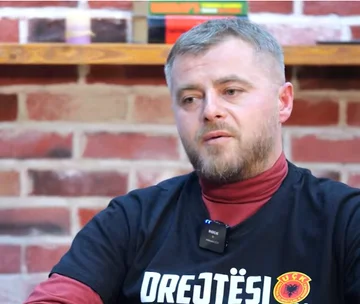
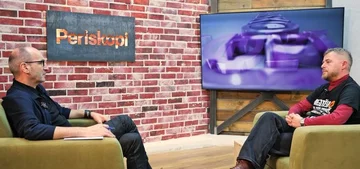
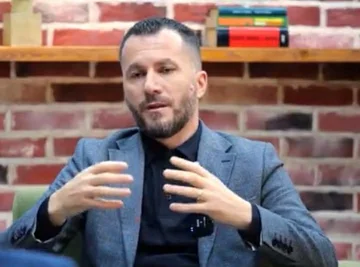
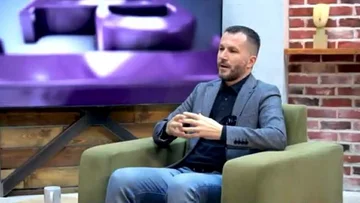
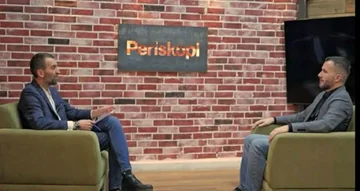
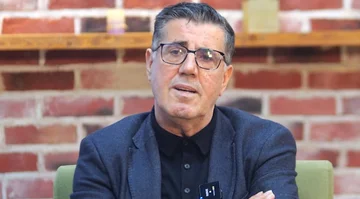
One of the most important is the implementation of the Stabilisation and Association Agreement, where perhaps the challenging part of this agreement has to do with implementation of the European Union's Services Guide. To better understand the function of this directive and the situation about its implementation, Periscope has interviewed Rexhep Blace, who is Director of the Legal Department within the Ministry of Trade and Industry.
What's Services?
The service directive is a legal act that has been adopted by European Union institutions, the European Parliament and the Council of the European Union, respectively. This regulation aims to regulate one of the EU's four fundamental freedoms, freedom of movement of services.
The goal of this directive is to create a service market that would facilitate the introduction of services in Kosovo by EU member states, and also facilitate the introduction of services from Kosovo these states. In this case, a citizen or company from EU member states, for example a Frenchman, will have the right to exercise business activity in the field of services in Kosovo and also a Kosovar or Kosovo company will have the right to do so in France or any other European Union country. By liberalising the service market, this directive will also affect the establishment of competition among service providers that will, of course, result in the establishment of the quality of services for citizens.
So in this case will Kosovo benefit and the European Union?
I had said that Kosovo would benefit a little more. Since, according to what we know, Kosovo has a considerable number of companies in the Service Sector and, with implementation of this directive, these companies will have access to the 600 million market in the European Union. So, besides Kosovo, our companies will have the opportunity to provide services even in EU countries, and this will raise not only the revenues but the quality of their services.
When is the complete implementation of the Service directive expected?
The completion of the directive is one of the main obligations emerging from the Stabilisation and Association Agreement (MSA), while the maximum term for the SAA is 10 years. I am convinced that within this term we as Kosovo will fulfill all obligations in this direction. On the other hand, also according to the SAA, five years after the signing of the agreement there will be a consultative meeting with European Commission officials to see where we are in reaching the agreement and what are the remaining steps that need to be fulfilled in the context of the publication of the Service Guide. Given the conclusions of this meeting, implementation of the directive is likely to begin even earlier than 10 years.
How will implementation of the directive affect the economy in general and attract foreign investments in particular?
If you analyze it from this perspective, you will see 70% of employment in EU countries stems from the service sector. The fact that services are very important for a country's economic development also shows information that service directives cover 45% in the EU GDP framework. The main goal of the directive is to eliminate all bureaucratic and administrative barriers that hamper the establishment and freedom of service delivery, and to be sure that the maximum reduction and reduction of requirements to enable the delivery of a service in Kosovo will significantly improve the business environment and make Kosovo an attractive country for foreign investment, in particular from EU investment. But this directive will increase competition even within Kosovo, and will simplify and fully avoid obstacles in the field of service delivery.
How will implementation of the directive affect the everyday lives of citizens?
At first, as I mentioned earlier, with the establishment of competition, this directive will provide better services for citizens. By increasing competition in the market, the directive will enable citizens to have more choices, and therefore it will affect the growth of jobs as Kosovo companies operating in the field of services will have access to the EU, so they will eventually have to raise the number of workers.
Chapter 4 of Article Service Law 16, 17 and 18 exclusively are mothers dedicated to the rights of service beneficiaries. In these articles, among other things, it is for service providers to offer, physically or otherwise, their pages, general standards for citizens. These information include service providers, business registration numbers, general requirements for a service, and the type of contractual service service conditions for offering this service, price, and in case of legal means for service beneficiary. So the legal advice so that if the beneficiary is dissatisfied with the ministry, or you feel that he has made you unjust, there is a clear procedure and a complaint address. This is not a service provider's denisration but is a legal obligation derived from the law of service.
Also in Article 18 of the Service Law, we've also seen providing personal responsibility for service providers in case the beneficiary of services is threatened with damage to his health or life. In this case, the service provider is obliged to have professional security so that in case of damage, the citizen can be compensated by professional provision of the service provider for the damage done.
Which areas of service will the Service directive cover?
The directive covers a wide range of services that have to do with citizens' lives, such as: Lawyer's Services, Architecture, Invenerity, Tourism, Agriculture and Veterinary Services, Accountability, Audition, Various Intermediations, and a lot of points like: Shoeworkers, Skinworkers, Pharcators, Seamstresses, Oreraworkers as well as private education services such as centers for professional skills and many other services.
We, thanks to the EU project that has been assisting us for two years, have identified a total of 398 services that are covered by the directive. It is important, though, that this list is not final, and other services can always be added. For example, in Kosovo at the moment, we have services within tourism that are not regulated, such as tour guiders, which we believe will be regulated by the future tourism law and covered by the Services directive.
What steps have been implemented, and what remains to be done to implement the Service Guide?
As I mentioned earlier, under the SAA we have both legal objective and regulation of the field of services by transposing Directity. From the moment the SAA went into effect, we as Legal Department, both the Minister of Trade and Industry, thanks to the European Union project, have taken steps towards implementing the Service Guide.
The first step has been the release or adoption of the legal framework for the transmission of the service directive with the aim of regulating the field of services, since for every step to be taken in this direction there must be a legal basis.
But in addition to the legislative aspect, in preparation of legal and legal acts, we as legal departments also in co-operation with all other ministries and agencies have done legal reviews and analysis of sectorial legislation in Kosovo that is related to services. This has been done in order to identify the legislation for services in Kosovo and to analyse how much this legislation is in line with the Services Guide. This was a massive task, and in this respect we are the first country to present full review of legislation where we've examined 131 acts under law and resulted in 54 acts that need to be administered and completed to harmonise with service directives. So, of the 131 acts, 54 acts are incompatible and we have to harmonise them over the next five years. But if viewed in general, we can conclude that Kosovo in general has a legal system not too far from the Service Guide.
A theme called the only point of contact is regularly interconnected when it comes to the Service Direct. Can you explain what it is and what function the First Contact Point is expected to have?
Article 14 of the Law on Services flowing from the Direct, envisions establishing the only point of contact as electronic portal that will facilitate providers and providers of access to services and general information. As for implementation, we plan to implement it in three stages: The first phase involves establishing all laws, legal acts, services, and access to services at this electronic portal. This is what we believe will greatly facilitate the work not only bidders but also citizens who benefit from these services. The second phase will be a little more advanced, with in addition to the information mentioned above, the forms for obtaining services from institutions will be established. And the third phase, which I call miracle, will be when all sides will be able to receive all services online from institutions. In our visit to Lithuania, which has been accomplished with the help of the European Union project, we have also seen how this system works in practice, where there is actually no physical contact between the official in the institution and service reception. The service researcher makes the request online, scans and emails all the documents needed. The only point of contact accepts demand and documents and sends them away to the competent body, then if all the documents are in order, the only point of contact sends them permission or license so that they sign the electronics that have requested. I believe that, in addition to facilitating access to services, this would have markedly affected the possibility of negative phenomena such as corruption and others.
At what stage is work now related to the U.S.R., and what work has yet to be carried out?
Thanks to the European Union-funded technical assistance project and in close co-operation with other ministries, we have so far been able to get the law into force in April 2017. We have also managed to extract two administrative guidelines, one for the functioning of the only point of contact, and the second one that has to do with reporting procedures to assess the compatibility of projects and norms with the direction of services. Also, a major task has been done in preparing the five-year action plan for implementation of the Service directive, where we have identified all legal and underground acts that need to be changed and administered within five years and comply with the directive. As the concept of the Service Direct is new to Kosovo, in co-operation with the European Union-funded project, we have organised many trainings, workers, joint meetings with officials from ministries and other institutions aimed at raising awareness for implementation of the directive.
What do you appreciate as the most challenging activities yet?
I believe challenging activities have been the ones that connect with the cross-border character of the directive implementation. We are very self-aware and familiar with the aspects that connect with our internal market, in the form that is now. But during our journey to the European Union, our market will open even further for companies and individuals from other European Union countries, and this will not only be increased competition for local businesses, but also be a management challenge for institutions. For example, several concepts as the right to establish, and in our Jurydic system so far we've only had business registration, so we need to adapt to this and other new concepts. But perhaps challengingly it has been the failure and identification of all laws, legal acts, and provisions that are interrelated and analyzing if these are compatible with the directive. According to EU officials, Kosovo is the first country to implement this process of reviewing sectoral legislation. Under this process we have violated 131 laws and legal acts involving thousands of pages of legal restraint.
What issues are expected to challenge you the most in the future?
I think the most challenging work has been to operate the only point of contact, where substantial human and financial resources will be needed for this job, but, above all, political support and interaction with E-government, electronic signing software, data security and others. But I believe that despite these challenges, in collaboration with the Information Service Agency that is under the Ministry of Public Administration, we will be able to establish and function on the First Point of Contact. Also challenging will be the ratification and change of laws that are out of line with the directive in a five-year term. Then these will have to go to management levels at the ministry, at the assembly, and eventually they will have to be signed by the president. )
How much would you as a department and how MTI can influence the acceleration of this process?
We have already created a sound system of adopting the law enforcement process, with this we have enabled the creation of a notification system for all legal and underground acts that need to be adopted in the future. Before approval, all will have to come to the MTI legal department where we will examine whether they are in accordance with the Services Guide and offer our legal opinion. In this way the adoption of all sublaws or acts that may be contrary to the directive will be avoided. We aim for within five years of signing, the whole Kosovo legislation to be in line with European legislation, where this will also be a major Kosovo achievement in its journey to the European Union. We will continue to organise training, worker and meetings so that we can constantly ensure that the whole process will go properly. But we will also be in close co-operation with the private sector as well, since it will be the right private sector to be influenced mostly by the implementation of the directive. On the concrete side to date, we have accepted 5 laws, administrative guidelines and six legal acts for examination, and we have given a positive legal opinion of these acts. So the notification process only has started to yield results.
When you await the complete start of implementation of the directive, and what are the factors that make you have this time vision?
Implorement of the directive is part of the SAA and harmonisation with EU laws or acquis. This is Kosovo's continued goal and I am convinced that within the five-year term from the signing of the SAA we will have very good and tangible results in this direction. But of course within the 10-year period that is the maximum deadline for implementation of the SAA we will be implementing in the Service Entrance.