4 months ago
Kosovo not to focus on US, Russia, but on EU membership process

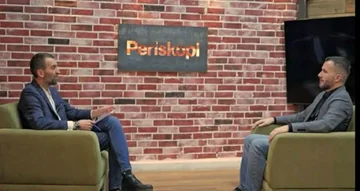
Periskopi(8 years ago)
(8 years ago)Former Austrian deputy mediator in Kosovo's status talks, Albert Rohan, has ordered Kosovo to focus on its EU membership process, since the country will not join the US or Russia. He has said that Kosovo has scored major successes in the first decade of independence, [...]
He has said Kosovo has scored major successes in the first decade of independence, but needs more work to fight corruption and organised crime.
Among other things, Rohan says the border agreement with Montenegro has taken on greater importance than needed, in relation to the liberalisation that is more important.
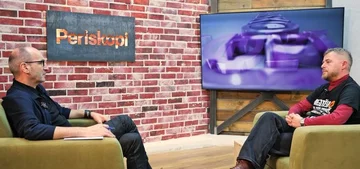
In an interview in KTV's Interactive, Rohan has spoken of the setbacks of talks in Vienna and the proposal he served to declare the country's independence.
Full interview with Albert Rohan:
It's been 10 years of independence. How much do you think Kosovo has walked?
In my view, there are mixed results. There are positive things that happened. Kosovo as a state, has been recognised by many states, consolidated institutions and democratic processes are occurring. Kosovo has become a member of many international organisations, and above all, relations with the EU have developed with the signing of the SAA. These are all positive and for me who have been linked to Kosovo for nearly 30 years, if you look at it from a longer perspective, Kosovo has never been better than it is today. In the '90s, Kosovars were oppressed, lived under colonial regimes, were under international protectorates in the next decade, and in the last 10 years, they are living in their independent state and I'm sure they're happy about it. On the other hand, there are many challenges, many of which come from abroad, such as unfriendly relations with Serbia, then negative behaviour from Russia, refusing to recognise Kosovo, which makes Kosovo's involvement in the integration process more difficult. And then there are internal problems, such as economy, social problems, high unemployment, especially in the new generations that need to be addressed, which means there's still a lot of work to be done.
What do you see as the greatest success in this decade?
I believe it is the very fact that Kosovo exists and everyone accepts this, even if not formally. This is the greatest success. But it should always be considered that from Kosovo it has started. Hence, progress is slow, but it is taking place, so I would not isolate anything as the greatest success is the ongoing movement ahead.
After so many years, there is still dialogue between Kosovo and Serbia. President Thaci says this should be last year and an agreement must be reached. What do you think it should look like?
I wish this relationship would normalize today or tomorrow, but maybe I'm asking a lot. I think that my friends in Kosovo should accept a reality, which is that Kosovo's full involvement in the international community depends on its relations with Serbia. There may be disagreements here, or it may not be right, but it is a vital fact that all, including leaders, should consider. Therefore, relations and dialogue with Serbia is so important. Dialogue must continue, there must be continued contact at all levels. The phase must be reached when there will be co-operation with a state that will forever be Kosovo's neighbour, whatever happens. In this context, I would ask my friends to consider one aspect. Public opinion in Serbia has been served for 30 years by nationalist propaganda and strong opposition to an agreement with Kosovo. Leaders like President Vuciq should take into account public opinion, have voters and should be confirmed in other elections, as do leaders in Kosovo. And this public opinion mood also explains President Vuciq's Zig-zag game that one day says something positive, another day something negative. My impression is that he's working slowly to guide this public opinion ship in another direction. So I think there should be patience, there should be a purpose, but it won't happen tomorrow.
Do you think President Vuciq is the right person to make bold decisions for Kosovo, considering how powerful his party is in Serbia?
First, the stronger the party, the easier it is to make some decisions that I think will not be popular. The second, the more nationalist the party, is easier to compromise.
Like President Vuciq's party.
It's always been like that. Just think of Mr. Becky of Israel with Egypt. No one has ever been able to make peace with Egypt, except Mr. Becky, who was a real nationalist. So this is old experience, so I think it's the right person. Despite his past, which we know, because he was active at the time, I believe he is interested in resolving this issue.
Should there be a legal binding agreement at the end of the process?
It would be my ideal recognition of independence. I don't know what a legal treaty would mean. Ambassador Ischinger when he traveled to Belgrade in 2006 with Troika ( The US, the EU, Russia), proposed the 1972 German German-German Treaty, where without formal recognition, each party knew the existence of the other, which said it would not prevent acceptance into international organisations and so on. Serbia rejected him at the time, even though it would have to. I don't know if that's enough. To me, the goal should be to have a normal relationship between two countries.
But formal recognition is very difficult to come by, and it will surely take many more years.
True, but here's another reality I want to advise my friends. Kosovo's future lies in the European Union, as does all other countries in the region. The US, Russia, Turkey will not be factors in the future for the stability and prosperity of Kosovo and the Balkans. I think you should understand that. I know that the role of the United States was very important when the independence process began. The US has been very supportive even in our process, but will not define Kosovo's future, Kosovo cannot become part of the US, Kosovo should become part of the EU. Therefore, I advise Kosovo leaders to focus on Kosovo's membership in the European Union. Not to criticise the EU Commission, member states, is counterproductive. I have to work with the Commission. The commission, especially the Hahn Commission, is a friend of Kosovo and he wants to help in difficult times and include Kosovo in the enlargement process, as we have seen in these days when Spain has tried to prevent it. Therefore, work together with these people and with member states that are good friends of Kosovo, such as my country. So, you need to focus on this. For me it is essential that Kosovo try to catch up with the integration process of the state that has moved the most, which in this case is Serbia. It is especially difficult under these circumstances, but it is not impossible, especially for the fact that the alternative is for Serbia to become part of the EU and Serbia to remain out and that would not be good for Kosovo, whether by legal agreement or without it.
Kosovo feels it is not receiving EU attention and assistance as Serbia moves towards integration as a result of dialogue. Kosovo is stuck and we are the only isolated country without visa liberalisation.
Yeah, but you gotta see why that happens. It's not the EU's fault, but Kosovo's for it. Kosovo has not done its homework. Kosovo has lost two years for visa liberalisation because it has not approved the border agreement with Montenegro. In my opinion, the border agreement has technical character. We were taken during status talks with the Macedonian border. There was a commission and the case was settled. It's not political, it's a technical problem. If you have historical boundaries, you need to transfer it nowadays and that's all, we know there were commissions from Kosovo that negotiated the agreement, which was signed by Kosovo political leaders and then not approved. And, compared to visa liberalisation, this border agreement is of secondary importance. Lost two years for that is simply unacceptable. Let me say that Kosovo was in package with Georgia and Ukraine to get liberalisation. Both other countries got this right a year ago.
But they did not have that condition. Virtually, part of Ukraine is now part of Russia, and people feel it is an unfair condition for Kosovo.
It may be, but this is a condition that must be fulfilled. You might object and call it unfair, but the good policy is to face reality and reality is that Kosovo wants visa liberalisation, EU member states established two conditions that must be met and that must happen.
But we have the prime minister of the country who says Kosovo loses territory with this agreement.
Look, this isn't about ownership. If an Austrian farmer on the border with Bavarina has land on the other side, he does not lose ownership. He can work his land. Borders in Europe in general, except for immigration problems, have disappeared, lost its role.
But we are talking about the Balkans, where borders are very important.
Yes, but we are talking about that in the next 10-20 years, with the joining of these countries in the EU, these borders will disappear, I assure you. We no longer care about borders. Therefore, I think the border agreement has taken on greater importance than needed in relation to liberalisation that is more important. Second, when the government signs an agreement it must adhere to ratify it. Afterwards, there are injustices that occur and I don't believe that Kosovo representatives were aware of the consequences. These difficulties can always be addressed afterwards. The way it has been done is to regret and Kosovo could be much earlier on the path to integration. Liberalisation is essential for people, but it is also a step towards European integration, and Kosovo needs to step by step and do so as soon as possible.
So you encourage Parliament to approve as soon as possible?
Yeah.
Another related issue, and for which we have seen two years of tear gas in Parliament and street protests, is the establishment of the Serbian Communist Association. As far as you know, this is pretty much your proposal for independence, that Serbs may have association.
Here I have to make some clarifications, since I personally put this into Ahtisaari's plan. This is received text for text from the European Charter for Local Self-Government of the Council of Europe. This is a framework agreement that each member of the Council of Europe signed and deals with local governance. There two ways of co-operation between municipalities are presented. One is practical. For example, if two municipalities want to have a joint brigade of firefighters or joint cleaning companies.
This is practical cooperation. This is the first one. The second is the association that has been thought of as a lobby organisation is not the government's executive power. It's an association for interest, for lobby, with an advisory character. It should help municipalities with the most difficult tasks by doing studies and similars, or in relation to the central government when they are in question to tackle budgetary issues, to help get him into negotiations with the Ministry of Finance. This must be the goal of this association. And we've literally got it from the Charter. Of course, it is otherwise interpreted by Serbia that wants to introduce third executive power between the central government and municipalities with executive competence. The association as it was conceived by the Council of Europe, as we thought it was, and as is the practice in Austria, where we have an Asociico with a president who has little activity, a Secretity, and they gather...
But there is no place?
No, no. They may meet perhaps once a week, the mayors meet, but in public only the president who has a role in social partnership. It's a valued function, but not an executive. Same in Germany and elsewhere.
This proposal under the agreement at Brussels, is it the opposite of what you've proposed?
In Brussels, there was agreement for the institution, but not for the statute. My guess is that with this organogram, it goes too far with what we've proposed and with what the KiE Charter predicts, even though I have to say that neither our Charter nor our proposal gives any details. We just say that municipalities can create an association, without details. But the spirit of the organization and the experience in other countries are very clear. It is sufficient if Austria's Communist Association statute is considered to see what this implies.
We have a Constitutional Court ruling that has rejected at least 23 articles. Should this association be formed at the end?
Yes, it must be formed and done very quickly. However, caution should be taken when the essential statute is drafted. The statue must be copied by other associations and not be given any additional function that no country has. We don't want Republic Srspka, not third power. This association should not have executive competence. This belongs to the municipalities.
Finally, we have had great discussion about the Kosovo Assembly's attempt to dismantle the Spacicised Chambers. Would it be wrong for Kosovo?
This case has two aspects, one fundamental and the other procedural. The first one has assumptions of serious crimes committed between 1998 and 2001, and these assumptions stand as a cloud over Kosovo. It is essential for Kosovo and the people of Kosovo to clarify these doubts. If the charges are groundless, this should be decided with an open and transparent procedure, a reliable procedure. If this clears up, everybody cleans up. If it turns out there's been crimes, it's important to individualise crimes. The guilty must be brought to justice. That's how justice works in a legal state. For those who care that this is how image breaks down KLA, I would say that the role of the liberation movement is undisputed. Second, the opposite is true. If you individualize the blame, you remove collective guilt from the KLA as an institution and it should be done. It's also the procedural aspect. As you said, the decision was made by the Parliament earlier. The financing is secured with the help of the EU, appointments have been carried out, things have begun and the charges are ready. At this stage, to try to reverse the entire process and return to the decision of the Parliament, it is simply impossible. Efforts to do so damage Kosovo's reputation. It seems that admission of guilt when no guilt is yet to be testified and must be stopped immediately.
It seems they were detained because President Thaci said that. But he was the man who supported the initiative of 43 deputies. in December and now he says he won't. In these weeks, there have been statements and threats by British and American ambassadors for the major consequences Kosovo will have if it breaks down the court.
I do not want to comment on individual statements of leaders or ambassadors, but I can say that all that can happen is damage to Kosovo's image as a rule-of-law state, as a mature state. This shouldn't have happened.
But we have war veterans and Prime Minister Haradinaj who believe this court is probably racist. It only addresses Kosovo Albanians, only one ethnic group.
He's on specific charges. And if Mr. Marty accused Serbs of concrete crimes, there would be a Special Chamber for that. And, we know that The Hague International Court has dealt with the crimes of Serbs in Kosovo. I think 80% of those sentenced at The Hague are Serbs. In either case, this is not about whether the other ethnic group should be charged. Deal with concrete charges against former KLA members, and that should be clarified. It's not a racist court. It is a normal court that will operate with Kosovo laws with Special Chambers abroad. It is a creditable process and Kosovo must go through this and finish it, despite the outcome it may have. This is gonna happen.
But alleged KLA crimes have been reviewed at The Hague. There have been processes in Kosovo, and people wonder why there must be more. Prime Minister Haradinaj has been twice acquitted.
I don't know who's gonna be on the defendant's list. But if people are innocent, they have nothing to fear. It is more important for Kosovo to clarify these accusations, as they have been staying for many years. It was a mistake that The Hague didn't deal with this, and that would be done by now. But I have to face it. You can't let him stay there.
The international community says it has created this special court because Kosovo courts have not dealt with these alleged crimes. But local politicians say for many years we have had UN judges and now EU judges. Why were these not involved?
Now, EULEX has certainly made many mistakes, as I believe UNMIK has. Even if you accept this, it doesn't mean the charges are gone. You gotta do this. This is a procedure adopted by the Assembly of Kosovo. You gotta get over it. You can't suddenly say we don't want to do it now, we want to go back. It's wrong policy, it's counterproductive. It's not good for Kosovo. I know the whole issue is questionable, that it can become even more so depending on who's accused, but if people are innocent, they'll be cleaned.
You talked about the image of Kosovo, but in fact the entire Dick Marty report has to do with one person President Thaci. What if the president of state is charged?
I think Mr. Thaci will decide for himself what he'll do, I can't give him advice.
I was talking about the image. What if the president is accused of war crimes?
He'll make his own decisions, I'm sure he'll have to deal with it if it happens. I have no idea if Thaci will get involved. It's about the chain of command and the responsibility there. I guess even Marty doesn't accuse Thaci of doing something personally. It's the chain of command, but this belongs to the Court. I don't want to get involved.
We have recently seen a diplomatic battle from Serbia, which has said some states have withdrawn recognition. Is that possible?
Anything is possible, depending on the state. We don't know how it's become known. If it's done formally, it seems very difficult. Let me tell you about dating. It is very good that Kosovo has achieved 114 or so much recognition. It was expensive, in terms of energy, money and political aspect, because if a new state appears it is accepted into the UN and accepted by all member states. This country, under normal conditions, must take no step to gain recognition. To establish diplomatic relations then, it is another matter. Unfortunately, because of Russia's negative attitude, Kosovo did not have this easy road and has had very difficult task of talking with individual states to gain recognition. But now that most UN states have recognised Kosovo, it is less important whether there are 5 states more or less. It doesn't change anything. The main issue is UN accession, and that happens only if Serbia gives the green light and Russia pulls the veto. That's a fact...
Which is very difficult to do.
Which is very difficult to do. Moscow directly links its policy towards Kosovo with Belgrade. That is a fact and all depends on relations with Serbia. Whether Kosovo has 100, 114,120 or 125 recognitions, nothing changes. If I were the Kosovo leadership, I would continue to seek recognition, but I would not invest much in this number issue.
This new agreement should include this, so that Serbia does not prevent Kosovo from joining the UN, even if it does not formally recognise it.
This must be the minimum and return to the German Treaty that envisions it. When I worked at the UN in the '70s, both Germanys were sometimes part of the Security Council even though they did not formally know each other. There is precedent for that and it would be absolutely minimum. But more important and more complicated is EU membership itself, because if Serbia becomes a member until Kosovo remains abroad we do not know what will happen. We have seen that when a country becomes part of the EU, it can do whatever it wants.
There is hope in Kosovo that it will join Serbia, and there are statements from the European Union...
And I hope, so I repeat my advice, focus on your path to EU membership, despite difficulties, as Spain's behavior shows.
Can they block Kosovo?
Yes, they can. At any time, anyone can block it.
Looks like Spain's serious this time.
When we worked with Martti Ahtisaari on the proposal and proposed it, we went to all Security Council states and to the most important members of the EU and tried to convince Spain that their policy was wrong for many reasons. The first one, Kosovo's story is quite unique, given the history in the 20 years before independence, is not compared to any other sensist movement. Trying to take this as a precedent for Catalonia, Spain somehow admits that it has mishandled this region, which is not true. Catalonia has its autonomy, has never been suppressed, there has been no fighting, no international intervention. It's a whole other case, and we've told our Spanish friends, why don't you say that, of course, we'll get to know Kosovo, it's a completely different case and it has nothing to do with the Basks or the Catalans. We told them it would be much easier for them, but unfortunately they didn't listen to us. And other cases are even more absurd. Because if there's scection movement in Spain, there's no in Slovakia. There is no Romania. There is no Greece.
But at least we have friendly reports with these states and we can use our passports there.
But that's what I wanted to add. All these states, including Greece, have been very understanding and pragmatic. It is a pity that the 5th did not use the 2010 JND's opinion to say: well, now that the court has decided independence was not incompatible with international law, we will recognize it. Unfortunately, that didn't happen.
That's what I wanted to ask you next. Are you happy that the JND decided that Kosovo's independence was legal and do you think Kosovo didn't use it enough for its own good?
I think he used it in recognition efforts, but on the other hand, he says the Declaration of Independence alone was not in conflict with international law, but says nothing about the substance of independence. Kosovo Serbs say, in fact, the court says that was not the question. The question was whether the Declaration of Independence is contrary to the law, and we just answered. We were not asked about the substance of independence. It's a clear decision, though, and it should be used by the 5 you don't know.
What would be your advice for Kosovo politicians to fight crime and corruption, which are the criteria for joining the EU?
This is a difficult issue for all states. If you look around other countries, they all have a problem with crime and corruption. It's very difficult to fight. We in Austria have appointed a special prosecutor for economic corruption, because we have seen that prosecutors sometimes do not have enough knowledge to investigate the secret way corruption operates and every state has a problem. The fact is that the poorest countries, the most harmful, is corruption. Some countries can afford a degree of corruption, but if finances are missing and then stolen, this is very harmful. So I can say that the fight against corruption should intensify. What it takes is for certain procedures to end and people to be punished for corruption, and then Kosovo can tell the EU that we met one of your two conditions, that there is progress against corruption. It must be visible.
But is there no political will to do so?
Excuse me?
But is there no political will to do so?
This is happening in many countries, you can imagine what I'm thinking. Clearly, those in power are not interested in making changes. This, in my opinion, is a plague for many countries and takes a lot of time to get rid of it. I can even ask a generation of people to change that.
The way political leaders have been brought in in recent weeks as regards the Special Court. Do you believe they have endangered the friendly report with the EU and the US?
A risk of relationships may be too much to say, but it's definitely counterproductive. It shows no good signs of the maturity of Kosovo society, leaders and institutions. If the Assembly makes a decision, it should be respected. You can't bring him back in a few years. Back to what I said, The NLA needs to understand how important it is for this matter to be dawned once and for all. All doubts, shadows must leave and this is not good for institutions.
Let's go back to the end of the negotiations. How do you remember talks in Vienna between Kosovo and Serbia?
I remember them as very interesting. I knew all sides very well, since my first diplomatic job was Belgrade. I was the first foreign official to meet with Prime Minister Kostunica on his oath day. On the morning of that day, I spent two hours with him and then the ceremony took place in the evening. I have had many friends in Serbia, and many friends in Kosovo, and I have known the Kosovo issue for many years. The match as if it were mediating between friends, and Ahtisaari the same, because it had long been involved in Balkan issues. I worked with him in the '70s. When they named him, I was Chief of Staff of the UN Secretary, we named him the Commission for Namibia. It was a very interesting time. One thing others don't know, is the very close contact we've had with the Contact Group. Initially we accepted the Contact Group's leading principles, which said there will be no partition, which will have no union with another state and others. Every month we had a meeting of different levels with the Contact Group. Then, Ahtisaari had a brilliant idea, urging the EU, Russia and the US to send liaison officials to our mission. This created a lot of bureaucratic problems with the administration in New York, because they felt they were outside and they couldn't work in our offices, but Ahtisaari said if they came, they should work like others. The Russians didn't use this opportunity. The EU did it sending Stephan Lehne. The US sent us two people, one was a constitutional expert and we had a senior Russian official on our mission, a UN diplomat. Everyone knew everything and was very transparent. The talks themselves were very concrete -- in detail for municipal borders -- for decentralisation, for minorities. They were very detailed. We shared matters with Ahtisaari. I led most of the regular meetings, and he led Raud of the Elephants when the presidents and prime ministers arrived. The next division of the work was, although not everyone else knew, that Martin focused on great powers. He went to Beijing, Moscow, Washington and I used to go with him. But I focused on regional powers, neighboring countries, because I knew them better than Ahtisaari and he had greater influence on powers than I did. It was a good job break. If you ask me if I've had disappointments, I tell you I've had two ways. When it was realized that an agreement on status was impossible, which soon became clear, we wanted to find a way for both sides to gain something. And, Ahtisaari's plan is compromise. On the one hand, there is independence for Kosovo, with some minor restrictions, and on the other side, there are major measures to preserve the Serb community in Kosovo. Kosovo's minority rights legislation is more advanced than anywhere in the world, and that is why Kosovo has received so much recognition. It was in some form the price for independence and recognition. My disappointment was that Belgrade thought only about territory. Very little was given to all positive sides that this Ahtisaari plan offered for its Serb minority in Kosovo. It took many years until Serbs in Kosovo realized how many possibilities they had in taking part in decision-making, directing their own affairs, with the process of decentralisation and similar. I think they've realized now, that was a disappointment. The next disappointment was Russian behavior. We had reason to believe in early 2006 that Russia would accept Kosovo's independence. There were statements that were very clear, especially from Mr. Lavrov. The fact that Lavrov signed a statement that the foreign ministers of the Contact Group made in January 2006 in London, which said that the solution should be acceptable to the people of Kosovo and that 90% of Kosovars wanted independence, was clear what that meant, and Lavrov had signed this statement. Then, in the spring of 2006, there was a change of attitude for the Russians, and they refused everything related to independence. Why that happened, we don't know. I don't know whether Putin got involved or not, but there was a clear change of position. That was to regret, because in that way the Ahtisaari Plan would be supported by the Security Council.
How long did it take to write the proposal?
It took us two or three months.
How many people worked on this?
It was that way that Martti Ahtisaari was the chief chief. I did the practical work in detail and, depending on the subject, we had other people, for example. when we worked in parts for the Serbian Orthodox Church. We had Stefan Lehne helping us with economic affairs. I was with a German dealing with decentralisation. Then we had people on the outside. We had people who sent us the Venice Commission for the Constitution. I can tell you that there is no single word, which has not been thought many times. I insisted that we read it again and again. What do you mean, how far will it go? What we want to describe for Kosovars, what we should leave them to decide. Interestingly, there was no voice later that said that we had introduced something wrong, for in this way they could refuse the entire proposal. No detail was questioned by anyone, and that was enjoyable.
Have you ever considered any other options?
We had two options when we found out we couldn't reach a deal. One was the easiest option to get to the Secretary General and say “na is sorry, we couldn't reach agreement even though we tried negotiations and now we're returning the mandate”. The consequences would be that international presence U NMIC, KFOR would be considered an occupational force in Kosovo, and it was not difficult to predict that there would be resistance to the international presence, and that would be catastrophic for both Kosovo and the International Community. So we feel that it is our mandate to solve the problem. And since we could not reach an agreement, we feel it was our job to propose one based on the history of Kosovo, the reality on the ground, the Contact Group principles and what we had learned from the 6 months of negotiations.
In fact, I was interested if you thought about proposing any expanded autonomy, anything less than independence?
Nothing. You can't expel independence with independence. You could have autonomy, but that meant going back and one of the principles of the Contact Group was that there could be no return of the pre-1999 situation, which meant the administration of Kosovo by Serbia. This was expelled from the Contact Group. It was simply impossible to return to the autonomy of the '90s, after all that happened, after the oppression, after the murders, after the military. It was impossible. And given the situation in Kosovo, everything under independence would be unacceptable for 90% of Kosovo's population. We never thought of that.
Has there been tension in the negotiations? Do you remember people screaming at each other?
Among the delegations there were. When we started, I let them talk on my first date. It's not like they were screaming. It had nothing to do with noise but the meaning of words. It was aggressive vocabulary on both sides. And my colleagues were uncomfortable telling me to interrupt. I told you: No, no need. Let them out of their rage, and let them accuse each other of whatever they desire. This was our three - hour morning session. At night then I said no. You went through this phase, you said what you had, and now we need to be constructive and organize our work. I've seen worse in my time in New York.
Do you recall any of each of the delegation to have been more aggressive, noisy, who has spoken the most?
No, no. The Serbian delegation, they were very professional, has forgotten their names. They were on the technical team. They were very professional, they spoke English very well. And they didn't scream. That wasn't their style?
Kosovars shouting?
No, no.
Mr. Haziri, I remember he was part of the delegation?
Yes, he led the delegation most of the time. There was no problem with screaming. I remember once when the Serbian delegation came and told me we would discuss churches, and we have all these bishops. I was told to be careful when Bishop Artemis starts talking, because we never know what that means. I told them if you want the word I need to give it to you because it's part of the delegation and you decide who talks. He spoke, but he was quite reasonable. It's always been a civil discussion. Our lunches were informal on the board, and the delegations were combined. The atmosphere was civilized.
Was anyone kidding?
No.
Was it that serious?
It wasn't a joke.
It was serious.
Where were you when independence was declared?
I was here in Vienna. . When he presented his proposal, Martti Ahtisaari and went to New York and lobbied with each Security Council member state. We spent two weeks in New York, we talked to everyone, and it was certain China and Russia would come veto and South Africa, and Indonesia would vote against it. But 11 votes would be in favour. We needed 9 to pass the resolution if there were no veto. We saw that China and Russia wouldn't change their minds and we left. Later, Russia said negotiations ended very soon and more time is needed. And, Martti Ahtisaari said it is useless, there is no movement to be expected. He said there might be talks for two more years, but nothing would change. Then came the idea for a recent effort, but Ahtisaari said okay, but it should not be us, but someone else who is related to the issue. And then there came the Troika with Ischinger, with a Russian and an American. They went to Belgrade and there was a proposal for the German-German Treaty. Then they came to the same conclusion as we did, which is useless and gave up. Then, in February 2007, we introduced our plan. We first went to Belgrade where we met with President Kostunica, and then went to Pristina, where we met the Unity Team.
Was it difficult to speak to Kostunica and offer that proposal?
He knew?
Yes, he knew, although what happens under international circumstances is that the exact text has never appeared in public prematurely. We were so careful that at the office when we were working on it, at the end of the day everyone had to deliver their copies, we closed them, and no one could take it with him. Then each individual receiving a copy received a number so that we could know if he would put it in public for the media. When we arrived in Pristina and handed in these copies, everyone began to look at the proposal because they were not sure exactly what we had proposed. I had given them some promises of content and they would see if I had kept them. It was a rare occasion when he did not go public.
You are considered a friend of Kosovo and come there often. Do you feel proud of your work for Kosovo?
Yeah. I often talk to Ahtisaari about it and say we are satisfied. We are not satisfied with how things developed later, but we are pleased to have offered solutions to the Kosovo problem that was inconsistent. The solution is not accepted by all but will be recognized. I think this was our mandate and our commitment, and we did the best we could and we thought that by helping Kosovo, we also help Serbia get rid of this burden, but it did not.
What is your desire for the people of Kosovo on the 10th anniversary of independence?
I don't want to be arrogant to give too much advice to my friends in Kosovo, but I will only repeat what I've said in the last 10 years. At the time of Kosovo status talks, all Kosovo political forces have come together about a goal that was Kosovo's independence. The Unity Team has worked very well for the people of Kosovo, and I am very sorry that this spirit of common purpose disappeared after independence and that they have a lot of time and energy spent on internal politics, the political race that is legitimate in democracy, but that takes a lot of space compared to the real problems that exist. If a country has so many challenges and problems, some of which come from abroad but have to be overcome, then the best thing is to join all political forces, uniting all energy to try to overcome problems together. There will be time for more political competition in the future. I remember in Austria after the war, when we had an occupation, we had destroyed economies and all joined together in a common goal of fighting occupation and overcoming challenges, conservative communists and all the others worked together, and that was good. I want more unity and greater focus on Kosovo's real problems.