4 months ago
Wait for New Year's in prison! It's about Periscope, director of the women's prison in Lipjan.

Periskopi(7 years ago)
(7 years ago)The Women and Mitur's Correcting Centre in Lipjan is the only one of its kind in Kosovo. A total of 74 prisoners are found. 41 are women and 31 are male minors. The director of this Center, Heset Loku in an interview with Periscope, has confessed to the living of prisoners inside and the conditions that [...]
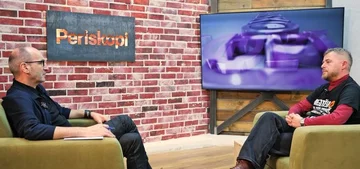
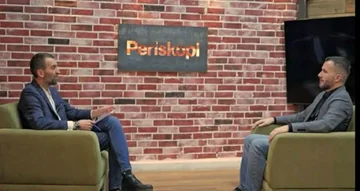
The Women and Mitur's Correcting Centre in Lipjan is the only one of its kind in Kosovo. A total of 74 prisoners are found. 41 are women and 31 are male minors. The director of this centre, Heset Loku in an interview for Periscope, has confessed to the living of prisoners inside and the conditions offered to them.
- What's the number of prisoners and prisoners in the correcting center of women and minors here in Lipjan?
Heset Locke: The current status of the categories in our institution today is 74. Of them are 39 female adults and two minor women. And 31 are male minors. In addition to these categories, we have two major persons who are for minor criminal acts, who are at the end of the sentence and have the final phase to be released. It is noteworthy in this institution that there are different categories of people who have come against the Law. They're minors in the sending-recording mass, part of it. Then there are the pre-prisoned minors and minors sentenced to prison. Then there are women of adulthood. Pre-prisoned women and minor women.
- Are there foreign citizens suffering punishment here?
Heset Locke: In this institution of women, there are also foreign nationals. There are citizens from Albania, there are citizens who also have dual citizenship, there are citizens of American citizenship, there are German citizens, there are Serbian citizens. The total number of foreign nationals is seven.
- What are the most frequent criminal acts, why are they brought here to serve the sentence?
Heset Locke: The acts of sin over which most women are punished or charged are acts of various kinds. Starting with criminal acts of serious murder, criminal theft, then trafficking with human beings, using narcotics and various kinds of works.
Has it increased or reduced the number of convicts?
Heset Locke: If we make a comparison to the previous years, we have an enormous decline in women in suffering and women who have been charged, or who are in custody this year. Now we have this situation. 41 are women in total. And there have been cases in recent years when we have reached as many as 70 female inmates.
- What are the terms offered in this correctional center, on the women's part?
The correctional centre for children and women in Lipjan provides extraordinary opportunities to all existing categories, in terms of their resocialisation and education. Every category inside this institution has a daily routine. That means everyone knows the day's activity, from the morning when the awake begins at 7: 00 p.m. to 8:00 p.m. Everyone has a definite routine. Because of different categories, routines are also different. Young people with categories mentioned at the outset have special routines, but women also have special routines. The conditions we offer, they have an opportunity -- first and very important for them -- is the possibility of employment. Most of the women convicted or about 90 percent of them with job interest are engaged in daily work within the institution. The jobs they work in are different, depending on the spaces and opportunities we have. But I said that's very important that most of them work, 90 percent work and their day is extremely defined by a daily schedule.
- How much is paid for?
Heset Locke: Pay is symbolic. So 1 euro is a work day. But the corrective service, the Ministry of Justice, is making efforts in this direction so that the future, perhaps close enough, will have an increase in the daily wage of inmates. But most importantly and above all, besides the pay is that they work. They spend their days working and engaging in activities and are not locked in their rooms.
You mentioned there were many activities here. What is their interest in participating in those activities?
Heset Locke: If we talk about different categories, their interest in activities in women is tremendous. But there is no shortage of minor interest in such activities. The activities women have here are sporting activities. We have an extraordinary sports hall, basketball games, volleyball and other activities, but women are more active in volleyball sports. Fitne physical activities that also have the potential for mastering. Then cultural events. Often they organise cultural activities with Kosovo sestrada artists, who volunteerly find readiness and come and give concerts or performances before these categories. And We are most grateful for those who are ready. This year we had the Osman Brothers performing before these categories and it was an extremely good performance. Within the year, we may have 5 or 6 and perhaps more. We present the requests to various artists of the stages and associations and depending on where we find voluntary readiness, without compensation. Those who find readiness can come and give concerts. Women here have a great chance of commitment to the tailor and hairmaker. Thanks to the Karitas Kosova organisation, which has sent professional trainers to this centre who have held professional training with convicted women and most of them have been certified and received certificates for tailors and hairmakers, today they are willing to work at this workshop. And part of them are very professional, very busy in this workshop and they're ready with onions. The certificates the Ministry of Poa and Social Goods issued are valid and can be used after release. It is noteworthy that during this year alone we have had prison directorate general, we have had work material for these workers, and within this year they've worked some 4 thousand and 300 pieces of various covered covers for Kosovo prisons. Carcaf, pillow, other covers. And we have a partnership and we're in the final phase with the twinning project that for next year will provide an extremely good donation and we hope that next year all women who are interested in working in the tailors will have jobs every day. We've then had a case that the American Embassy donated some handmade equipment to women who worked on them in recent times and we've had a chance to hand over Monday to the children of Sos Village. A bunch of things that the female prisoners worked for. It's been an extremely deliberate activity, all the women involved. But then I said in the hair shop, there's a lot of women in the oven, even in the kitchen.
- What's the quality of food, because there's often been complaints by prisoners that they serve the same food, not too healthy... What kind of thinking is practiced?
Heset Locke: The correctional centre in Lipjan is one of the institutions which, in terms of quality of food, is the most valued and we don't have any single annexes during the year, I'm talking about the year 2018, we don't have any single complaints of food quality. Food is on a weekly menu, and every week food changes. So the daily menu takes a week and we're very careful that every food is contained according to the set parameters, even for minors and women. They cook their bread themselves and it's an extremely quality bread that my colleagues have in mind. The cooking is in cooperation with professional workers because the responsibilities there cannot be left entirely in their hands, but there are contributors, and I said those women who are engaged in the oven have daily hours when they wake up at work, when they should go and prepare bread. Those that are engaged in the kitchen, too. The ones in the tailor and the hair. But the hairman most do business for colleagues.
- What about healthcare? Are there enough staff and all of these budgets treated equally?
Heset Locke: The correctional centre in Lipjan owns a complete staff can say health. We have a general practice doctor who's regular every day. Monday through Friday, regular time from 8 to 4: 00 p.m. And so do the dentist, it's regular. Then we have doctors calling. We got the gynecologist coming in from time to time. We got a shrink with a call. Which means that we need different categories. They are reconfirmed to the psychiatrist and he is obliged to respond to their demands. We have a regular-time psychologist. So the medical staff is extremely complete and provides opportunities. All categories in the institution, which need medical treatment, have access to primary health care. Inside the institution, while in the secondary and tercir routine, they are sent to KKUK. But they can also exploit the right to health care and private management. But obviously, if they refer to private orients, or family doctors, then the expenses should be removed.
-How many of you are open as the principal for requests or even their complaints?
Heset Locke: There are more demands within the year than complaints. And every request is addressed. It's how they conduct themselves to the principal. If a prisoner or minor has any requests, he has staff that is directly with him. He presents the request to him, and he is obliged to apply to the highest level, to the principal. At some point or even when requests are healed and the problem is resolved. If there is any request that cannot be resolved from staff directly, the request is forwarded to the director and is certainly given answers within the set term. The same procedure goes with complaints. And in terms of complaints, besides what they might refer to even the staff, but if there's a reluctance that the staff may be very nontransparent in this direction, every resident's object has a box of complaints, that any prisoner can file a request or an anonymous complaint about any irregularities, and we have the assigned person who is obliged every two days to open those complaints boxes and without what happens to him. If anything happens, he's obliged to bring them to the director to examine them. But if someone is unhappy with the director's examination of the complaint, he also has the opportunity to address the director general of prison. So we're quite open to their complaints and demands.
- Yes, the staff of the Correcting Center, what is his attitude towards the prisoners. Are there times when there is violence against them?
Heset Locke: There's no way. With responsibility, I say, no case of violence against various categories of prisoners. One of our primary objectives is human treatment of all categories. But there are moments we may disagree, and they may disagree with us. But in the sense of mistreatment and in the sense of violence, it does not come into expression at any moment.
- Is there any chance you'd be able to examine it when there was a disagreement between prisoners that might have been out of the way?
Heset Locke: Cases of clashes or physical violence between prisoners and staff have not occurred. Among the prisoners, there are cases of minors. Not very frequent, but it may be recorded cases, and women are much less rare. We can't say no one happens. But they are very rare cases. They mostly have good reports. We try to make their own system, so according to categories. Those who have better behavior are more relaxed, those who have less behavior, or are in the initial phase of adaptation, they are in other environments and have violent and privileges depending on these categories. It is noteworthy that those who are well behaved, those who committed on the day of the penalty, those who do not have other criminal acts for which they may be accused, have the opportunity to exploit weekends or go home within the year. Seven days in a year. It's a regular vacation. Seven more days are extraordinary vacations, in cases like family members, or such cases. And now with the changes in the Law that is not yet in force, there will be an increase that will enable 14 days to be out of prison. Within the year. In minors, however, there is an extra-competitive profession. The minors within a year meeting the conditions mentioned earlier may be up to 30 days outside the institution. And that affects quite positively. And for minors, it's a good innovation to enter into the rule of law for minors, to get them to take effect sometime around May, they have this opportunity to use one-thirds of the sentence. After 1/3 of the sentence is carried out, and it meets other criteria, good behavior, respect for routine, respect for all activities in this institution, they have the chance to start using 1/3 benefits.
- What security does this prison have? Do inmates try to escape from the bars?
Heset Locke: We never had a chance to try women. Never. I'm talking about the period that I'm manager of this institution now for almost seven years. There was no case of running away or anything with women, but with minors, yes. In minors, there have been cases of departure, but there have been cases of departure. Because they are also in their teens and are more skillful at using those options.
- What time of visits do they have with other relatives?
Heset Locke: Visits are weekly. Each prisoner is entitled to a two - hour weekly visit within the day. But they are not alone. There are also extraordinary visits for certain cases, which is, in addition to this one-time-a-week schedule. In certain cases, even those with behavioral behavior, who no longer have any offenses, disscilinarys, can use extra visits. As usual, extra visits are approved in cases where there are movements of family members, either coming from the outside world or different reasons. The lead also has extra visits. It's the visiting hall, and we're pretty good at it.
- Do you have wives with little children, who may have become mothers here?
Heset Locke: At the moment we don't have any women with kids, but we've had cases this year. They have a special environment, they have a special object. We call it the mother's house. There are two rooms adapted there and there are optimum conditions for child rearing. With toys, clean surroundings, with everyone who needs a baby. She's also separated from other inmates. There are no other categories. She's the only one. And mothers with children can keep their child at this facility until the age of 18 months. If he is 18 months old, he is obliged to separate from the child and he is handed over to his family, social centers, or to someone in custody.
Is the prisoners allowed phones inside?
Heset Locke: You're not allowed in a physical sense by personal phone, but they have a right to phone calls. They're on their daily routine. Twice in a week, they have regular phone calls. One phone call, length five. But at times we are too tolerant in this regard. Even outside the minute, it's regular time days. There's no strict definition.
- Are there privileges to prisoners?
Heset Locke: Privileges are within legal restraint. I say responsiblely no privileges. Not why I may be being too modest, but if such concessions are made, at any institution, I'm only talking right now at the correct center in Lipjan. But if such privileges are made, it's hard to manage that institution. Because those people who look at each other for what they're using or doing. There is no non-profession that has not met the criteria. The main thing about keeping me calm and order is to have normal training, everybody.
What organization takes place within the prison for the New Year's celebration?
As far as hosting parties are concerned, within the Centre's correcting Service in Lipjan we do not do as director any particular organisation. But we allow all the categories that are here to take care of themselves. It means that they are able through the shipyard to be supplied with various food items that allow the regularity of household order. We do their gathering in an adaptable environment where we can develop activities on New Year's Eve. Women are usually divided into two groups. Because they've got reception halls. But even minors in their wards have reception halls where they even gather in groups. The activity we allow is that they can stay close to TV cameras until the early hours of the morning. So there's no limit to that night, and the way the organization works does their way of doing it. They have no obstacle. They can stay until morning. So tomorrow they don't have any commitments. Food is usually a little different for all parties. More special. They have a richer menu, including candy and other food items. And the other parties. But for New Year's, especially something more. According to the Executive Law on Criminal Sanctions, family feeding is prohibited, and it applies to holidays. /Periscopi/