34 minutes ago
Shala: Kosovo products are more quality than Serbian ones

Periskopi(8 years ago)
(8 years ago)The establishment of a 10 per cent protection tax on products imported from Serbia, as well as the ban on selling and importing products that do not refer to Kosovo as a state, are expected not to be the last measures Kosovo will put on Serbia's products. A group of MPs have submitted the request to the Kosovo Assembly. [...]
A group of MPs have submitted to the Kosovo Assembly the request for a parliamentary debate over the urgent need to impose economic and political sanctions against Serbia as a measure of reciprocity.
Independent MP in the Kosovo Assembly, Korab Sejdiu, told Radio Free Europe that Kosovo as a state must respond to any aggression by another state, in this case from Serbia.
MP Korab Sejdiu, initiated of this initiative, says “Serbia has recently undertaken a very vicious campaign on Kosovo”, and this has prompted it to seek reciprocity measures.
Let's start acting as a state and the idea has been supported by other MPs. Our goal is not to be a sponsor of this tough campaign of Serbia through 400m euros a year that we donate to the Serbian economy and which is then forwarded to the Serbian government to invest in Kosovo's destabilisation, including in the battle in Kosovo's non-membership at INTERPOL”, Sejdiu points out.
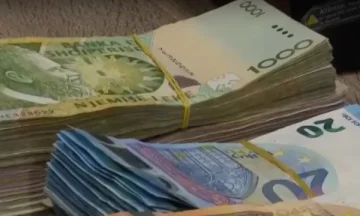
Kosovo continues to import products worth over 400m euros a year from Serbia, while Kosovo products in Serbia's state continue to face numerous barriers, with the value of exporting Kosovo products to Serbia at no more than 48m euros a year.
Minister of Trade and Industry in the Government of Kosovo, Andrew Shala, tells Radio Free Europe that in the event of a decision by the Kosovo Assembly on embargoing Serbia's products, they would proceed with it.
Shala adds that Kosovo could replace all products imported from Serbia.
Kosovo has products as well as locals, but even Kosovo businesses can easily replace products from Serbia to initially local products, which are also from better quality than products from Serbia, but also from prices. Likewise, products Kosovo does not have Kosovo businesses, very easily they can get from other countries”, Shala says.
Minister Shala's decision to impose tax 10 per cent on products coming from Serbia, Bosnia and Herzegovina had rushed concerns writer in Brussels that the Free Trade Agreement is being violated, CEFTA.
But such a decision has been supported in Kosovo by all business representatives and field experts.
Economics expert Naim Gashi tells Radio Free Europe that imposing an embargo on Serbia's products would have extremely small effects on Kosovo's economy, as according to him, Kosovo's economy has a major share of raw materials from the European Union.
While Serbia, with all its political, institutional and economic mechanisms, fights the state of Kosovo and the state of Kosovo must use mechanisms available to counter this fierce attack Serbia is launching, which is unfortunately being done with the silence of the European Union”, Gashi points out.
MP Korab Sejdiu, meanwhile, adds that, consistently from Kosovo, it is required to be the most understanding side towards Serbia, but, what is happening now, Sejdiu adds, is that Kosovo's friendship is being treated as weakness.
We are in a situation that we have no solution to change our approach to the Government of Serbia, and a good start would be for us not to supply over 400m euros a year to the Serbian economy. I strongly believe that at the moment we imposed such an embargo, pressure would increase in Serbia's government to stop open attacks and aggression against Kosovo, not only in the international sphere, but also within our state, in particular in four northern municipalities”, Sejdiu points out. / REL