4 minutes ago
Kosovo government, last in region for transparency

Periskopi(8 years ago)
(8 years ago)Kosovo's executive power ranks last in the region for transparency. This, since the prime minister's office has the low institutional opening score with only 41 per cent -- 19 per cent lower than the previous year. As the opening decreases further toward the lowest organs in the hierarchy, where ministries have scored 37 percent and agencies [...]
So said the launching of analysis “The Open Governance of Executive Power in the region and in Kosovo”, which analyses the level of transparency, the opening and accountability of executive power in the Western Balkan states and included proposals for improving the current situation.
And if compared with last year's measurements, where the Prime Minister's Office had scored 60 percent and ranked second, a significant decline is seen this year.
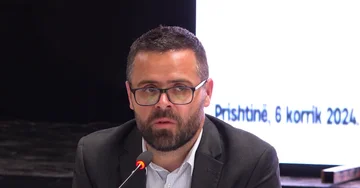
Libor Chlad, deputy head of the section for co-operation in the EU Office in Kosovo, said transparency is very important, as the decision-making process also monitors.
He said that along with the accountability, equally important is to sideline the conflict of interest. While, he said there is a resistance to change.
On the other hand, Clyde appealed that Kosovo citizens should be allowed access to official documents. As he added that the independence of the judiciary has enormous significance.
There's a lot going on, but there's still going to be. Now we have a law that provides access to public documents, and it's applicable, but sometimes it's easy to put on paper and harder to apply. Now we will establish a mechanism that will control how public administration works. We have three bills which are in Parliament and we hope that these will help us take a step in the right direction, so that we can present a public administration nature in Kosovo”, he said.
Chlad added that along with Public Administration Minister Mahir Yagcilar, they have worked to increase the capacity of the Public Administration to analyse the scope of this administration.
According to him, there are many executive agencies in Kosovo, for which he said many of them are independent, but it should be known whether the concept of independentity exists, as well as whether the Parliament has the capacity to monitor 79 agencies or not.
Public Administration Minister Mahir Jagcilar announced that despite the challenges faced with the opening of the data, several important steps have already been taken in this direction, such as the report offering a concrete action plan for the initiative to open data and launch the re-enacted portal for open data.
As he addressed some of the main challenges they face.
“We are currently working on creating mechanisms for establishing a clear policy for opening executive data to ensure that data is being opened fairly and on public interest. Serious challenges will be the low level of awareness of the importance of opening data and the fact that the data produced by institutions should be made available to the public to help innovation, research, policy making and transparency. Second, the challenge will be the lack of capacity of officials to inventory and prepare according to adequate data publication standards. In this direction we as minister are planning a cycle of training for next year for officials expected to be named as contact points for open data”, Jagcilar said.
The opening of data, according to him, in addition to strengthening government transparency and accountability, brings many positive benefits to citizens, businesses and the public sector.
While, Blerina Ramaj, Co-ordinator of Action Project SEE, said that in this year's measurements, based on indicators for executive power, Kosovo is ranked third in the region, marking 33 per cent of indicators.
Instead of the progress that has been expected, according to her, executive institutions in the region had even worse results compared to last year.
Ramaj made it known that institutional opening only reaches 38 per cent of the fulfilled indicators, while stressing that last year it was 41 per cent.
“we have prime offices in the Balkan countries. The openest one has been Macedonia's in this case, which has scored 75.64, which is the highest percentage ever reached. Then, we have continued with Montenegro, Serbia, Albania, Bosnia and the last of us have Kosovo, compared to other states. The prime minister's office in Kosovo, based on existing components, has integrity based on code-ethic mechanisms and interest prevention. There are 37.58, transparency is 29.51, and efficiency is 25 percent”, she said.
Otherwise, this report has found that the executive power in Kosovo (the office of prime minister, ministries and agencies under the Prime Minister's Office) has not worked on increasing the opening of executive power in Kosovo, but has only neglected it.
The measure was made from December 2017 to February 2018, while it became known that a series of recommendation and guidelines towards public institutions have been developed based on research results. /kp