4 minutes ago
Journalists are being violated

Periskopi(8 years ago)
(8 years ago)The lack of contracts, salary delays, break-out violations of leukemia, overtime without any compensation, and no remittances are some of the problems journalists face at work. This was said at the working group meeting for “the working conditions of journalists”, organised by O SBE, where it was said [...]
The lack of contracts, salary delays, break-out violations of leukemia, overtime without any compensation, and no remittances are some of the problems journalists face at work.
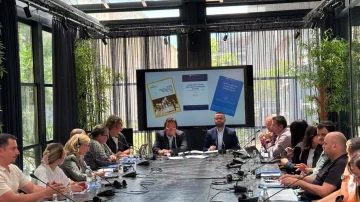
This was said at the working group meeting for “the working conditions of journalists”, organised by O The SEU, where it said that journalists also face a lack of working conditions, while it was stressed that journalists often did not raise their voices because contractual relations with the employer were threatened.
Kaltrin Hoxha from O The SBE, it said, is precisely the risk of breaking contracts and working relations -- what causes journalists and interns to remain silent when their rights are violated.
We've read about cases in recent years when journalists have told publicly about the offenses committed at the workplace. We're talking about lack of contracts, delayed payments, breaks of lehoen, and overtime without compensation, as well as cases of non-admission. We have also heard occasions when interns have raised their voices for treatment in the editorial work. Although contrary to the work law, young and skilled trainees remain in those positions for up to 12 months. These, as well as journalists' cases remain, because such a signal could easily lead to disruptions of contractual relations with the employer”, she said.
Even Ardiana Thaci Mehmeti from the Association of Kosovo Journalists said journalists face labour rights violations, lack of working conditions and violations of their rights, until there was a call for journalists.
She made it known next year The AGK will conduct a survey of all local and national media in order to have precise data about where the rights of workers are, where their rights are violated, and what they stumble about in the workplace.
And to that end, she invited reporters to raise their voices.
This can't be done if we as journalists, like Association don't get sense to talk about rights, even if it costs us maybe by breaking contracts, even though I believe that if things get bigger there won't be enough contract cuts because even employers aren't the ones who want to hurt the image of companies that work”, she said.
Zelko Tvrdisk from Radio Contact Plus praised his job, as he said, there the working schedule is regulated by work regulations, while additional hours are paid off. As for lack of working conditions, he said institutions should deal with improving the current situation.
When we speak especially of northern Kosovo, we have had an additional problem, an additional judicial instability that is more specific to this part of Kosovo, which has been the additional problem facing journalists. I'm afraid these local journalists working on these media are badly paid, and on the other hand, there's a lack of working conditions, working regulations. Problems that would have to be solved institutionally”, he stressed.
While Zekirija Shaban of Infokus said that in Kosovo, the chain guaranteeing the right to speech is quite fragile.
By contrast, according to survey “Public perception of the media and the safety of journalists in Kosovo”, conducted by the O mission. The SEU in Kosovo has found that 52.8 per cent of respondents believe journalists are not safe during their work, 59.6 per cent believe both male and female journalists are equally vulnerable, while 30.7 per cent believe investigative journalism is the reason journalists face threats, attacks and intimidation.