4 months ago
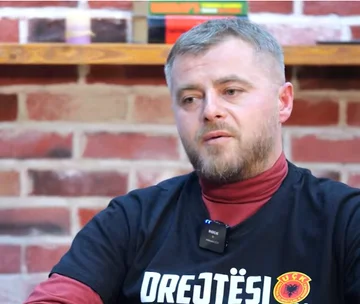
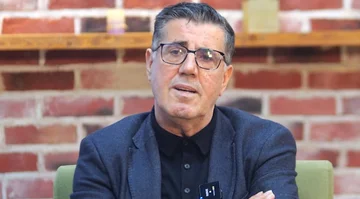
Hoxhaj warns measures against EU: If there's no visa, we'll condition it with dialogue.

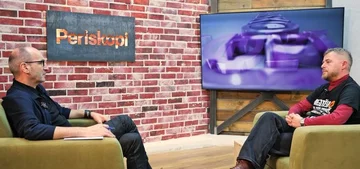
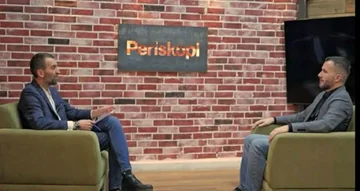
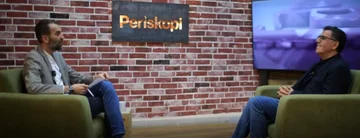
Periskopi(8 years ago)
(8 years ago)Deputy Prime Minister in the Government of Kosovo Enver Hoxhaj has said Kosovo should condition dialogue with Serbia unless visas for Kosovo citizens are liberalised as soon as possible. In an interview for Radio Free Europe, Hoxhaj has also talked about the tax Kosovo has imposed on Serbian goods, saying there could be [...]
In an interview for Radio Free Europe, Hoxhaj has also talked about the tax Kosovo has imposed on Serbian goods, saying there may be other measures if Serbia continues to behave aggressively towards Kosovo. Hoxhaj has also talked about the lack of recognition and inaction of Kosovo diplomacy in this direction. Deputy Prime Minister Hoxhaj stresses there will be no early elections even in 2019.
Radio Free Europe: Mr. Hoxhaj, you have been quoted as saying Kosovo should withdraw from dialogue if visas are not liberalised. How did you think about establishing this, conditionally speaking, against the European Union?
Enver Hoxhaj: I thought some kind of conditioning policy would happen, not some kind of attraction. In my statements there have never been formulas for withdrawal, but if the European Union is unable to fulfil promises in relation to visa liberalisation and we have fulfilled all criteria, from the first criteria to the 95th criterion, and now remains the EU, to make the decision as far as free movement is possible in 2019. Then why should we believe the EU that the EU will have instruments to convince Serbia to recognise Kosovo. We must be realistic in such an approach.
Radio Free Europe: A kind of threat to the dialogue process has even made the Serbian side, saying there will be no talks until the tax decision on Serbian imports is withdrawn. Will the Kosovo government respect this condition from Belgrade?
Enver Hoxhaj: Belgrade will withdraw from the dialogue or not is their issue. We'll participate in dialogue. We trust dialogue. But putting a tax is something else. If Serbia makes political aggression on Kosovo, as it did in 2017 and in 2018, it is natural in the political behaviour of states that we establish economic measures and through economic measures, damage the Serbian market. If Serbia makes trade with Kosovo around 400m euros a year and this budget is used to attract recognition, this budget is used to prevent Kosovo's membership in various international organisations, this budget is used to crack down on Kosovo's image and Kosovo sovereignty, it is a normal behavior for countries to take such actions.
Radio Free Europe: When we are in the dialogue, President Hashim Thaci has consistently spoken of an agreement with Serbia, which would include correcting the borders, which, by many, implies exchanging territories. But how real is it actually expected Kosovo and Serbia to agree on the border between the two states?
Enver Hoxhaj: I think the agreement between Kosovo and Serbia should include some elements. Its first element is mutual recognition. There is no more important topic in Kosovo-Serbia bilateral reports than bilateral recognition and Kosovo's UN membership. If Serbia has the political will to happen, we are willing to sit down and talk to Serbia. Of course, there are other subjects. It could be economic issues, trade issues, it could be energy, security themes, it could be the causes that have brought war and conflict to Kosovo, war damage, the fate of the found.
I think it's early to deal with the epilogue dialogue. It is impossible to know what the agreement will be like between the two countries. The main theme, or main axis of the agreement, should be mutual recognition. The problem Kosovo has with Serbia concerns its sovereignty. The problem Kosovo has with Serbia has to do with not recognising the reality of independent Kosovo.
Radio Free Europe: Serbian diplomacy is conducting a very tough campaign against recognition and Kosovo membership in international organisations and mechanisms. What are Kosovo institutions doing in the face of these actions?
Enver Hoxhaj: One of the actions we took last week has been the establishment of a tax on Serbian goods, but I believe that other actions will be taken, but serious actions are taken as actions and not declared beforehand. Beyond that, I am of the opinion that Kosovo's foreign policy, should prevent a goal that has Serbian foreign policy and the purpose of Serbian foreign policy has been that every time Kosovo has no foreign policy at all. So that our entire report with the international community can only go through dialogue.
To expand the context of foreign policy, we must get more recognition, we must apply and participate in more international organisations.
Radio Free Europe: The British ambassador to Kosovo said there may be 10 states that have drawn recognitions. Do you like Government have any official announcements from these states?
Enver Hoxhaj: I don't have any information because reports with states are kept by the foreign minister, sir. Pacolli and the Foreign Ministry. I am not in a position to confirm or confirm, it is up to Behgjet Pacolli to offer clarity. I think everyone should support Pacolli, MPJ, to do her job, but what we need is to move, operate globally.
The time we're living in is fluid. The international context is quite confused, changing every day. Political elites are being changed to any possible, domestic elections in certain countries. Therefore, we must be active, have new friends, mobilize old friends. But, above all, we tie up countries for specific interests in Kosovo.
Radio Free Europe: Kosovo has long rejected new recognitions. What are the reasons for such a static situation in the process?
Enver Hoxhaj: I think that any domestic situation, favorable, should be used to raise our demand for recognition in different parts of the world. At the time I was a foreign minister, every internal situation, we used it to recognise Kosovo. If we have signed Stabilisation and Association Agreements, we have lobbied on behalf of this agreement. If we have signed agreements with Serbia, we have lobbied on behalf of these agreements.
But even when there are adverse internal situations, the diplomat is entitled to turn these situations into a favour. There has to be a new argument on how to penetrate a country. I think recognitions can come when there's physical presence, when there's direct contacts, when you travel 300 days a year in different geography, and if the balance is not 10, 12, 15 recognitions that I received within a year as soon as I was foreign minister, some of them can come. If some countries do not recognise Kosovo, they may vote to join an organisation.
Foreign policy, must be more active, more lively, cuter, more determined, but must combine, connect our interests and the interests of our partners.
Radio Free Europe: And finally, considering the problems created in the decision-making framework, is it now the time for early elections? If not, when can we have such choices?
Enver Hoxhaj: Political forces in Kosovo, Kosovo institutions, leaders in institutions and opposition, must seize this opportunity since the European Union has conditioned Serbia's future, through normalisation of reports with Kosovo. Serbia's future in the EU runs through Pristina. We have to use this opportunity.
In this direction, I don't think 2018 or 2019 should be talked about choices. It is not the political parties' duty to organise electoral performance every year, but we must fulfil some of the expectations, especially when we have dialogue, when we have visa liberalisation, when we have the KSF, it is the most absurd requirement, to think that there will be early elections.