4 minutes ago
Haradinaj: Visa shortages lead to level of discrimination

Periskopi(8 years ago)
(8 years ago)Prime Minister Ramush Haradinaj, at the closing ceremony of the General Assembly Conference “Prizren 2018<18x1>, said that despite the fact that our citizens still do not enjoy freedom of movement, Kosovo wants to be part of the EU and NATO. At this event organised by the Youth European Parliament, Haradinaj before numerous delegates, officials from all states [...]
At this event organised by the Youth European Parliament, Haradinaj before numerous delegates, officials from all European states, and ambassadors, said Kosovo is the result of the breakup of the former Yugoslavia, which was very tragic. “In today's political developments, some are right, some left, some liberals, but we are Europeans, we want Europe, we want to unite Europe like Kosovo. We're in Euro-Atlantic orientation.
We want to be part of NATO, and in this direction, we seek support, we seek friends, to convey orders to European citizens, starting with our neighbours, especially Serbia and its citizens. It is important that they know our truth.
Now is the time to help each other and our future”, Haradinaj said. Speaking of the difficulties Kosovo youth face in finding a job, Prime Minister Haradinaj stressed that unfortunately life is not perfect, as our young people struggle for a job, and that, according to him, is not easy. X1> Education is not yet what it should be.
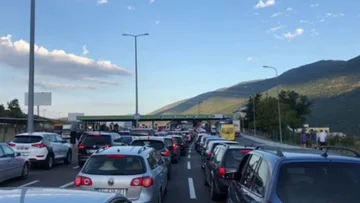
Doual education is not yet an offer for them. Finding a job, for many of them, is really hard. Learning from the good practices of other countries is difficult for our young people, since they cannot travel freely. We are the only state in Europe that does not have visa liberalisation. This is not just an obstacle, but goes up to the level of discrimination.
However, we are European”, Haradinaj said. Meanwhile, British Ambassador to Kosovo Ruair O'Connell said that young people can make changes only by talking about what they disagree with or see wrong, as this possibility, according to him, does not repeat itself. Otherwise, the main goal of this programme is to train young people with the history and work of the EU, including young people from almost all union member states.