a minute ago
The number of beggars on the road increases, some work for organized groups

Periskopi(8 years ago)
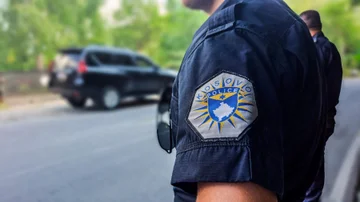
(8 years ago)Alms in Kosovo are growing markedly, as a result of the increased number of beggars. Kosovo Police statistics show that. While 339 cases of alms-seekers were identified in 2017, this number has increased to 442 cases this year. Thus, the problem turns out to be quite disturbing, even in spite of the fact [...]
Kosovo Police statistics show that.
While 339 cases of alms-seekers were identified in 2017, this number has increased to 442 cases this year.
Thus, this problem is emerging to be quite disturbing, even though different actions have been taken by Kosovo police.
Lypsaries, usually, ask for money for food, but complain that they are not helped by anyone other than citizens.
These are suspected that they often end up being exploited by various profitable groups, which they have accepted only behind the cameras.
Even for Webi Mujk, social affairs connoisseur, charity-seekers' work presents disturbing phenomena.
It says institutions should deal with these cases, as their number is increasing and no one handles them.
At the Centre for Social Affairs in Pristina, they have not wanted to talk about the issue, with the argument that they do not have directors.
And, in the Kosovo Police say the largest number of these people come from several Kosovo cities, but there is also a large number of them coming from Albania.
“A number of them are citizens of the Republic of Kosovo and frequent the city of Pristina, but also other centres and most of them come from Fushe Kosova, Lipjan, Ferizaj, Obilici, etc. While a considerable number of them also come from the Republic of Albania and are known differently with the term "person in motion" --” -- the Kosovo Police say in a response by the Information Office.
Alms-seekers, mainly children, are forced to do this, which many of them consider “working”.
On Saturday, in Prizren, Kosovo Police have arrested a Roma community woman who had forced her children to seek charity.