4 months ago
We cannot take responsibility for poor quality education

Periskopi(8 years ago)
(8 years ago)Kosovo has since since the war benefited tens of millions of projects worth raising the quality of education. Likewise, nongovernmental organizations have benefited millions from training teachers and improving education. But the situation remains miserable and hopeless. The World Bank's shocking research on the level of [...] recently found this.
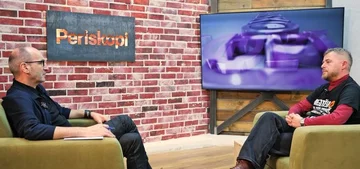
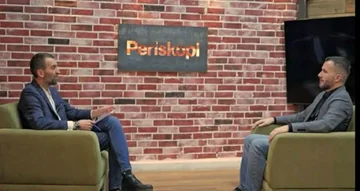
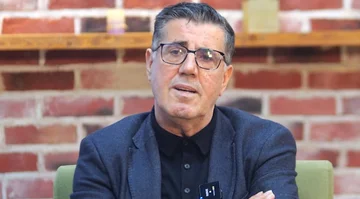
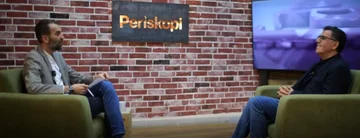
In an interview for Periscope, he has said that as a nongovernmental organization, they make efforts to improve the quality of education, but according to him, this quality is far more complex than the efforts of an organization.
He says that their projects, although reaching the value of millions, have enabled them to work with only a small portion of students and teachers.
Periscop today reported that at the site level, KEC remains the largest absorption of donations for projects dealing with education.
READ BEAH:
On the basis of calculating the values of projects that are public, this organisation has so far managed over 43m euros to improve the quality of education in the country.
In addition, no value has been made public for some of the other projects that have been implemented by this organisation.
Read full the interview with KEC Executive Director Dukagjin Pupovcin:
- You as an organization, one of the key points of action, also have improved the quality of education for which you have acquired projects, the value of which if we collect it, several million. Do you feel guilty about this poor quality of education in Kosovo?
Dukagjin Pupovci: Yes, we as nongovernmental organizations that we are, we also try to contribute to improving the quality of education so that it can contribute to an organization of 30 employees. Of course, we have mistakes in this regard and cannot escape responsibility for those mistakes, but the quality of education is far more complex than the efforts of a nongovernmental organization. Let me illustrate this by example. In the last two years, we have equipped about 150 SMART TV classes, while 8,000 students and 500 teachers have provided free access to an educational video platform through which class learning can be developed and taught at home. There is no doubt that this is a modest contribution to improving quality through the use of contemporary technology. However, there are about 400,000 students in Kosovo, while we, in this case, have worked with only 2% of them. Then, we can send TVs to classes, give students and teachers access to the platform, train for its use, but using this opportunity remains a matter of their will and a matter of organization within the school. We can't impose anything, we can only help where help is welcomed.
Therefore, despite the fact that we are not satisfied with the effects of our work, we cannot take responsibility for the poor quality of education in Kosovo. We have accomplished and continue to implement projects that bring about improvement, but these projects should become part of the system, not forgotten after their completion.
- As an organization aimed at improving the quality of education in Kosovo, why haven't you reacted after publishing the World Bank report?
Dukagjin Pupovci: Yesterday, we were asked to propose on this subject and we gave it. There were no other interests in the proposal. The World Bank report does not bring any new ones in terms of education. From the Test P The ISA has been clear that our 15-year-old students are stuck to 3.5 years of schooling in relation to students from O countries. ECD. The World Bank expresses this impasse slightly differently, in reports of the expected years of schooling until the age of 18.
- Have you noted the factors that are hindering the development of the education system in Kosovo and what are you doing to eliminate those obstacles?
Dukagjin Pupovci: Yes, we have identified them. They are in the Strategic Plan for Education Development 2017-2021 approved by the Government of Kosovo in December 2016. In drafting this plan we have worked together with August, municipalities, educational institutions, civil society organisations, international partners and this plan reflects a kind of consensus about the problems of education and solutions. It has 7 targets and 240 strategic measures. Now, this is a state plan and its implementation belongs to the state. There are also financial costs of about 180m euros for 5 years, so it requires full devotion from the state. We can monitor the implementation and give our criticisms what we did in 2017 and we're doing this year. There are some reports we have published and promoted about the situation in education in light of the implementation of the Strategic Plan. We can also do some small projects that are in the spirit of the Strategic Plan, as is the case with the SMART school equipment project I referred to earlier. At this point, the Strategic Plan envisions the equipment of 9,000 SMART TV classes, and we, with the tools provided by donors, could provide 150, so we haven't met 2% of the needs. Others can be provided by the state if it wants to implement the plan it has approved. Choose a working directory
- Do you believe that the quality of education in Kosovo can be improved through the training you hold as an Organisation?
Dukagjin Pupovci: After announcing the test's disappointing results P ISA, there's been a lot of criticism for the inefficiency of training, so I want to explain that. Training programmes in Kosovo are, primarily, international or developed programmes with international assistance and are implemented by numerous local and international organisations. Most of these programmes are accredited by the Ministry of Education. Not all programs are oriented towards the quality of teaching there are training for child rights, prevention of violence and similar.
Attendance in these trainings is voluntary, and there are teachers employed in schools, mostly on weekends. It's about qualified teachers, longer experience, or shorter employment. So these people bring a work experience, not students. During training, which is, primarily, 2-3 days, they are familiar with new teaching methods, new teaching approaches. Someone adopts them more, someone less; one category expresses more interest in using class training knowledge, others less. I allow the possibility that some training will not be quality, but then, I'm assuming that this will be reflected in training ratings that, usually, contain high marks given by participants.
For years at the Kosovo Educational Centre, which has developed a lot of training, we have noted that the effects of training programmes are not sustainable, that people are adopting methods, but that a substantial number are not implementing them in a large and adequate way. We've recently added training to the classroom monitoring component, hoping it will have a positive impact on the application of knowledge.
Whatever the case, the need for training will be constant, as teachers need to refresh their knowledge and skills. Now more caution must be made to reflect on the results of students in class, working with schools even after the training is complete, which most training providers cannot do./ P ERISCOPIA