4 months ago
Privatisation of social companies could take place within 5-7 years

Periskopi(8 years ago)
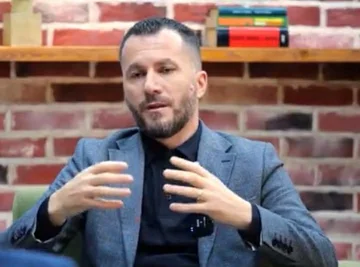
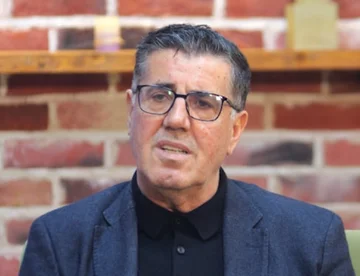
(8 years ago)Ekrem Hajdari, managing director at the Kosovo Privatisation Agency, says over 50 per cent of the social assets in Kosovo have not yet been privatised. The process of privatising social enterprises, according to him, in a real term of 5 to 7 years could be complete. In an interview for Radio Europe [...]
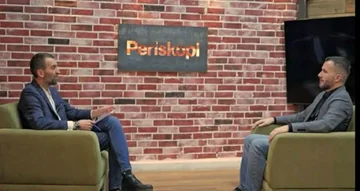
In an interview for Radio Free Europe, he says the means of the Privatisation Fund, which currently stands at over 400m euros, can only be invested in the Kosovo Government's valuable letters.
Radio Free Europe: The process of privatising social companies in Kosovo, initiated 15 years ago, continues today. How far have you come to this process?
Ekrem Hajdari: This process has now begun in 2002/2003 and has continued for 15 years. It is not that we can be commended for doing a job with the pace preceding the law's entry into force. Now I can say that we are halfway through the privatisation process. This is well illustrated with privatisation data. So far 1607 properties, assets of social companies and contracts for all these assets have been privatised, while 2119 social assets have not been privatised. This number is showing that half of the social assets are not privatised.
In the past year these data have been other, as the AKP has already continued to identify new assets that we have not registered, and therefore this number of unscathed assets is continuing to grow.
Over 50 percent of unprivate social assets
Radio Free Europe: Among the unprivate assets, what are the most strategic ones?
Ekrem Hajdari: It's a number of assets that we consider strategic asset. It's a list that has been handed over to the Ministry of Trade and Industry and the Ministry of Strategic Investment, so that we jointly co-ordinate those assets through the Strategic Investment Law. There are “Hotel Grandi”, “Brezovica”, “Golesh Mining”, “Strasovci”, “Kosovo Boxies”, <x10Damper”, in the Suhareka region, a major and very suitable object for industry.
We have other assets that we think are tempting for various investors, numerous parcels of agricultural land, industrial land, we have long-built facilities and plants, numerous locals throughout Kosovo, which await privatisation.
AKP still in property identification outside Kosovo
Radio Free Europe: As for Kosovo property, which is abroad, has the identification of all these assets been achieved?
Ekrem Hajdari: In 2017 we have established a special unit that is dealt exclusively with the identification and protection of these properties that are found outside Kosovo, in courts of respective countries. According to data owned by the AKP, a total outside Kosovo's territory distributed across countries of the former Yugoslavia are 162 social assets. These 162 assets belong to 38 Kosovo social companies. We have made needed requests with authorities to register on behalf of AKP
Radio Free Europe: Have there been difficulties identifying these properties found abroad?
Ekrem Hajdari: Except with courts in Serbia where we have enough obstacles due to our officials' non-recognition as individuals for protecting those assets with other states, we have had no problems. The processes are under way. We believe that through the documentation and requirements that we have real requests, we will be able to return those assets to our records.
Privatisation Fund invested in valuable letters
Radio Free Europe: A fund has been established by privatised companies. What has been done with the means of the Privatisation Fund?
Ekrem Hajdari: The Privatisation Fund is around 400m euros. During these three years one portion of the Fund has been distributed to creditors, then a portion has been distributed to the workers. But the 400m-euro fund is in the Kosovo Central Bank and will stay there. Changes Now After the Law Immination for The AKP only gives the opportunity to invest in valuable letters. So it's designed to have some of this fund invested in valuable papers.
The rest of the funds cannot be invested, as there are funds waiting for their destination, either for the payments of numerous creditors or for workers. We are waiting for the Special Chamber of the Supreme Court to start working with an added dynamic and to approve the demands of the treatment expectations.
Radio Free Europe: Is there any plans when the entire privatisation process is expected to end?
Ekrem Hajdari: This is an issue that we often discuss. For the first time, we asked that question in 2016 at the Economic Development Commission in the Kosovo Assembly. In this discussion, it has come out as a requirement from the Commission for us as AKP to draft a final strategy, a document that will set out a structured time for years which has a strategic plan for when the privatisation process is envisioned.
At that time we have drafted that document and delivered it to the Commission for Economic Development. The government and we as the AKP have begun implementing that plan, but in the meantime the political flows in the country, the failure of institutions for a while, in particular the Special Chamber of the Supreme Court, which still remains unfunctioning, has caused major problems in realising that strategic plan, as most processes in liquidation, sales, complaints, creditaries, depend on this institution. (The Supreme Court's Special Chamber). The dependence on this institution has put us at a time that in most of these processes we've stayed.
We think that if all institutions function properly in a real term of 5 to 7 years could we complete the privatisation process as a whole?
AKP: There is no usurped property
Radio Free Europe: One of the problems of the privatisation process has also been property usurped. There are also buyers of these properties who had complained that their property was confiscated, what was done in releasing those properties?
Ekrem Hajdari: I don't know if there's any property of social companies seized today. We over the past two years have undertaken numerous shares in co-operation with the Kosovo Police throughout Kosovo and even in the north of the country, and we have all freed them.
I know that in opinion, but even to us, we get complaints from the parties who have only privatised an asset, the asset who has been handed over to the party by the free AKP, but who today may not enjoy it free. We have all encouraged to address the courts and establish justice.
Radio Free Europe: The privatisation process was initially seen as a process that would help with economic recovery, generate new jobs, but by economic experts it was estimated not to achieve the targets. How do you appreciate it?
Ekrem Hajdari: I consider the AKP's mandate to be in full function of economic development. Unfortunately, numerous political circumstances have largely interfered with this process over the years, and this process has fluctuated from time to time, but despite these circumstances I consider that this process continues to function on economic development. We have numerous stories of success where local businessmen and foreign investors testify that through the privatisation process they have achieved the realisation of numerous projects. That could happen in the remaining 50 percent.