4 months ago
There is another world, parallel and sometimes caught.

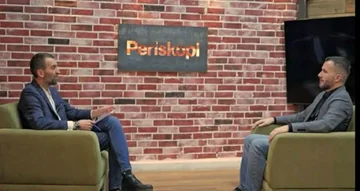
Periskopi(8 years ago)
(8 years ago)This interview was conducted in Japanese after writing the novel by writer Murakami. Twenty years after my sister's death, the narrator continues to be reminded of her. Why was that death so terrible for him? There are three types of emotional wounds: those that heal quickly, those that heal slowly, and those [...]
This interview was conducted in Japanese after writing the novel by writer Murakami. Twenty years after my sister's death, the narrator continues to be reminded of her.
Why was that death so terrible for him?
There are three types of emotional wounds: those that heal quickly, those that heal slowly, and those that remain with you until you die. I think one of the main tasks of the obsession is as deep and as detailed as possible with third wounds, those that remain forever. Because they're scars that, for better or worse, define and shape a person's life. And the stories of the effective ones, they can show where the wound lies, define its borders [exactly, the injured person does not even know that such a thing exists, and work on its treatment.
The most dramatic moment of confession is placed inside a cave near Mount Fuji. What made you choose that location?
I've always been obsessed with caves. I've visited many of them during my travels around the world. The cave in Mount Fuji was one of them.
The confessor's sister, Komi, tells him that the characters in the “Lisa in Wonderland are definitely there. A theme in confession and across the novel is confusion of the difference between real and unrealistic. In fact, it might be said that this is a subject that permeates your entire creativity. What makes you keep coming back to that idea?
I ask myself the same question. When I write novels, reality and unrealisticly mix with each other. It's not like I plan to do that, and I don't even mean it when I write, but the more I try to write about reality in a real way, the more unrealistic the world I build becomes. To me, the novel resembles a party. Anyone who wants to come in, comes in, and those who want to leave can leave whenever they want. I think novels get that driving force from the sense of freedom.
When the Com fall in a way down to the rabbit hole, it reveals a secret, circular room. Does that room have symbolic meaning for you? Or is it the truth going to another world?
My basic view of the world is that right after the world we live in, with which we are familiar, it's a world we don't know anything about, a non-family world that exists with ours. The structure of that world, and its meaning, cannot be explained in words. But the fact is that it exists, and sometimes we take a little bit of it, totally by chance.
Was the “Lisa in the wonder world” reference point for the rest of the novel, too? Are you, like Komi, obsessed with Lewis Carroll?
I doubt there's a child that hasn't been touched by Lewis Carroll's character. I believe children are attracted to him because the world he describes is completely self-sufficient, a parallel reality. He didn't appreciate the explanation. The kids just experience it.
There are other works in the novel, as well, from the “Don Giovanni” of Mozart to the “The Great Gatsby” of Fitzgerald. Do you often become inspired by other works until you write?
The original inspiration for my novel came from one of the stories of the “Shiu” collection, from Akinari Weda, specifically a story about a zombie coming back to life. For a long time, I thought of extending that story into a complete novel. I would also like to write something that would serve as a host for the “The Great Gatsby.” [Great Gassby]
Do you think that “The murder of the Comor” is a break-up from the previous novels, or a sequel?
My first novel after a long time that I wrote completely into my first self. In fact, what I felt was very strong, and it showed how much I missed writing that way. I had a great time writing that book. /Periscope from The New Yorker