24 minutes ago
McAllister hopes EU states will soon come up with visa decisions

Periskopi(8 years ago)
(8 years ago)No representatives of European Union institutions or member states have given deadlines for visa liberalisation. While different representatives in Kosovo are doing so constantly. The decision-making process for visa liberalisation for Kosovo is under way in the EU Council, and in Kosovo, citizens are under way that [...]
The decision-making process for visa liberalisation for Kosovo is under way in the EU Council, and in Kosovo, citizens are arguing that liberalisation could happen at this end.
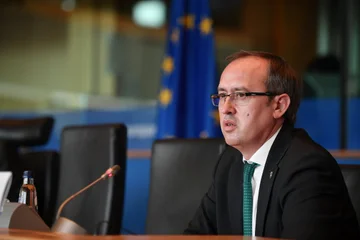
European Parliament Foreign Affairs Commission Chairman David McAllister, in an answer to Time, said he is aware that expectations in Kosovo are high.
In July 2018, he says, the European Commission confirmed that Kosovo met the remaining two criteria for visa liberalisation, which are demarcation of the border with Montenegro and strengthening results in the fight against organised crime and corruption. Meanwhile, in August 2018, the European Union for Civil Freedoms, Justice and Home Affairs Committee (LIBE) voted to enter inter-institutional negotiations on visa liberalisation for Kosovo.
“Remember that this was confirmed by a great majority in the European Parliament on 13 September. I am very aware that expectations in Kosovo are high. Now the goal is for the EU Council to come up with a position, they make decisions. I hope member states will position themselves in a near future”, McAllister said.
That day has previously estimated that Kosovo has met the conditions for liberalisation, but it expects EU countries to recognise this achievement and give the green light for free movement for Kosovo citizens.
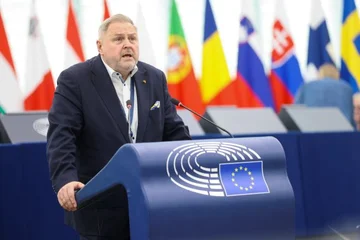
So far in the EU, they say there is no date when they will confirm the news of liberalisation. Even in May of this year, even European Parliament Vice President Rainer Wieland had asked the leaders of institutions and political parties in Kosovo not to give deadlines for visa liberalisation.
“recommends that all leaders in Kosovo not make promises for visa liberalisation that could happen very soon”, he said.
But Prime Minister Ramush Haradinaj, President Hashim Thaci, Chief Prime Minister Kadri Veselini, Deputy Prime Minister Enver Hoxhaj and European Integration Minister Lierar Hoxha are the most likely that the decision for liberalisation occurs this year, and in weather citizens move freely.
Vetevendosje is the party that has called for the resignation of state leaders for, as they say, the fraud they are giving citizens about the deadlines for visa liberalisation. They have raised concerns that there will be no visa liberalisation either in 2019, and that is what those who are promising say know themselves.
And although frequent promises about visa liberalisation continue in Kosovo, they blame the EU, as if this should make the decision faster because Kosovo has fulfilled its obligations.
Deputy Prime Minister Enver Hoxhaj has recently said that if the EU does not give any deadlines, Kosovo will change the report to them and see how to deal with them.
Time.net is interested in getting more information about Hoxhaj's statements, which also says by December The EU needs to come up with an answer, but even though it has agreed to return, it has been four days since it no longer showed interest.
The decision by the Council of Ministers and the European Parliament on lifting or not visa could be harder if this is made this year. That is because next year the EU presidency leadership will be changed, as well as intensify preparations for parliamentary elections. This could affect the slowdown of the liberalisation process for the next year as well.
We remember that so far among several countries that are reluctant to vote for visa liberalisation for Kosovo citizens are Germany, France and the Netherlands.
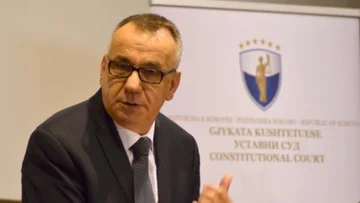
Demush Shasha, Executive Director at the Kosovo Institute for European Policy, told Koha.net that Kosovo is now entering the most important part of the decision-making that is conducted within EU institutions.
The Council of Europe has now made a proposal for the completion of the 539/2001 Adjust, with the goal of securing visa liberalisation for Kosovo in the Schengen Zone.
But according to Shasha, there are now six more steps left for the free movement of citizens, as he says, the outcome of negotiations and agreement on an informal interim agreement on meeting the 539/2001 resolution. After that, he says, it is the vote for completion of the 539/2001 Adjust to LIBE (Parliament) and approval at COREPER (Corelia). Then, according to him, the vote for the completion of the 539/2001 resolution at the plenary session of the European Parliament. The other one, says Shasha, is the vote for the completion of the 539/2001 regulation by the EU Council, the signing ceremony by the Council and Parliament, the entry into force of the Order and the free movement of Kosovo citizens (20 days after the publication in the official newspaper).
The critical part of these steps, he says, is the vote for completion of the 539/2001 resolution on the part of the EU Council.
“Sic we have recently communicated publicly, at this point we can confirm that free movement for our citizens cannot be done this year. The most positive scenario is for decision-making for the visa liberalisation process to be completed this year, while citizens move freely in 2019”, he told Koha.net.
Such a situation recently created in Kosovo, according to him, takes the visa liberalisation process on a very unknown road, due to at least three reasons.
Romania's “The Romanian presidency starts on January 1st, 2019 therefore given the Romanian state's stance on Kosovo independence, we can expect very little movement in the positive direction in terms of visa liberalisation. The European Parliament elections will distract member states' attention, and developments around BERXIT will have key political attention within the EU”, he said.
Shasha has also spoken of the promises of institutional leaders of the Republic of Kosovo for free movement until the end of 2018.
The “Dinamica that we are seeing in recent days is that we have a rejection or hesitation from member states, which are reluctant to make the positive decision to liberalise visas on Kosovo. In this context, senior institution officials have used a blaming language towards the EU in the event of non-liberalisation of visas by the end of this year. These statements are disturbing, and we recall that no representative of EU institutions or member states has ever given deadlines for visa liberalisation. It is the very institutional representatives of Kosovo who have offered unstable time promises for visa liberalisation”, he said.
Shasha also said that the tendencies of institutional leaders to blame from EU institutions are unacceptable.
The responsibility for failing to liberalise visas during 2018 falls on the political leadership of this ruling coalition, which has given irresponsible and unrealistic promises”, he said further.
Demush Shasha, Executive Director at the Kosovo Institute for European Policy, also says the position of EU institutions is very clear and consistent. Kosovo must mark progress in the fight against organised crime and corruption, with particular emphasis on high profiles and create a positive environment in rule of law, ensuring the judicial system's independence from political influences. Every regress and any negative news we send to EU member states only deepens doubt and raises scepticism for a positive decision on the visa liberalisation process. The entire political leadership must understand that without independent justice, transparent, efficient and with people of integrity, the positive climate within member states cannot be created to ensure a positive decision for the free movement of our citizens”, Shasha concluded.
We remind them once again that for the liberalisation process, the European Commission initially makes the assessment of whether all conditions have been met. Then, the European Parliament is mandated by the competent Parliamentary Commission ( LIBE ʹ Commission for Civil Rights, Justice and Internal Affairs.
After that, the EU Council of Ministers approves the negotiating position, which paves the way for the trialog between the Commission, the Council and Parliament, agreeing to the content of the text, which is then put to the polls. After agreeing to the text, the proposal for liberalisation is put to the polls at the plenary session in the European Parliament, where the qualified majority is needed. At the same time, the EU Council of Ministers must vote on the qualified majority proposal (55% of EU countries representing 65% of the population).