4 months ago
In Kosovo, great confusion

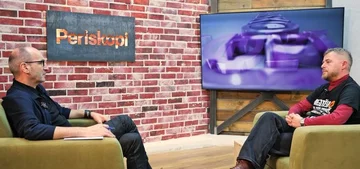
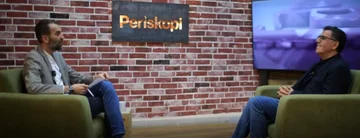
Periskopi(8 years ago)
(8 years ago)Prof. David L. Phillips, who recently withdrew from his position as adviser to the Kosovo government, speaks of the DW's option of changing borders and stage in Kosovo-Serbia dialogue reports. DW: Professor Phillis, who makes decisions for Kosovo today? Phillips: It is not clear who is responsible in Kosovo for [...]
DWProfessor Phillis, who today makes the decisions on Kosovo?
Phillips: It is not clear who is responsible in Kosovo for dialogue with Serbia. Is President Hashim Thaci? Does the government have plans for a joint team to participate? All these are open issues. Although I have closely monitored the dialogue, I don't know who's responsible. According to what I have understood by Hashim Thaci, he is the highest authority.
This question can also be addressed to the American government. What a role the American government plays in this dialogue. And what are the policies of the Trump administration on specific dialogue issues, such as border regulations. John Bolton's statements and others are unclear. They too must be clarified.
DW: Who should explain?
Phillips: People in Kosovo must decide on the structure of negotiations and their responsibilities. And American officials have to explain what the role of the United States will be, and what is the American position on specific issues.
DW: You think these decisions haven't been made yet? Have they been taken and kept secret?
PhillipsI don't know. If they are resolved, the decision is not clear to me. If it is not clear to me, it is not clear to others. And if the decision is made, then civil support is necessary. Therefore, it is important to create transparency and clarity in role and responsibility.
DW: Since August, almost every day new news of dialogue comes, yet it is difficult for us to understand all of what is happening. The latest is that Mrs. Moghrin is in favour of partitioning Kosovo. How can negotiations be mediated when you have a unilateral attitude?
Phillips: No one has attended meetings between Vuciqi, Thaci and Mogher. So we don't know what they're talking about. We can't say that Moghrin is working with a plan for partition because she didn't say that. What needs to be achieved is more transparency and greater access, so the population directly affected by the talks is better informed.
DW: Now it seems the French president has joined the game, Macro. What does that mean?
Phillips: France seems more open to border correction than other members of the five. But we don't know exactly. Even Macro has to make a clear statement about it. In fact, all members of the five should clarify what they expect from the talks, and what their positions are. The fifth is Italy, France, Germany, the United Kingdom, and the United States.
DW: The last time we talked about Kosovo was in August when the first ideas for changes of borders, territories, corrections, etc. were heard. At that time, no one made a clear statement. Now, three months later, nothing has changed. Should we understand that as a strategy? Or should we use conspiracy theories to understand more?
PhillipsThere is another third chance that no decision has been made. There is no detail about these ideas. There's no file. This is more likely to be true than the two scenarios you mentioned. “It's discussed”, it's a very unclear statement, which has nothing to do with any specific policy or agreement. I've asked for any documents to talk about details and I'm told there's no such document. Maybe it exists and it wasn't given to me. Perhaps what we hear is that everyone says what comes to his mind.
DW: This unclear situation prompted you to make the decision to give up the Kosovo government's advice on dialogue issues?
Phillips: I resigned to the Kosovo government. The government has not returned answers yet. But I cannot participate in negotiations that work for the division of the country. I don't think this is an effective strategy. And I don't think that Kosovo can achieve its goals -- recognition from Serbia, recognition by the five European countries that have not yet recognised it -- and give up Russia and China by vetoing the Security Council. The border regulation for me is an idea that does not bring about the desired normalisation of relations.
DW: You have just written an article that offers as an alternative to division, decentralisation. The problem Kosovo has is not a human rights problem, it is a status problem.
Phillips: The Kosovo problem is Serbia. Serbia refuses to admit it has lost Kosovo, that Kosovo is independent and sovereign. Kosovo will never return to Serbia's control. Serbia is blocking everything. Serbia is blocking Kosovo in efforts to gain greater recognition in the world. And as long as Serbia continues to stumble, it will remain alone outside the EU. Because chapter 35 requires normalisation of relations between Serbia and Kosovo, before Serbia progresses on its candidacy for EU accession.
DW: Serbia is our neighbour. And I understand that the EU wants to have Serbia in its bosom as well. And perhaps some compromises must be made. Does this compromise have to do with taking part of Kosovo? That's what Serbia is looking for? Are you trying to get a portion of Kosovo to say “
Phillips: Serbia's official policy towards Kosovo views Kosovo as Serbia's province. Serbia does not accept reality. We don't know where this idea of border change came from. He came from Belgrade, from Pristina, from Tirana? Who supports this idea? We don't know. We don't even know if Vuciki supports this idea. We know that most Kosovo Serbs, including the Sava priest, have rejected it. Because changing borders would marginalise Kosovo Serbs and lead to massive population movement, could cause violence and damage for Kosovo Serbs. We don't know who supports this idea. The only man we know supports this idea is Hashim Thaci.
DW: Some newspapers wrote that the idea was made public after a meeting with Jared Kouchner...
Phillips: No one's been present at the Kouchner meeting with Dachy and Brnaby. We don't know what they discussed. What we know is that Daciqi made a statement after the meeting that “all options are open”. The division of Kosovo has always been at the table. The idea of partitioning Kosovo originated with Dobrica Qosiq and the Serbian Academy of Social Sciences. Vuk Draskovic supported the idea of being foreign minister. We don't know if this tai is a real proposal, or is it the old idea that resurfaces again.
DW: So what does Serbia want?
Phillips: Serbia is seeking territory in northern Kosovo, compensation for investment and wealth in Kosovo, special protection for minority and Orthodox culture. I have not seen any written documents from Serbia where this is proposed. I've just seen a few notes about dates, but things are unclear. What does Kosovo get in return to give 20 percent of the country? recognition from Serbia? Would Serbia make constitutional changes to enable recognition of Kosovo? Can it bring recognition from EU countries that have not recognised it? Even knowing Spain, which is problematic? Moscow does not receive orders from Belgrade. What will happen to the Security Council? We don't know. What I know is that negotiations cannot be based on dreams. Negotiations should be based on realities. They should be enabled by international media, monitored for implementation, including measures taken to cut the path of complaints of the other side. I don't think that Kosovo- Serbia is following these rules.
DW: Does this mean that Kosovo is today, as one day after independence day?
Phillips: The dispute over partition causes major confusion in Kosovo. No other plus country will recognise Kosovo as long as this discussion is not over. Kosovo has work ahead of serious work: improve governance services, including fighting corruption. The split debate is a departure from government affairs. This can't go on long. Many years have passed and Kosovo must be fully integrated into the international system. It must become part of Euro-Atlantic institutions, including Interpol. There must be visa liberalisation.
DW: Kosovo is creating an army. Can Kosovo become part of NATO without status?
Phillips: Of course Kosovo must have the national army. The national military is for securing borders and protecting from possible aggression. Serbia has acquired sophisticated weapons from Russia, including MIG attack aircraft. Russia has created a spying base in Nis. Kosovo needs to be able to defend itself and defend its sovereignty. The North Atlantic Council must act through the PfP programme, and accelerate Kosovo's NATO membership. NATO is not only an alliance for security issues. NATO is a coalition of countries that share the same values. Kosovo must strengthen efforts for democracy and commitment to human rights if it seeks to get closer to NATO.
David L. Phillips is the director of the peace-building and rights programme at Columbia University's Institute for Human Rights in New York. Prof. Phillips has been working for Kosovo's independence for 30 years, when he was an American government official in Capitol Hill, when he was in working groups like that of the Council for Foreign Relations and as a researcher at Columbia University.