2 minutes ago
BBC military article: What's different? Really nothing.

Periskopi(8 years ago)
(8 years ago)British President “BBC” has dedicated an article during the process of transforming KSF into Army, objections and support from other states, as well as a brief historical by the Kosovo Liberation Army and the KPC. “A proverb says one man fears loaded rifle, while two fear when it [...]
British President “BBC” has dedicated an article during the process of transforming KSF into Army, objections and support from other states, as well as a brief historical by the Kosovo Liberation Army and the KPC.
A proverb says that one man is afraid of loaded rifles, while two fear when it is empty”, this BBC article in Serbian begins.
He's afraid of the one to whom the gun is turned, because I don't know if it's loaded, and he's scared of the one holding the gun, because he knows that fact.
Something similar is happening with Kosovo authorities' plan for transforming the KSF into the Army, which has triggered major reactions in Serbia.
Last week, the Kosovo Assembly adopted the three bills for the KSF mandate.
KSF short story
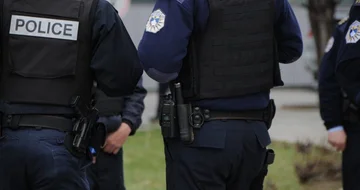
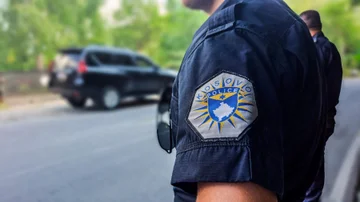
Kosovo Security Forces are the successor of the Kosovo Liberation Army, a guerrilla organisation which after the end of the 1999 conflict was disarmed and disbanded.
In order for some of the KLA members to be still active, the Kosovo Protection Corps(TMK) was formed, with a mandate similar to that of today's KSF. Topping them was Agim Ceku, former general in the KLA.
The Kosovo Protection Corps was disbanded in 2009. The same year the Kosovo Security Force was formed, mostly by new frameworks that were not at war during the conflict. The same had some 5,000 members.
Many of the Serbs left this force following the transformation of the KSF.
KSF is equipped with light weapons. It also has several combat cars, which are donations from Turkey.
The Ministry of Defense, which has never existed before, will soon be formed.
This is actually against regular procedure, which initially required two thirds.
Caused Noise
Belgrade's reaction was expected. The “is something that causes fear”, said President Alexander Vuciq, who added that “situata is very difficult for us”.
Defence Minister Alexander Volin said that Pristina's “movement jeopardises the peace and security of the region”, and that according to him the Kosovo Army consists of “armed terrorists”.
Similar reactions came from other state officials, as well as pictures filled with titles, “Albanians want war”.
During that time, Kosovo's president and prime minister issued several triumphal statements.
“How proud we are today for our girls and our boys in uniform”, Thaci wrote.
While Prime Minister Haradinaj said forming the Army is a step closer to consolidating the state of Kosovo.
Albania's Prime Minister Edi Rama congratulated Kosovo as well.
“Praise the martyrs of Kosovo, and blessed be the army of the Republic of Kosovo”, Rama wrote.
The photograph that he spread, composed of former KLA and KSF members, is not in line with the principles that a new army will be “ethnic”.
What do the Russians say?
Reactions from the world were different. States that recognise Kosovo, above all the United States of America, soundly support the idea that Kosovo will have its own army in the future, despite their preferences of doing so through the constitution.
The KSF Transition to the Armed Army is a process that consumes time. Washington will see this done in a way that contributes to regional peace and stability”, State Department Secretary Matthew said. Palmer on a visit to Belgrade.
Mission NATO, KFOR, has indicated that it supports the current mandate of the KSF, implying that it does not support the transformation.
That is logical, because NATO has the monopoly on preserving stability in Kosovo, and forming an army would complicate its mandate.
As expected, Moscow expresses its opposition.
The Kosovo Army's “Forming, in the way it is done, is a major factor of non- stability in Europe”, Maria Zaharova said.
What does it really change?
Actually, nothing.
As KFOR Commander Salvatore Coucci explained a few months ago, it takes 10 years to transform the KSF into the Army.
Considering that KSF is fully dependent on NATO and US partners when dealing with training, equipment and capacity, then it is clear that the intensity of the transformation will depend on them, rather than on the Government of Kosovo.
This is exactly what Palmer said, so “Washington will see to it done in a way that will ensure regional peace and stability”.
But even if the Army is formed in cash, the format of five thousand soldiers cannot even approach Serbia's Supreme Army.
And when it comes to Kosovo Serbs, who are trying violently to integrate Serbian municipalities, experiences show they are not a threat to the Kosovo legal armed forces, including the police, more than groups and violent personnel.
This was clearly evident on 17 March 2004, when several thousand Serbs were expelled from towns and enclaves south of Ibri, as well as in a series of conflicts around the Mitrovica bridge.
For this reason, the threat to the Kosovo Army is a threat to an empty weapon, a fact which Pristina and Belgrade know very well.
They are not intimidated by each other, but their tense atmosphere has political causes.
Fear of the third party in this case citizens of Serbia and Kosovo, which does not exist at all until war, concludes the BBC article.