8 minutes ago
Thaci's disintelligence initiative was afraid he'd be charged.

Periskopi(8 years ago)
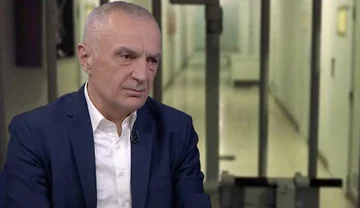
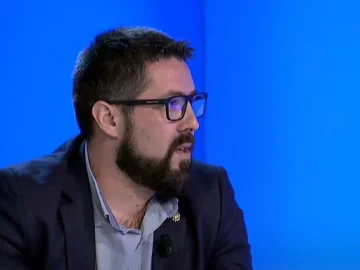
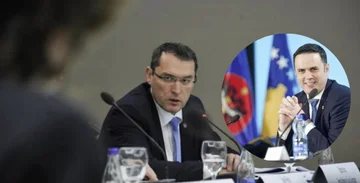
(8 years ago)According to Bekim Blakaj from the Fund for Humanitarian Law, the initiator for abolishing the Special Court was Republic of Kosovo President Hashim Thaci, as he said he feared that KLA leaders would be potentially charged. “Actually say this should be a political issue, in the first place personal initiative [...]
According to Bekim Blakaj from the Fund for Humanitarian Law, the initiator for abolishing the Special Court was Republic of Kosovo President Hashim Thaci, as he said he feared that KLA leaders would be potentially charged.
The “actually say this should be a political issue, in the first order personal order the initiative I believe is derived from President Thaci, because there are months ago that in some public speeches he's been taking in as regards the Special Court, then the gathering of signatures on behalf of veterans to change the Special Court, respectively, to expand the jurisdiction of the special court and at the last moment even the text of the petition has changed, so that this court <x1.
“I think he fears, of course some senior former KLA officials will be charged, commanders and this resistance of several institution carriers against the special court is born with fears that they will be indicted by the Special Court”, he said.
The removal of the Special could strengthen UNMIK's role in Kosovo, he warns, adding that resolution 1244 is still in effect.
As for establishing a court by the United Nations organisation (OKB), Blakaj says it would be indisputable if the Special was abolished.
The question is such that Resolution 1244 is still in effect, it has never been abolished, and with this Resolution 1244 the main mandate for law in Kosovo has UNMIK, so it can easily happen to be empowered U n NMIC in Kosovo that we still see a great presence of UNMIK. It would be very possible for the United Nations organisation (OKB) to create another court, but without the establishment of this tribunal from the United Nations, the situation in Kosovo would be significantly worse than it is today, we would have this UNMIK presence and I don't even know how many Kosovo bodies could contribute to the development of Kosovo”, Blakaj said.
All this situation has caused the international community to express categories about the possibility of ending the court.
But even if the court starts working as predicted by Western countries, reports are broken.
Even at this point, even if the court is not to be broken, because we have the opportunity yesterday to hear even from the Government of Kosovo and a text written by the parliamentary chief, it is clear that the Court in all likelihood will not be abolished, but bad reports remain between Kosovo's institutions carriers and in the first place the British embassies and the United States of America<1>.
He confirmed that if the Special Court were abolished, then Kosovo could not seek trial for war crimes either from Serbia and the European Union.
I think that by this act if the special court eventually was abolished, a political immatureness of institutions in Kosovo would be extremely harmful in the first place for justice, because many victims have high expectations from this court, but on the other hand, it would be reduced to the whole process of confrontation with the past in Kosovo, so we can't wait then if this court, which any other court, is going to judge for war crimes, we can't call either then Serbia nor judge the European Union for Serb crimes to be destroyed, so it's going to be so that it's very important that it doesn't get broken down now.
As for starting the work of the Special Court, he said that in the spring we can expect the first charges, because the beginning of the work dragged too long.
The beginning of the special court's work has been extremely procrastinious, but in all likelihood this spring, this spring of 2018 we can expect the first charges, at least that's what the” warnings are.
Efforts to abolish the Special Court sent Kosovo into a situation that was not well received by internationals.
43 MPs called for abolishing the law in the last minutes of last session for the budget on 22 December last year.
After failing to maintain the Headship of the Parliament, Britain and the US ambassadors said this is a knife behind the back and that Kosovo has been going through the hardest time since the post-war.