2 minutes ago
Sheriff in Strasbourg counts countless crimes committed in Kosovo

Periskopi(8 years ago)
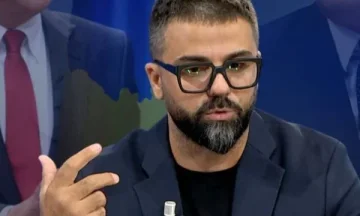
(8 years ago)The head of the Initiative's Parliamentary Group, Bilall the Sheriff, has published on HINA Facebook, address held in Strasbourg at the Joint Meeting of the Commission for Stabilisation and Association Kosovo's EU-Kosovo Assembly with MEPs. In a long speech, the Sheriff has counted the countless crimes of Serbs during the recent war in [...]
In a long speech, the Sheriff has numbered countless Serb crimes during the recent war in Kosovo.
The head of the Initiative's deputies has cited a series of massacres that were carried out in Kosovo by Serb forces.
In the speech given in Strasbourg, Bilal the Sheriff, who holds the post of Secretary General for the Initiative for Kosovo, has said that Serbian forces, with the aim of total or partial destruction of ethnic Albanians, have committed killings, injuries and disabilities of tens of thousands of innocent people, among whom thousands of women, children and elders.
Over 20 thousand women were subjected to sexual violence in the function of destroying the Albanian woman, as host to national heritage; over 1 million people were expelled in the function of Kosovo's ethnic cleansing... And finally, after withdrawing from Kosovo, Serbian forces took thousands of Albanian civilians with them. Since the end of the war until today, several thousand of them have been turned into coffins from Serbia, while with the fate of more than 1600 people nothing is known. In a word, Serbia's state committed crimes that are punishable with the International Convention on Prevention and Punishment of Genocide Crime”, the Sheriff has said among other things.
Below, you find the full word of Bilal Sheriff:
My word held today in Strasbourg at the joint meeting of the Stabilisation and Association Commission The Kosovo Parliament's EU-COSOVEs with MEPs.
Honored chairman of the EP delegation, Mr. Tonino Pilla
Honoured MEPs and MEPs
honoured ones,
At the entrance of my word I am referring to some data that is known to all those who are seriously preoccupied with learning what happened during the Kosovo war.
With the aim of the total or partial destruction of ethnic Albanians, Serbian forces committed the killings, injuries, and maims of tens of thousands of innocent people, among whom several thousand women, children and elders; to over 20 thousand women were subjected to sexual violence in the function of destroying the Albanian woman, as a bearer of national heritage; over 1 million people were expelled in the function of Kosovo's ethnic cleansing... And finally, after withdrawing from Kosovo, Serbian forces took thousands of Albanian civilians with them. Since the end of the war until today, several thousand of them have been turned into coffins from Serbia, while with the fate of more than 1600 people nothing is known. In a word, the state of Serbia committed crimes that are punishable by the International Convention on Prevention and Punishment of Genocide Crime.
“War crimes and the way to reconciliation” is a valid topic for all societies that come out of war. By establishing in direct response the consequences of the war and the process of closing a tragic chapter, the preliminary reflection on what is in the way is inevitably imposed. Instead of Serbia agreeing to crimes committed during the war, co-operating with the international community for punishing the entire chain of people responsible for crimes and apologizing for these crimes, Belgrade's old politicians, recycled in the new state institutions after Milosevic's collapse, applied the «crime viewing strategy».
I see it right to focus on the matter of «looking at the crime» because this strategy represents one of the essential dimensions that enables us to better understand the obstacles that arise in the process of reconciliation in Kosovo-Serbia relations.
It's known that in all phases of war «crime viewing» is distracting the criminal. In the case of the Kosovo war, a specificity is added to this initiative, which makes it different from the crimes committed by the elsewhere. The killing of civilians of all ethnic affiliations in Kosovo was done with political decision and specific purposes.
I'm not here to bring you interpretations of events by any Albanian, even an eyewitness to the crimes committed. But honored ones present, I am stressing that the real purpose of these murders made public the political personalities of the Serbian state itself. In December 2013 Aleksandar Vuciqi, Serbia's current president, declared in the quality of the Serbian government's deputy prime minister, that the Serbian state was behind many crimes against civilians in Kosovo. Shortly after him, Serbian Renewal Movement Chairman Vuk Draskoviqi, who in wartime in Kosovo was Yugoslavia's deputy prime minister and commissioned to lead foreign relations, confirmed that “From the head of the Serbian state was decided that the State Service would conduct a series of terrorist attacks against Serbs and Albanians in Kosovo, which the KLA should wear. The aim of these attacks was for the KLA to be presented in the eyes of the international community as a terrorist organisation and, at the same time, through these shares, would be given fire to anti-Albanian sentiments in Kosovo and across Serbia ...
Honored European Commission representatives,
One might ask why I chose to quote statements by Serbia's top state representatives at this joint meeting when crimes were committed in Kosovo. The reason is that these statements are very significant on the subject that has been laid down: Here is evidence of the murder of civilians of all ethnic affiliations in order to promote interethnic hatred.
Today, as we approach the end of the second decade from the time of the worst crimes Kosovo has ever experienced, over 1600 Kosovo families live in daily anguish because they do not know about the fate of their relatives.
Overall the «crime viewing strategy» is about avoiding the direct or indirect responsibility of those involved in committing crimes. In the case of Kosovo «the crime watching» not only does it survive the triumph of justice and the accountability of all those involved in committing crimes but continues to fuel interethnic hatred and become an obstacle to the path to reconciliation.
Unfortunately, after the initial opening of the «Serbian Crime Box in Kosovo» the debate sank into Serbia. With the silence imposed by the power for the crimes committed in Kosovo, hopes waned that the whole of the criminal chain from command to the executioner would be placed before the responsibilities of Recak Massac, the Izbica Massacre, the Rezala Massac, the Great Krusha massacre in Rahovec, Rugova's Massac, and many other massacres across Kosovo where more than 10 thousand civilians were killed.
Instead of acknowledging crimes committed and bringing criminal responsibility to all criminals, Serbia's state continues to this day to repeat the strategy compiled by Milosevic's Staff for the murder of civilians in Kosovo to be accused by Albanians.
Unfortunately, international institutions of justice that were designed to bring justice were also ensnared. Since the end of the war until now, more charges have been filed against KLA soldiers than against Serbia's military and police forces. In fact, to peak out on this strategy, the indictment arose with the argument that through them it would be enlightened whether the KLA leaders were involved or not in crimes Serbia has repeatedly charged.
honoured ones,
The processes should not be processed to prove anyone's guilt or innocence. Judicial processes must bring justice to the victims. In Kosovo's case, due to the application of a strategy for «crime theft», responsible people for the killing of 1392 children, 1739 women and thousands of civilians of different ages, as well as violators of over 20 400 Albanian women. Family of murdered civilians and women victims of sexual violence expect justice. Looking for the culprits on the wrong track, we continue to keep the anxiety of the victims' families alive and thus make the reconciliation process even more difficult.
To turn attention to the real track where those who committed the crimes should be sought I am concluding this word with the statement of former Secret Service of Serbia Chief Radomir Markoviqi, the man who was at the helm of the leadership of «Eskadron of death», as Serbian politician Vuk Draskovqi calls the team that committed crimes against Serbs, Albanians and other ethnic affiliations in Kosovo.
Disillusioned by the maximum sentence of 40 years in prison due to direct involvement in the murder of Milosevic's Serb opponents, “Radomir Markovic, in the plea for pardoning the sentence he addressed to Serbia's Chairman Tomislav Nikolic, threatened to bring Serbia down on its knees if he publishes the list of crimes committed by the Serbian Secret Service against Serbs and Albanians in Kosovo”.
Radomir Markoviqi owns lists of civilians killed in Kosovo, because he headed the state structure for the execution of civilians. Unfortunately, in all judicial processes for the murder of civilians in Kosovo, neither UNMIK authorities nor EULEX authorities had the powers to question any citizens of Serbia, nor, therefore, Radomir Markovinqi, who owns the lists of civilians killed by Serbia's Secret Service. Without the full lighting of lists owned by Belgrade authorities concerning the killing of civilians of all ethnic affiliations in Kosovo, the judicial processes will end without positive results. Except for those who are interested in hiding the crime nobody needs processes that prove someone's innocence. Kosovo and its citizens need to conquer justice to close a tragic chapter. However, the full enlightenment of crimes is a necessary condition for this chapter to be closed and to walk on the path to reconciliation.
P.S.
I have made a copy of the article bringing up the above - mentioned statements by Serbian politicians to those who are interested in their source.