41 minutes ago
Elections cost Kosovo 10m euros

Periskopi(8 years ago)
(8 years ago)Over 10m euros have cost Kosovo's budget the organisation of two parties of elections in a year, where 4m euros have been spent on extraordinary elections for the Kosovo Assembly. This for Kosova Prees has been announced by Central Election Commission spokesman Valmir Elezi, who has indicated that [...]
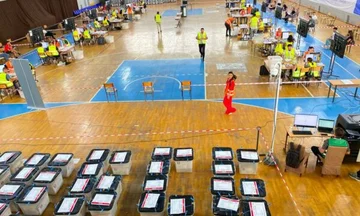
Over 10m euros have cost Kosovo's budget the organisation of two parties of elections in a year, where 4m euros have been spent on extraordinary elections for the Kosovo Assembly.
This for Kosova Prees has been announced by Central Election Commission spokesman Valmir Elezi, who has indicated that the cost of local elections has been higher than by parliamentary elections because of the runoff.
The overall cost of organising early elections for the Republic of Kosovo Assembly, which was held in June 2017 total, has been 4m euros. While, in terms of the cost of local elections in 2017, the drafting of the report has not yet been completed to know the total cost of these elections. For these elections in the Law on the budget of 2017, that's why local elections have been scheduled at 6.1m euros, but with all of this, we have to wait for the conclusion of this report to know exactly how much was spent from these planned means... The cost of local elections is significantly higher than the cost of parliamentary elections for the fact that in local elections by law is the first to hold the second round for the election of a municipality speaker, so that what we commonly call a runoff”, he said.
The run-off has had 19 municipalities and that the cost of local elections must be expected by the end of the report.
While, election monitoring organisations say holding two sides of elections within a year undermines Kosovo's poor budget as well.
Albert Krasniqi from the Kosovo Democratic Institute has said the country has faced elections since December of last year and that it has a very high cost for Kosovo's budget.
“If we count from December last year and until December of this year, six sets of elections have been held in Kosovo, two rounds of voting for extraordinary elections in Drenas, parliamentary elections, two rounds of local elections and a revote in Istog. Which is an extremely high cost for a poor budget Kosovo has and for more when these costs are being caused because of the political class's irresponsability in Kosovo, which because of accounts they have in those moments undermine the governing coalitions and thus trigger extraordinary” elections, Krasniqi said.
According to him, despite this in power, politicians and municipal leaders who are irresponsible and cause millions of euros to the state budget because of their unreasonable spending and according to him, the cost of the elections would be very unrecognised in relation to what they do.
While he also has a remark on the Central Election Commission on Voter Education spending.
“As far as the CEC is concerned, it's about spending on education of voters and which have been completely ineffective because they've had a large number of invalid votes, and the CEC has had an extremely poor campaign, not to say there's been any in parliamentary elections to inform voters how they should vote. So we could have another government if those around 8 per cent of the invalid votes could be recounted. Especially when we have a very close outcome among the mayoral candidates, so the CEC campaign must focus there”, Krasniqi said.
While, from the organisation Get up, Genc Nimoni has said that two sets of elections within a year are a major cost to Kosovo's budget.
“We as an organisation have made monitoring elections together with the organisation and what we have seen of course that organising elections has its cost. Of course, two first elections charge the budget and in normal conditions that would not have to happen, but under the extraordinary circumstances that have occurred in us have made two first elections organised at the same time, in the same year, and of course it has its own costs that undermines the planning lines that are planned for other” expenditures, Nimon said.
And holding two parties in addition to the financial cost has been challenging for the Central Election Commission. CEC spokesman Valmir Elezi has said that despite what had two sides of the election within a year, they have managed to fulfil their constitutional duties.
“As far as the Central Election Commission is concerned, 2017 has been a year filled with continued commitments to the CEC, initially to organise early parliamentary elections and then even local elections. For the Central Election Commission, organising and holding elections is a constitutional and legal duty. Certainly it has been challenging to the fact that we have passed from one election process to another, in this case from early parliamentary elections to organising regular local elections, but despite this, after a maximum commitment by the CEC, we have managed to fulfil our constitutional and legal obligations”, Elez stressed.
Kosovo has gone to extraordinary elections for the Kosovo Assembly after voting a no-confidence motion on the government led by Isa Mustafa.
The extraordinary parliamentary elections have been held on June 11th, while the first round of local elections for mayors has been held on October 22nd. Second round elections have been held on November 19th, while revotes in Istog have been held on December 17th.