11 minutes ago
There will be tough competition among political parties in these municipalities

Periskopi(9 years ago)
(9 years ago)Campaigns for local elections to be held on October 22nd have been launched in Kosovo. The political parties, which compete in this election, have made efforts to run for mayor of prepared and qualitative candidates, estimate representatives of civil society. But according to them, the selection of quality candidates has been made especially for large municipalities, as [...]
Campaigns for Local Elections to Be Hold in Kosovo October 22. The political parties, which compete in this election, have made efforts to run for mayor of prepared and qualitative candidates, estimate representatives of civil society.
But according to them, Candidate Selection The quality is especially made for large municipalities, such as Pristina, Gjilan, Ferizaj, Mitrovica and Prizren.
Meanwhile, for small municipalities it is estimated that political parties have not paid much attention to selecting candidates.
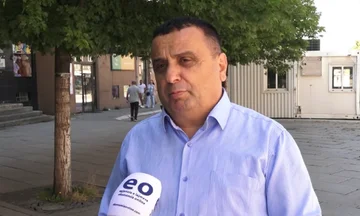
Bekim Salihu, a researcher at the Institute for Advanced GAP Research, told Radio Free Europe that political parties have concentrated the main race in large municipalities, though at the end, he adds, the parties will make calculations in how many municipalities they won and not which is big, which is small.
“Political parties in general, and separately in these elections, have tried to find candidates who will pull out, get votes from the electorate. They have tried to offer as well-educated and prepared candidates as possible, and that's worth an estimate because it makes the race rich. But it is evident that there are also lack of resources within political parties, for these parties to count on these resources to offer more prepared candidates”, Salihu said.
The Central Election Commission in Kosovo is making final preparations for holding regular elections for local self-government bodies, to be held in Kosovo's 38 municipalities.
Valmir Ismaili, analyst from non-governmental organisation “Democracy Plus”, told Radio Free Europe that there is not expected to be any major innovation from local elections.
For each municipality, he said, there will be a tight race between two or three political subjects.
The “Political parties are again focused on the country's largest municipalities, and the main race is expected to take place in those municipalities. There are Pristina and Prizren the two largest municipalities in which there will be greater confrontations between political subjects, then comes Gjakova, Peja and perhaps Mitrovica, which can enter such a category”, says Ishmael.
The local government race takes place between candidates for mayors and candidates for councilors at municipal assemblies.
Bekim Salihu says that the lives of citizens develop in the municipalities where they live and that, according to him, candidates who compete in this election would have to concentrate on projects that have the impact on improving the lives of citizens and public services.
“The GAP Institute has published an analysis that specified the problem that the central level in most cases is interfering with local level competencies, and thus it is impossible in some cases to exercise functions in terms of the needs of cities and citizens. But, of course, many responsibilities remain, and many projects that could be made to mayors”, Salihu says.
While Valmir Ismajli says significant changes cannot be expected, as close co-operation between the local and central level has usually been lacking.
Kosovo's “municipalities unfortunately depend heavily on the central budget from government grants and not largely on personal revenues. As a result, however good a mayor in Kosovo will find it very difficult to do something for his municipality, unless he has the support of the central level”, Ishmael says.
Central Election Commission Certificate Now the competitive political subjects that will participate in the local elections. A total of 91 political subjects, out of them a coalition, 35 Political party, 30 civic initiatives and 25 independent candidates.