4 months ago
NATO port for Russia: Respond if Allies Are Touched in Balkans

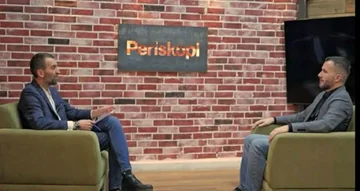
Periskopi(9 years ago)
(9 years ago)Security in the Western Balkans benefits security and stability in Europe, notes General Petr Pavl, chairman of the NATO Military Committee in exclusive interview for Deutsche Welle. DW: General Pavel, what are NATO's plans to strengthen security in a fragile region like the Western Balkans? Gene. Petr Pavel: The Western Balkans is a region [...]
DW: General Pavel, what are NATO's plans to strengthen security in a fragile region like the Western Balkans?
Gene. Petr Pavel: Western Balkans is a region of strategic importance for NATO and we have invested in the security and stability of the Western Balkans for more than two decades. With this assistance, since the 1990s, the region has made significant progress. NATO has helped end two ethnic wars in the Western Balkans. Stability and security in this region benefit stability and security in Europe. We aim to maintain our presence, focus and commitment in the Western Balkans as long as our assistance is required and to support the Euro-Atlantic aspirations of countries in the region. To the extent that the security environment has changed significantly over the past two decades.
NATO allies, including those in the Western Balkans, are facing a wide range of complex challenges, ranging from a safer Russia to unrest in the Middle East, terrorism, migration flows, hybrid threats and cyber attacks. For nearly 70 years we have defended stability and peace because we have been able to adapt. NATO must have reliable protection and prevention to be able to defend against any opponent or threat. These new security challenges have caused the greatest reinforcement of our collective defence since the end of the Cold War. NATO must ensure that it possesses reliable protection and prevention, which has a range of skills and opportunities to respond appropriately when this is required. We have increased our readiness and the ability to position them quickly, if necessary. We have reinforced our east wing with our presence and our multinational war groups. At the same time, we have increased our presence in the Black Sea region on land, air and sea. We are also strengthening our coordination with other organizations, including the European Union. These adaptations/adaptations send a clear message that an attack on an ally will be faced by the entire Alliance as a whole. That includes allied countries in the Balkans. If one of them called on Article 5 of the Alliance, the allies will remain united, determined to protect NATO's territory and prevent any possible aggression.
DW: From NATO's point of view, what are the risk factors, make peace and stability vulnerable in the Western Balkans?
Gene. Petr Pavel: In today's security environment, our threats and challenges in the suburbs and beyond are as diverse as many. One of the challenges currently located at our borders is a more aggressive and secure Russia of itself a nation with which the Alliance has worked for more than two decades after the Cold War to build a partnership. The second is the fight against terrorism, where we must ensure the address not only of current problems but also of root causes. The nations can and must prepare to face these external threats, but the vulnerability to them can stem from domestic challenges as well. Democratic values, rule of law, internal reforms and good relations with neighbours are vital to regional co-operation and stability. This is not an easy way. It requires real commitment, real progress in reforms and reconciliation among neighbouring countries. The Alliance sees the region's future in Euro-Atlantic co-operation and integration for those who love it, and we are determined to help countries in the region implement real reforms for the benefit of their citizens, regardless of whether they want to join NATO or not. We respect their choice, no matter what.
DW: What is the essence of NATO's short and medium-term strategy to neutralise new geopolitical influences, especially Russian ones, to infiltrate the Western Balkans?
Gene. Petr Pavel: NATO fully respects the right of nations to establish/choll their political and security agreements. This is a fundamental principle of European security that we have all signed, including Russia, as defined in Helsinki's Final Act. However, we have seen an increase in efforts by foreign sources to intervene and influence democratic processes in various Western Balkan countries. Any external intervention, whether with informal piracy, propaganda or inciting unrest, is contrary to the principles of good international relations. We encourage local governments and institutions to increase resistance to these kinds of interventions and ensure that their democratic institutions remain strong, fight corruption, modernise and implement necessary reforms. NATO will continue to work with different partners in the region to help strengthen their democratic institutions and reform their Armed Forces.
DW: What are the preconditions and opportunities for NATO membership of the two aspiring countries in the Western Balkans, Bosnia and Herzegovina and Macedonia? What about Serbia and Kosovo?
Gene. Petr Pavel: The NATO door remains open to all European democracies sharing the values of our Alliance, who are willing and able to share the responsibilities and obligations of membership, and that their involvement can contribute to our common security and stability. In June, we welcomed our 29th ally, Montenegro. This proves that the policy of NATO's open door works. But let me be clear: this is not an easy process, nor is it quick. It is a long process of hard work and effort. Thus, countries naturally become impatient because they want to see immediate results. On the other hand, the process is naturally long because implementing these fundamental reforms requires not only resources, but also time and determination. Bosnia and Herzegovina and the former Yugoslav Republic of Macedonia have a Membership Action Plan,(PVA), which is NATO's advisory, assistance and practical support programme, adapted to the individual needs of countries aspiring to join the Alliance.
Both nations are actively working to meet the conditions set by Allieds in PVA. But, as I said, this is a long process and I would call on members who aspire to have what we call strategic patience. I would like NATO membership to be the ultimate goal, but not all nations aspire to join NATO. For example, take Serbia. Serbia does not want to join NATO and has the right to choose its/unitable security agreements. We do not force nations to join our Alliance. Some of those countries that do not want to be NATO members choose to be NATO partners. NATO co-operates with more than 40 countries worldwide. And these partnerships are a true success story. They help maintain peace, strengthen stability and promote progress for all of us. These countries enjoy access to this very broad framework of cooperation. This, in itself, is extremely important, not only to have access to all the NATO countries' expertise and experience, but also to participate in courses, exercises and operations. And we cannot forget the political support behind a strong sign of NATO partnership. And this meaningful expression of strong partnership also sends a strong message to potential opponents. So I believe that strong partnership has a great value in itself.
DW: Terrorist threats do not rule out the Western Balkans. What is new about their avoidance, from the Conference in Tirana, of the NATO Military Committee, developed recently and for the first time in Albania's capital?
Gene. Petr Pavel: The first meeting of the NATO Military Committee in Tirana was dedicated to NATO's efforts in the Stability Design. NATO defence chiefs discussed a number of concrete proposals regarding military contributions to support a comprehensive, systematic and consistent approach. They welcomed the Centre for South and its initial operational performance, the important role it will play in improving NATO's regional understanding and the ability to predict crises in the region, and stressed the importance of continued co-operation with other key partners, namely with the European Union. Our work on combating terrorism involves many different lines of effort and kinds of activities from our permanent support mission in Afghanistan, to our training for Iraqi forces to the development of new technologies for lynching or bomb detection.
NATO is now an all-powerful member of the Global Coalition to overcome I The SIS and we have increased the contribution of AWACS surveillance aircraft, which give the Coalition a chance to have a clearer air view. We are also working to improve our information and knowledge, as well as the way we share information among member states so that allies can take quick precautionary action against the threats we face, including terrorism. But we must remember that terrorism has no religion or boundaries. It cannot be defeated merely militarily, but it must be treated at certain levels of social, economic, political and, when necessary, even military. There is no simple solution. Terrorism is not a new phenomenon in itself new, but it has resurfaced in recent years, mostly in the form of Iraq's Islamic State or how it is known by the DESH initials. To be able to treat the problem effectively, we need to understand it and use all available means. I believe the Alliance's efforts, along with those of our partners and multinational organisations, can contribute greatly to the collapse of terrorism, but it will take time, resources and determination. No quick solution.
DW: What is the attitude of NATO for the timing of transforming Albania's Armed Forces from their defence role in NATO's mission to the Armed Forces that fully comply with NATO standards?
Gene. Petr Pavel: I am very grateful for Albania's strong commitment to our Alliance and its contributions to NATO missions, operations and activities -- to our missions in Afghanistan and Kosovo, as well as to the Aegean Sea. You do not have very large armed forces, but contribute as much as possible. You also contribute to the Advanced NATO Force Presence with troops at the Canadian Battle Group in Latvia. Albania also offers strong support to our partners, including contributions to our Trust Funds for Ukraine, helping cyber defence and military career transition. In addition, Albania plays an important role in I SIL, providing Special Forces equipment and trainers in Iraq. Albania also helps build stability closer to home, boosting co-operation throughout the Western Balkans. Albania is a powerful lawyer for NATO's current policy and for the integration of its neighbours into the Euro-Atlantic family. Albania has also offered to maintain a NATO Eexcellence Centre for foreign fighters. NATO and Albania are co-ordinating the road ahead. Albania makes valuable contributions to international security and you are a promoter of stability in the Balkans and beyond.
DW: General Pavel, what are the main results of the Conference in Tirana, of the NATO Military Committee, which you are running?
Gene. Petr Pavel: Let me first thank Albania for the great support and warm hospitality we received during the Military Committee Conference in Tirana last week. The Military Committee conference was an opportunity for NATO defence chiefs to discuss some of the important points on NATO's agenda, as the need to meet current shortages in the Permanent Support Mission, (MPM). Purpose The RPM is to train, advise and assist Afghan security forces and institutions. The mission continues to offer a substantial contribution to the fight against terrorism. NATO currently has over 12,000 troops in the Permanent Support Mission to train, advise and assist Afghan forces. In recent months, more than fifteen countries have pledged additional contributions to enable our troops to continue providing assistance requested by Afghan security forces, especially in terms of Special Forces, Air Force and the development of new leaders. Although there is still work to be done, the force generation process continues. The NATO-led Permanent Support Mission is an essential contribution to the fight against terrorism. And it's the key to Afghanistan's military progress and support.