22 minutes ago
Governance as in Pristina, what Vetevendosje wants in other municipalities

Periskopi(9 years ago)
(9 years ago)The government in Pristina shows what governance the Vetevendosje movement wants in other municipalities. So said the chairman of this party, Wisar Ymeri, at the table organised on the “Randing of local government”, where VV, civil society and candidates for mayors participated. Ymer stressed that the municipality cannot be [...]
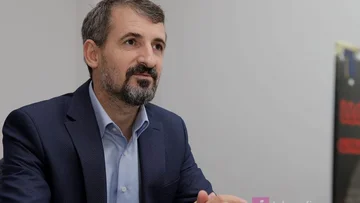
The government in Pristina shows what governance the Vetevendosje movement wants in other municipalities. So said the chairman of this party, Wisar Ymeri, at the table organised on the “Randing of local government”, where VV, civil society and candidates for mayors participated.
Ymer stressed that the municipality can be nothing but common, since the name municipality itself shows that it is something common to citizens and equally enjoys where we live.
Speaking of the mode of governance, the leader of the Vetevendosje Party added that if investments in Pristina are taken today, those in health, investments in the creation of spaces for local producers, infrastructure, this clearly shows what society and what municipalities Vetevendosje want.
According to him, together they will change the municipality because they want to change themselves.
2013 “Pristina has been returned to citizens, until 2013 equally replaced as territory, such as space, power and administration. The municipality in most cases has been linked to private interest and corrupt administration. Public space has been turned against as privatised, while public interest has mediated us through private benefits. Power has taken on the personal character that has its connections almost commercially to citizens. This turns us all from citizens to clients, from the benefit of government services. Today's municipality returns public goods to market goods, where only powermakers” have access, Ymer stressed.
While, Besnik Bislimi spoke of decentralisation, where he said that in Kosovo decentralisation is very poor, as this is also seen from the budget that is accommodated by municipalities.
“On the real decentralisation level in Kosovo is very poor. This is also seen from the budget approved for municipalities, as in 2017 all municipalities have had a combined budget of 440 million euros, which is about 22 percent of the budget, but if it deals with national income is about 6 percent. Within this 6 percent, most have been fixed since the start, which means that the municipality has no discrimination in manipulation with these figures. In the case of Kosovo of the 440 million that are accommodated to municipalities, 250 million are dedicated to salaries, so municipalities have no maneuvering spaces in this field”, Bislimi stressed.
According to him, in Kosovo it has continued The ruling PDK, overly proportionally, has favoured several municipalities, such as Skenderaj or Drenas, where most capital spending is financed by the centre. Similarly, Bislimi said that the same has continued with the LDK when it received the Ministry of Finance, where the Podujevo municipality 80 percent of projects are funded by the centre, only 20 of its own resources, while 95 percent of capital projects are funded by its own revenues, while the centre finances it with only 5 percent.
Pristina Mayor Shpend Ahmeti, who said they have freed the capital from a circle which through different interests has kept some people in power.
Ahmetin stressed that at the end of his mandate he does not want to measure how many meters of asphalt has been laid down, nor how much electricity has climbed, but how much he has created an active citizen, but has reminded his party colleagues not to overlook citizens.
The most important was contact with citizens and gatherings with citizens, never forget that they are too important if we want to organize any character that has public interest in itself. Yes, it is the individual, but the community or neighborhood is the basis for organizing in every municipality. They work together, nobody knows exactly how many 20 families living with one entrances they know every day, and every entrance has their guards, someone who sees who's coming to park there, someone who looks at how many holes they are, someone who's running. In 2014, 2015, and 2016 of approximately 50 civil gatherings, 50 civil gatherings per year are 25 times more than legal requirements, by law you must have two gatherings a year. Fifty gatherings started with 20 people at the gathering, at the end of 2016 there were no fewer than 200 of us. It is not easy to come to such a gathering, because no one will come to it saying, "You are indeed doing well." At neighborhood gatherings come people who have trouble, each one of them has a problem, from individual troubles, to a big neighborhood problem, but the change we've noticed even in the community discurs is extraordinary”, Ahmeti said.
Besa Sahini from civil society demanded that municipalities do more about establishing the quality of education, given that the test P The ISA ranked Kosovo very bad last year. She stressed that not only school facilities should be built, but that quality should be more priority.
“What municipalities can do, I have to go beyond providing school construction and simply employing directors, employing teachers, can do much more. Reading is a problem, there are many problems, but if we talk about reading what is basic, then reading should be addressed. All the studies I have read so far are addressed through the greatest reading. Reading occurs when there are books closer to children, and to bring books closer to children, school libraries must be much richer than they are today. But books are not enough, programs should be developed that move children to read - reading clubs” - she said.
Justice and Jurispodence Committee member in Vetevendosje Movement Xhavit Mustafa has stressed that municipalities in Kosovo operate according to Ahtisaari's plan, which, though it has been doing 10 years, has not been properly functional.
He has invited mayors to take initiatives to change this plan.
“E the biggest fault of establishing municipalities under this plan is ethnic grounds, which removes the minority community and majority from municipal affairs. For example, in municipalities where Serb majority municipalities exist, other communities have very little access because they have no representatives in those countries, and it is an obstacle to that community. Near Pristina we have the Gracanica municipality, where eventually only 1-2 assemblyists can participate by vote because it is also the small population. I think the time has come for the initiative to run even from municipalities, to change the plan to make changes in this regard”, he said.
Even Urbanism Director in Pristina municipality Libun Aliu spoke of the difficulties of local governance, until there were demands for his colleagues who have run for mayor in local elections to be held on October 22nd.
So the importance of communication with the community is extremely large both in campaigning and in power then. Now in campaigning at the points in the structures that we have, what President Shpend Ahmeti said, you will gather all their demands and they will be organised that those requirements will be carried out even if we are to govern, not only to the other's governance and thus to convert active citizenship as well as to governance. We have had trouble confronting the LDK's PDK assemblies, the problem is we have behind those at VV”, Aliu said.
Following the table, training of candidates for mayors has continued.