4 months ago
Subheader PDK: Government formed PAN with some MPs

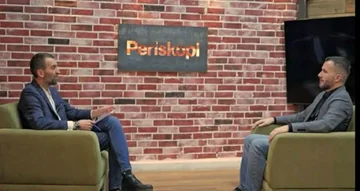
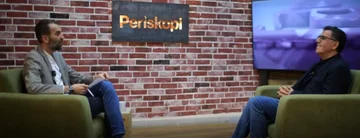
Periskopi(9 years ago)
(9 years ago)“We like the PDK think that the future ruling coalition should consist of the PDK, AAK, Initiative and eventually any MP who would have to support forming institutions together with minorities”, have said in an interview for Radio Free Europe, deputy head of the Democratic Party of Kosovo and outgoing minister [...]
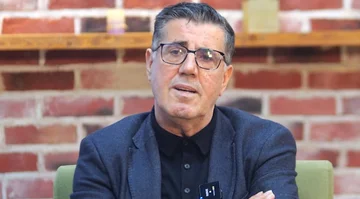
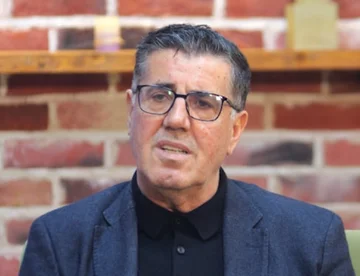
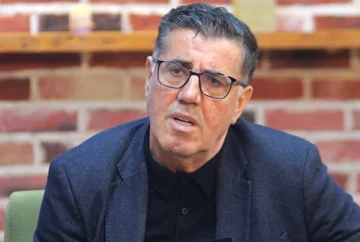
“We like the PDK think that the future ruling coalition should consist of the PDK, AAK, Initiative and eventually any MP who would have to support forming institutions together with minorities”, have said in an interview for Radio Free Europe, deputy head of the Democratic Party of Kosovo and outgoing Minister Enver Hoxhaj.
He rules out the possibility of the crisis over the formation of the new government, meanwhile, expects Kosovo to enter into significant decision-making, initiated by demarcation with Montenegro to complete dialogue with Serbia.
Radio Free Europe: Mr Hoxhaj, currently working on the institution of new Kosovo institutions. Where the Coalition Stands PAN negotiate about forming the new government?
Enver Hoxhaj: We as the Democratic Party of Kosovo, together with the Alliance for the Future of Kosovo and the Initiative, have mandated Mr. Kadri Wessel as coalition leader and Mr. Ramush Haradinaj as a commander, to talk with all political subjects and appointed deputies, and according to information we have as PDK Chief Chairman, our coalition has the necessary numbers to counter the Kosovo Assembly, elect the Speaker of the Parliament and form Government. When it happens, it's not only about the political agenda, it's about administrative issues that the Secretary of the Assembly has to do.
Radio Free Europe: Continuously, by PAN's run, Mr. Haradinaj, reportedly the numbers needed for forming the government, but no new coalition has yet been introduced that would guarantee the parliamentary majority. Do you see difficulties and eventual crisis about forming the new government?
Enver Hoxhaj: We are quite sure that the country will not have a crisis that has conveyed Kosovo in 2014. In the election campaign, but also during 2017, our attitude like the PDK has been that the country needs political stability, but also decision-making and dynamism. So at least there must be reason for the country to slide towards a political crisis, since the necessary parliamentary majority will be in the Kosovo Assembly, and I believe that in the near future, there will be developments that will complete the process of forming new institutions.
Radio Free Europe: Have you established contact with the LDK and parties in the LAA coalition and see any possibility of approaching these political parties?
Enver Hoxhaj: We like the PDK think that the future ruling coalition should consist of the PDK, AAK, Initiative and eventually any MP who would have to support forming institutions together with minorities, which not only in the sense of parliamentary support, but also because of our political and constitutional system should be part of the future government of Kosovo. We think that's the necessary number.
However, in our view we agree that Kosovo needs some of the topics of consensus in the future to be supported by the LDK and Vetevendosje. I am basically thinking about completing the border demarcation process and visa liberalisation, electoral reform, the Association of Serb municipalities, as well as the formation of the Kosovo Army. Beyond who will be in Government and it's clear that Mr. Haradinaj will be prime minister, while The PDK will be the engine of this government, we think that the government and the future opposition should find strength, political will and have political vision for the topics of consensual character and here Mr. Haradinaj and Mr. Wessel has our support to sit down and talk to all political subjects, even the LDK.
Radio Free Europe: If Haradinaj does not secure a necessary parliamentary majority for forming government in the first effort, it will be The PDK would support him in the second attempt?
Enver Hoxhaj: Our attitude is clear, and our position has never changed or changed. We think the country needs new dynamics, the country needs decision-making which addresses some of the developments that have remained unaddressed in recent times and Mr. Haradinaj has a profile, has political support, and we are very sure that institutions will be established in the first time. While who and how the situation of imaginary character can be created, it is more up to the president who even interprets and applies the Constitution than a political subject like the PDK.
Dialogue
Radio Free Europe: Mr. Hoxhaj, if we can get through other issues involving foreign policy and cross-side reports. Recently, the presidents of Kosovo and Serbia agreed to switch to a new phase of dialogue. What will this phase bring to your assessment?
Enver Hoxhaj: In our view as the Democratic Party of Kosovo, but also as foreign minister, dialogue should be exactly a topic that has the support and reconciliation of all political subjects. Dialogue has been the one who has divided Kosovo politics and society in the last five or six years and has been seen since foreign policy topics, such as dialogue with Serbia, have produced internal crises which have really had a direct impact on both domestic stability and our external performance.
In this direction, we think that dialogue should be moved to a second and final phase to complete our diplomatic communication with Serbia with mutual recognition and establishing diplomatic relations, and with a process of reconciliation between Kosovo and Serbian society. Dialogue should be a topic where we have to have political consensus, where the Government, the President, the opposition should agree about goals, expectations, objectives and about parameters and red lines that should have dialogue with Serbia.
I've been having a long time of dialogue being restricted in time and must be limited to content. And, what President Thaci has done is, and I think it's in the interest of Kosovo, and we don't need to be in a dialogue for normalisation with Serbia in eternity, but it has to be limited.
Radio Free Europe: Do you see Serbia's change of position ahead of Kosovo's independence, and do you expect the Serbian Parliament, among the first steps in this direction, to change the preamble of the Constitution, where Kosovo is represented as part of Serbia?
Enver Hoxhaj: I think we should have a full strategic opinion of what are the goals that Kosovo can meet in dialogue. What are the measurable and possible goals, and it does not only have to do with a list of wishes on how Kosovo views this process, since Kosovo is an example in such a dialogue and Serbia is another act. But the crucial role is international, whether our American or European partners or other regional powers.
The first step could be exactly the removal of the mention of Kosovo in the pre-multiple of Serbia's Constitution. Another second step should be Kosovo's membership in the UN, which would enable the newest state in Europe to be part of the international system. A third step could be mutual recognition and establishing diplomatic relations, as well as a social dialogue built on a reconciliation between Kosovo and Serbia, due to efforts for genocide and crimes and the policy of ethnic cleansing that Serbia has pursued in relation to Kosovo.
It means, Kosovo should enter such a dialogue with a clear agenda, and I believe that the country's president, the future prime minister, but opposition leaders and all parliamentary subjects should close this process in the interest of Kosovo. For more, dialogue with Serbia is also seen as part of the final phase of completing statehood and completing sovereignty. And of course, with sovereignty complete, there are other topics like marking the border line with Montenegro, or the fact that Kosovo still does not have armies and must have armies, which is a prerequisite for integration into NATO.
Radio Free Europe: Kosovo's membership in international mechanisms is cited. Recently, it is also talking about whether Kosovo will membership in INTERPOL. How do you think Kosovo will have difficulty becoming part of this mechanism?
Enver Hoxhaj: What I can say is this, what will be the approach of the future government in relation to Kosovo's membership in U. NESTO, or INTERPOL, is the decision that belongs to the future government. But as foreign minister who still exercises office, I can say that Kosovo has the votes to be part of the U. NESTO and INTERPOL.
In the last few months, in 2017, but even in the past year, I've had an intense lobby agenda, I've visited countries of Africa, Southeast Asia, Latin America, and I've stayed in many European countries and, of course, vote insurance for U n NESTO and INTERPOL were priority priorities. But beyond the vote, Kosovo needs to conduct even several topics and internal issues to become part of these two organisations.