4 months ago
From Origin of Power to Greece of Troika

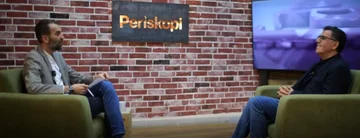
Periskopi(9 years ago)
(9 years ago)The Colonels lost power because of the Americans? This is clear. Papadopoulos was a kind of CIA agent. In those months, the Six Days War and the United States wanted a free hand on air bases in Crete. It was a whole other world. The tension between the two blocks was high. The Soviet Union was not to be [...]
The Colonels lost power because of the Americans? This is clear. Papadopoulos was a kind of CIA agent. In those months, the Six Days War and the United States wanted a free hand on air bases in Crete. It was a whole other world. The tension between the two blocks was high. The Soviet Union should not have access to the Mediterranean basin, which was then the center of the world, as would the Middle East. In 1974, at the opening of the Suez Canal, Greece's importance declined, and the errors of the colonels led to the end of the 148x1> dictatorship.
AT HIN. Fifty years ago, at two o'clock in the morning of April 21, 1967, Colonels Georgios Papadopoulos, Nikolaos Macarezos and Ioannis Ladas announced the coup. They had set free the second-class military route, accustomed to moving into the shadows. Since the evening, tanks had caught wide boulevards designed for the town of the nineteenth century. The elected troops had taken control of the communications centres and the Parliament. Parasites were about to land at the Ministry of Defense. It's been months. With the consent of King Constantine II, he was preparing a military stamp. But the indecision of senior officers and the approach of elections scheduled for the month of May prompted the soldiers of lower levels to take the reins. So began the seven years of the obscurantist dictatorship, known in history as “dictation of the Colonels”.
Vassilis Vassilikos, from northern Greece (born in Thasos, who grew up in Thessaloniki), was not yet 33 years old, and was not yet the renowned writer for the novel that took the name from the last letter of the alphabet, “Z”, which was then added to the words “Orgy of power”. Translated around the world and forwarded to cinema directed by Costa Grava, the book would become a manifestation of the Greek freedom struggle.
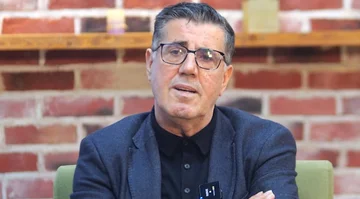
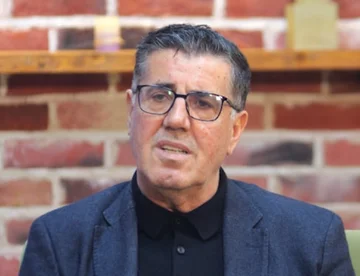
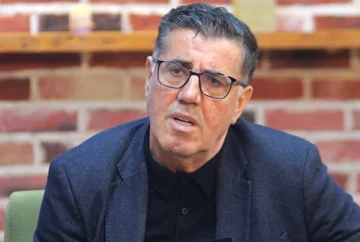
However, it was written before the coup. The events he was inspired to have taken place in 1963 were referring to the murder at the hands of the right - wing extremists of Grigoris Lambrakis. Vassiliko had known to look far away. Like many of his generation, they were willing to leave the country at the dawn of April 21. “I was already abroad”, he says today, at the age of 82, at his residence in Athens and Colonus, where Sophocles created and caused Edipi to die. I was on the train, to be exact. I was traveling from Sweden to Venice, where I would take a ship back to Greece. I got mixed news. I changed my schedule. I went to Rome, where I had many friends and waited to see how the situation would develop. When it became clear I was in Italy, then I moved to Paris. Until my friend Italy Calvino invited me back to Rome. I've spent extraordinary years in Italy”
When it became clear, you say. What was clear at this point?
That the civil war had never ended and the extreme right was in power. A world famous dictatorship for fanatical bans, such as miniskirts and long hair. But he did a lot more. Like all dictatorships, anyway. Between torture and murder. For those who fled and those who spent years abroad, it was very difficult. The feeling of not sharing the suffering of the oppressed Greeks developed. Of course we were more useful outside. Costa-Grava's book and film had their weight, even though the dictatorship was because the Americans didn't want it”.
So the colonels lost power because of the Americans?
This is clear. Papadopoulos was a kind of CIA agent. In those months, the Six Days War and the United States wanted a free hand on air bases in Crete. It was a whole other world. The tension between the two blocks was high. The Soviet Union should not have access to the Mediterranean basin, which was then the center of the world, as would the Middle East. In 1974, at the opening of the Suez Canal, Greece's importance declined, and the errors of the colonels led to the end of the 148x1> dictatorship.
The dictatorship that Italian journalists soon followed with great attention.
Of course. There were fears of similar actions. De Lorenzo's coup project would become known to the public because of Italian investigative journalism. And in those days of uncertainty, there were great Italian journalists who confessed to the coup. I remember the work of Furio Columbus. He had filmed the situation. He was one of the first witnesses. Leaving Athens, he feared they would control him and sequencing the movies. He saw an American woman carrying a large suitcase. He offered to help him, and in return he gave him his purse. Something that would be unimaginable today. However, when the police opened up the trunk that Columbus attracted, the surprise was great. Women's clothing and anything that can hold a rich American. The agents laughed. Columbus passed. He told this story with great pride”.
Italy and France. You actively cooperated with the European left.
More with that Italian, actually. Italy, which I love indefinitely, was a beacon for all of us. He was raised in Italy, thanks to Gramsci, that communist independent of Moscow, the one we called Eurocommunism. It wasn't just Berlinguer. And the intellectuals I met and with whom I became friends had clear ideas. Nanni Balestrin, Umberto Eco, Michelangelo Antonioni, Francesco Rossi. I've spent wonderful years in Italy. The publication of the book by Felix had opened up a world for me. Today almost forgotten”
The arrest and torture of Alekos Panagoulis is still remembered by the book of Oriana Falacla. You were among the first to publish Panagulis abroad.
I had opened a small, almost personal publishing house called “and a half-x2>, in honour of Felin and his wonderful film. I published Panagulis' poems. Pasolini was crucial. When Panagoulis was released and went to Italy for the first time, we met personally. We realized that we had done a great job for Greece from Italy. It was important to avoid feelings of guilt against those still in prison”.
Was returning to Greece difficult?
No, enthusiasm for freedom prevailed. I then continued to live a little in Greece and a little abroad. I was ambassador to U NESTO, after years when I led public television, and Andreas Papandreou was in power. This was an era in which people of culture had function and roles, which today cannot even be imagined”.
Today, everything is lost, you say.
The left “does not exist anymore. Culture is in very poor condition, on the level of social recognition. Look, the Greek crisis is a European crisis, in which our country has the function of weak used to dominant foreigners, although proud of nature. The tragedy began with Maastricht in 1992, when there was a major mistake aimed at an economic but cultural union. Without a transformation that focuses on the great European cultural history, there is no hope of cultivating”. / “ ) The world..