4 months ago
LDK opened for talks with Vetevendosje, but also with AAK and Initiative

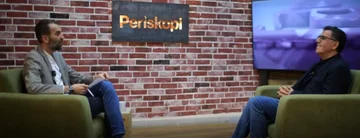
Periskopi(9 years ago)
(9 years ago)In the interview for Radio Free Europe, Osman also talks about the possibility of it taking over the post of LDK chairman. Radio Free Europe: Mrs. Osmani, where do you see the Democratic League of Kosovo after the June 11th elections, in coalition with PAN, Vetevendosje or opposition? Vjosa Osmani: LDK Voter, now [...]
In the interview for Radio Free Europe, Osman also talks about the possibility of it taking over the post of LDK chairman.
Radio Free Europe: Mrs. Osmani, where do you see the Democratic League of Kosovo after the June 11th elections, in coalition with PAN, Vetevendosje or opposition?
Vjosa Osmani: LDK voter, now more than ever before, has been clear, in proportion to each one of us that he opposes any kind of co-operation with the PDK, and therefore with a coalition he belongs to. The PDK, which in this case is the PAN coalition.
So, absolutely no member of the LDK, whether in leadership or a simple member, has a mandate to negotiate with PAN or PDK and has no mandate to reach coalition agreements with this party, which has testified for years, in fact since its existence, which is our main political opponent, and it is impossible to achieve obvious success in a coalition with such a party.
Therefore, the citizens' response in relation to the LDK has been clear and there is no way that any coalition with PDK or PAN could be reasoned. So this is completely disfellowshipped.
As far as other options are concerned, I believe that within two or three days there will be final certificate of results. We have already had an initial meeting with our parliamentary group, and except that it is unanimously decided that there will be no coalition with the PDK or the PAN, it is also said that the LDK will be open to discuss with Vetevendosje, but also with the AAK and the Initiative, if they are cut off from the PDK.
What would be the final outcome of such conversations about forming the Government is early to say.
The LDK has a programme as a member of the European People's Party, within which it must stand, the cause of ideology as a centre-right party, and there is a government programme that it will definitely insist on implementing, regardless of whether we are talking to the VV, AAK or Initiative. And, with whatever it might have greater programming uses, of course the odds will be greater for governance.
Now, there are a large number of people within the LDK, who prefer that the LDK stay in the opposition and focus on reforms over the years. However, because of numbers consultations now in the Assembly, the LDK should naturally engage positively to negotiate with the VV, but if the AAK and the Initiative are cut off from the PDK and they are also seen what will be the possibility that the LDK will have an important role in opening the streets of Kosovo, whether in the European Union in its Euro-Atlantic perspective.
So, at the moment, there are no final answers to what the outcome or epilogue of talks with Vetevendosje or potentially with the AAK and the Initiative will be, if they are cut off from the PDK, but as opportunities exist.
Radio Free Europe: On what basis would the LDK be included in a new ruling coalition?
Vjosa Osmani: As I said, the primary priority for the LDK is to respect the programming priorities, which the LDK has already built for years, not just during this campaign and during these elections, because they are governing priorities and there are programming frames that are built together with our international partners, which are part of the European People's Party. They are the governing priorities that we strongly believe will move Kosovo forward and pave the streets of Kosovo.
Therefore, these are our criteria and it should be seen how much reconciliation can be achieved with Vetevendosje or even with the AAK and the Initiative, for these priorities.
Of course, other issues can then be much cheaper, if there is reconciliation for the programme and other governing orientation.
Radio Free Europe: Imagine the eventual crisis in the form of new institutions, especially the Government?
Vjosa Osmani: The crisis creator here can only be the president of the country [Hashim Thaci], who unfortunately is misinterpreting the Constitutional Court's decision, saying only the winner of the election can be mandated even if it fails for the first time.
In fact, the Court's decision is clear and if the coalition The PAN, as the winner of the election, fails to create numbers in the first effort, then the president has a constitutional obligation that the mandate to give any party, which has 61 MPs behind him, and not only the winner of the election, and if they have no more than 59 deputies, as has been proven so far.
So if the country's president wants to continue to violate his post as guarantor of civic unity and the functioning of institutions, then he can continue to do so because unfortunately he is unable to take off his party coat.
However, of course he will face the demands of MPs to interpret such a constitutional offense.
So, I believe it's clear, if the coalition PAN fails for the first time, then the president must definitely mandate anyone with 61 deputies signed, and there would be no crisis in such a case.
Radio Free Europe: Considering the outcome of the Democratic League of Kosovo in the June 11th elections, do you consider that the LDK should now undergo a new process of reforms and its leadership?
Vjosa Osmani: The reform process is continuous, and anyone who thinks it can be carried out within two years is wrong. I'm in favour of a process of reforms starting from below, from the base, from the subsurgeons, which continue to the branch and eventually include the leadership of the LDK, because that's the only way that those reforms are substantial and are accepted by citizens because that means that they're hearing the base, our electorate is being heard.
Any ignoring the voice of citizens, any ignoring what the base requires, of course it harms the LDK. When exactly by date, it doesn't matter when changes happen. The important thing is that when they happen, they happen properly.
So, I'm now in everyday contact with the subs, with our structures, to see exactly what the LDK electorate is looking for, in terms of reform, and to confirm their demands, we should act.
Radio Free Europe: How much are you willing to take the LDK leadership wheel?
Vjosa Osmani: Like every other time I've said, all I have to say is that it doesn't matter the position I have, which is that I'm part of a process of positive changes and deep reforms in LDK.
That's why I've been engaged for years, and that's why I'll continue to engage despite the obstacles that will be. After all, it is not important the party chairman's name and last name, of importance, that the LDK be restored as the first power in the country, and that is why I will make my contribution, regardless of my position.
Radio Free Europe: Does that mean you're willing to lead LDK?
Vjosa Osmani: I am willing to continue to be a devout member of the LDK, just as I have been so far and become part of any team that is serious about the reform process.
Radio Free Europe: Just part of the team or lead a team, a party, in this case LDK?
Vjosa Osmani: Any role required by the base, which requires the electorate and would lead the LDK towards return as the first political power in the country.
Radio Free Europe: And, you could do that?
Vjosa Osmani: The LDK to do so must take each member seriously even if that member has only one vote after himself. It must unite all powers, it must unite all generations, not have disfellowshipped logic, but the logic of the union, and then I believe that citizens would see the real power of the LDK.
Radio Free Europe: These issues that you mentioned are happening in LDK or not?
Vjosa Osmani: It's happening sometimes. In some cases it's not satisfactory, but each one of us will have to contribute to the fact that the inclusion will actually be present, in all the branches of the LDK, so that people will not feel disfellowshipped, and as I said, regardless of generations, there will be a cohesion, a union of the republic's generation of independence and generation, and only then the LDK will return to the belief that citizens had in the past.