4 months ago
In Albania, Vetting starts in September

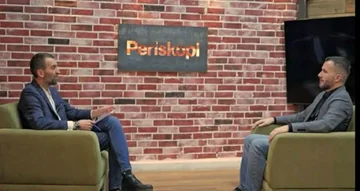
Periskopi(9 years ago)
(9 years ago)The Albanian Vetting process officially for judges and prosecutors under justice reform is expected to start in September. The chairman of the International Monitoring Operation for Justice Reform, Genoveva Ruiz Calavera, in an interview given to DI, expressed optimism about this. It says as soon as [...]
The Albanian Vetting process officially for judges and prosecutors under justice reform is expected to start in September.
The chairman of the International Monitoring Operation for Justice Reform, Genoveva Ruiz Calavera, in an interview given to DI, expressed optimism about this. She says that the sooner this process begins, the better.
FE: When it begins in Albania to re-evaluate judges and prosecutors -- that is, vetoing -- which is expected to be the cornerstone of a fair, impartial judiciary independent of politics?
Genoeva Ruiz-Celaera: What you said is very fair: self-preservation is so important for Albania that it can be considered a process of historical importance, a defining moment for the justice system in the country, but not only. Strengthening an impartial, independent, responsible, efficient and professional judiciary is also important for a broader challenge: to irreversibly consolidate, once and for all, the rule of law in Albania. With such expectations, it is clear that the earlier the process begins, the better. Citizens of Albania have already been waiting for a very long time; they deserve a judicial system in which all of them have confidence. Regarding the international community's constitutional and legal needs to monitor or “associated with” the process can only confirm that all preparations have been carried out over time. The International Monitoring Operation (ONM)) is ready to make available its highly qualified expertise to accompany the process, just as soon as local veto institutions are ready to begin the re-evaluation process, which we hope will begin at the beginning of this autumn. However, to be clear, while the international community bears responsibility to monitor the process, it depends on local structures, the self-confidence institutions that have already been set up to conduct re-evaluation directly.
DW: Are there risks that can prevent the successful implementation of the vetoic process, which are taken into account to avoid/confrontate?
Genoeva Ruiz-Celaera: There are always dangers in complex reform processes. The vetting process is certainly among the most complicated/complex efforts on the current reform agenda. Preparations are made on the basis of very intensive consultations, by both sides: internal political actors in Albania, as well as between them and international community actors, to ease as many possible risks as possible. Current implementation of the process will require commitment, courage and willingness to quickly overcome any obstacles that may appear along the way.
DW: Will those judges and prosecutors who resigned in time include vetoing Albania, thus saving”de facto” investigation into their past, assets and links to organised crime? What about those who refuse to declare their possessions and who do not resign?
Genoeva Ruiz-Celaera: The law on vetting gave all members of the judiciary a clear deadline to present preliminary information on their assets and heritage. Before the deadline expired, prosecutors and legal advisers chose to resign. In a way, this means that self-preservation has already begun to produce results before its expected start. The process takes place on three clear pillars: past, assets and assessment of professional skills, which will be binding and will be conducted for each member of the judiciary. We will monitor that investigations will be complete and will enable, once and for all, the cleansing of the justice system, at all its levels, from those who do not serve in the interest of Albanian citizens but have followed corrupt practices and / or developed links with organised crime networks.
DW: What is the situation regarding the establishment of two new institutions to implement justice reform: The High Court Council and the Prosecutor's Council?
Genoeva Ruiz-Celaera: We are closely monitoring the formation of new advice that will be directly responsible for managing the justice system. There are certain specific legal responsibilities that have been given to the IMO in this regard, when it comes to appointing members of the council. So far we have had close consultations and partnerships with relevant authorities to carry out our duties at the right time and facilitate the finalisation of these processes.
DW: Can you, please, predict that when reform in justice has its first results as long as these results are a prerequisite for opening membership negotiations with the EU?
Genoeva Ruiz-Celaera: We have already seen the first results with the new legal framework that has been adopted to support justice reform. Other concrete achievements now depend on many factors, and it is difficult to make specific predictions about when they will be realized. But one thing has been very certain and very clear so far: citizens' demand for change has not been left unheard. Hoping that this requirement will continue to push forward the reform engine and generate all long-delayed positive changes. I really have reason to have a very optimistic outlook, including that very soon to see the self-preservation move forward.
DW: Is the situation within the EU in favour of concrete political actions and decisions to accelerate the pace of the integration process for candidate countries for membership in the Western Balkans, for example. Like Albania? Is the geopolitical situation in the region playing a role in politics?
Genoeva Ruiz-Celaera: The EU is facing many challenges, most of which are related to global issues and complex dynamics even beyond it. Recent history has shown once again that when unity prevails within the EU, common solutions based on solidarity have benefited all countries in Europe, even beyond. This has also been important for the Western Balkan countries. Like. Co-operation for refugee crises across the region has shown that an even closer partnership is needed and the ultimate goal of EU membership of all countries in the region represents nothing else in the culmination of a natural/normal historical trajectory: The Western Balkans are part of the European family and its future is the European Union. In this context, reference must also be made for the significant progress achieved within the Western Balkans process. The last meeting in Trieste was an opportunity to strengthen dialogue and concrete co-operation in many sensitive sectors, confirming a strong common commitment to further advance our bilateral relations and regional co-operation.